When stairs are blocked by smoke or fire, a properly selected escape rope or descent kit can be the difference between a safe evacuation and a dangerous situation. This guide covers three product types — reciprocating descent kits, steel-core escape ropes and high-strength rescue ropes — with real specifications, length-by-floor selection, anchor installation and proper use. Match the product to your building height, occupant profile and emergency procedure before ordering.
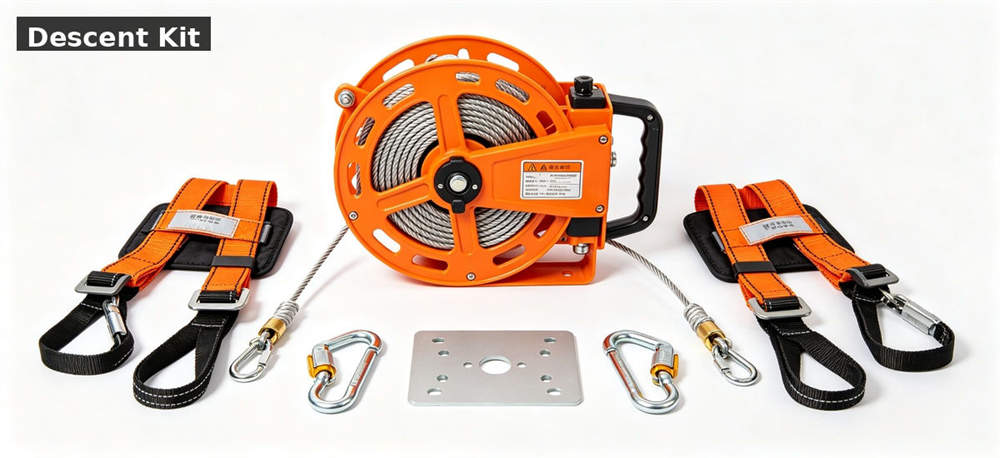
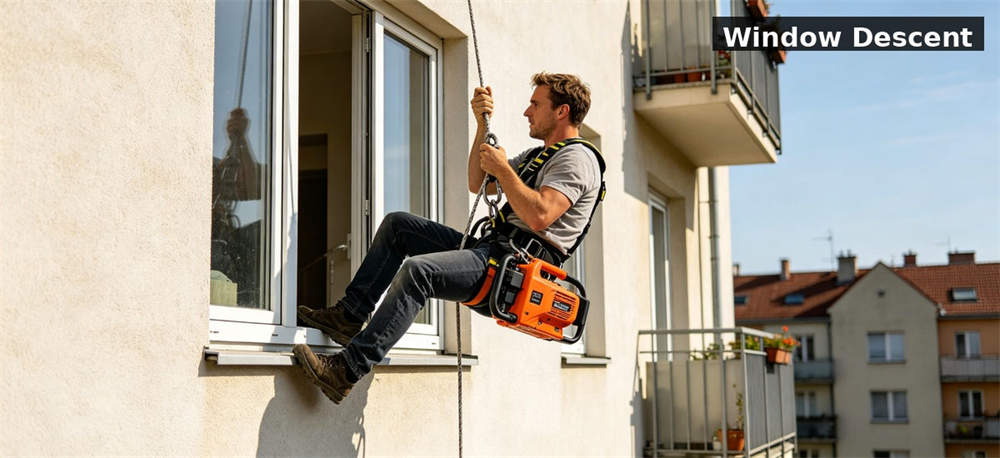
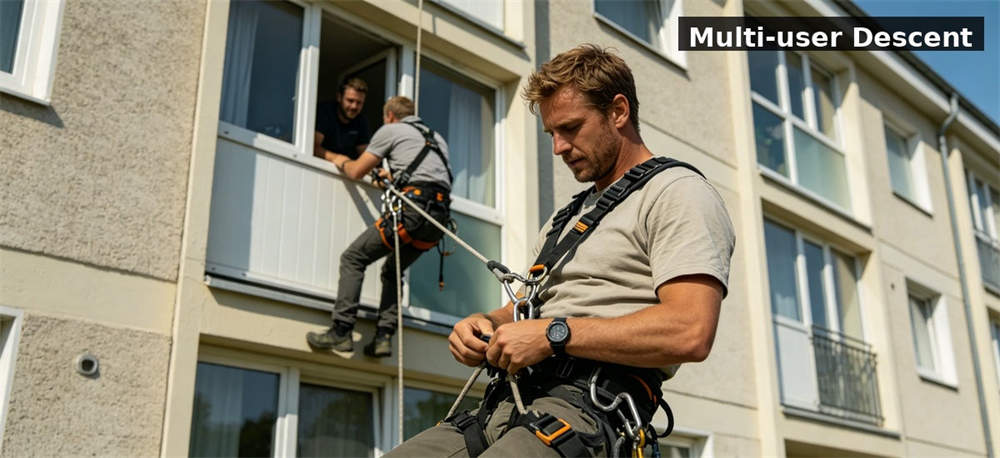
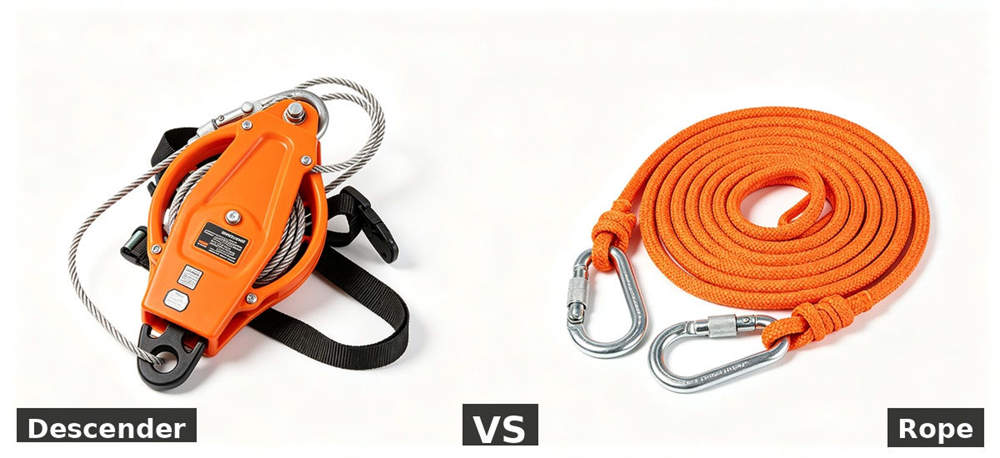
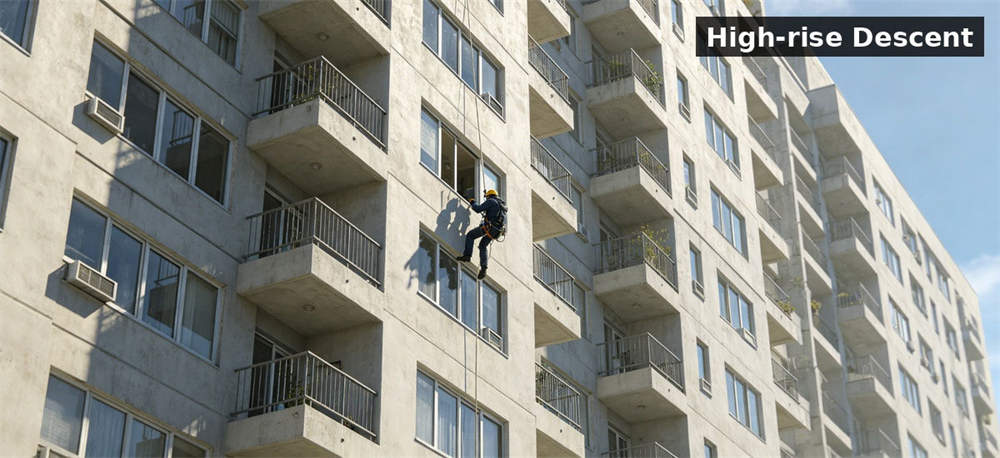
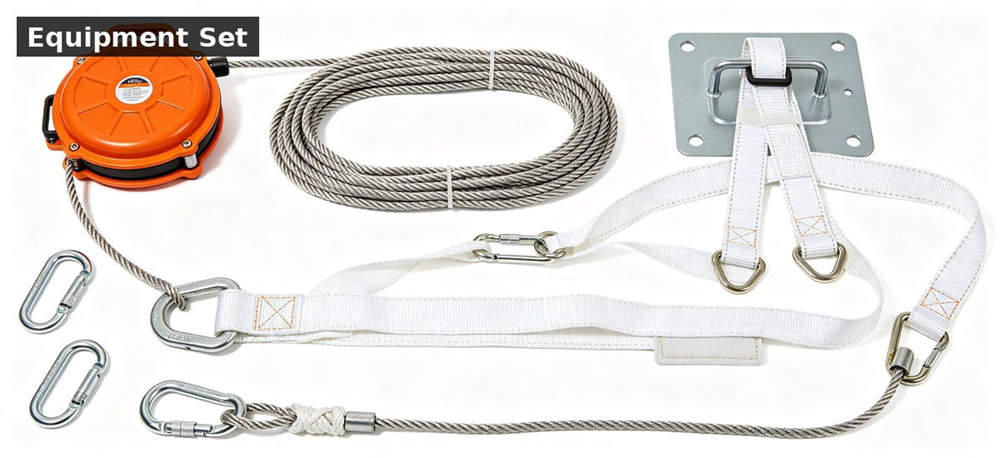
The most common high-rise evacuation system. A gravity-controlled descent device automatically regulates your speed as you descend. One person at a time, and the hook returns to the top for the next user — allowing continuous evacuation of multiple people.
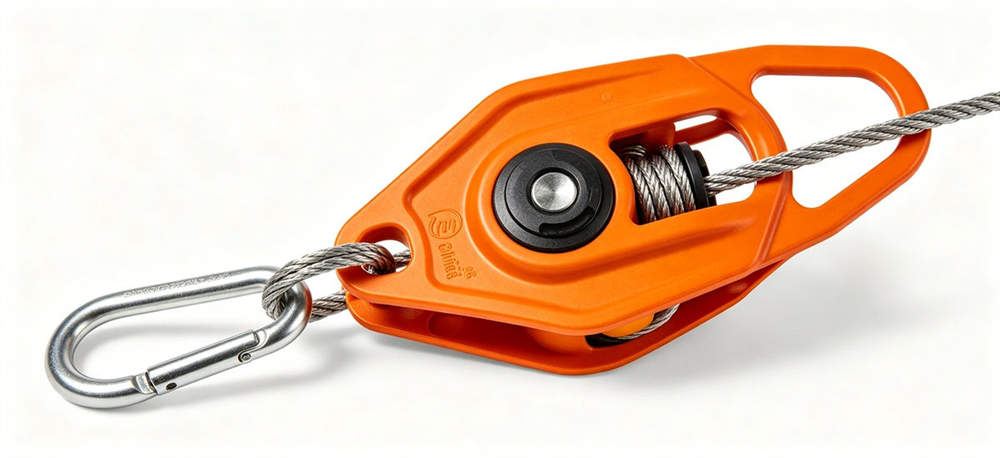
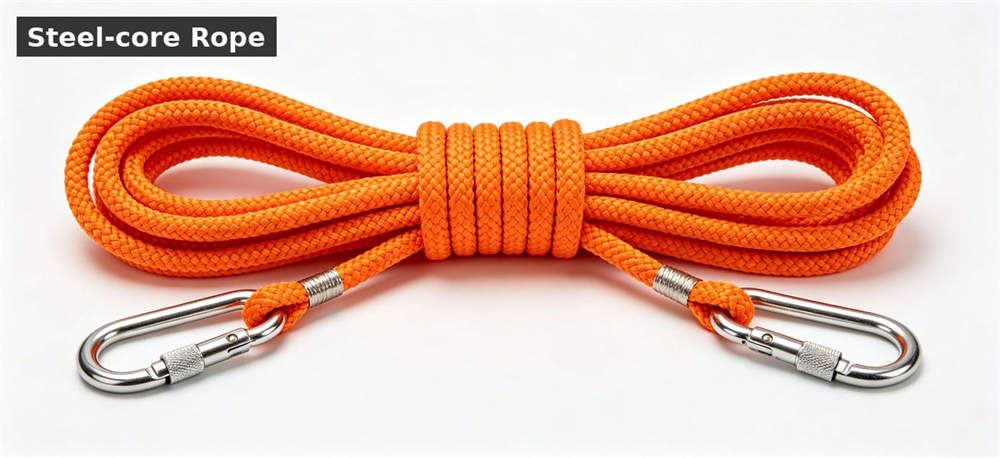
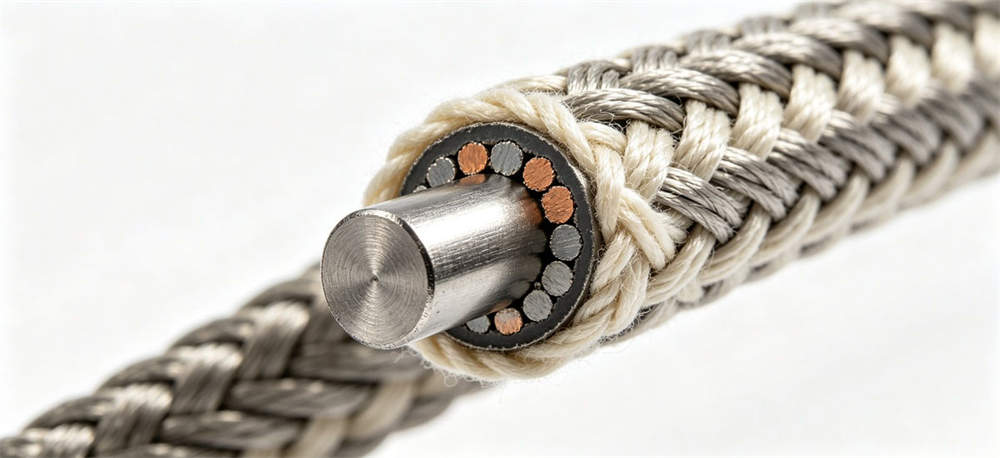
A simpler, lower-cost option for lower floors or as a backup system. A steel-wire core rope with two locking hooks at the ends. No mechanical descent device — the user controls speed by wrapping the rope around their body or using a basic friction hitch.
View steel-core escape rope details
For professional rescue teams, fire departments and specialized emergency response. Made from advanced fibers for higher strength, heat resistance or specific environmental conditions.
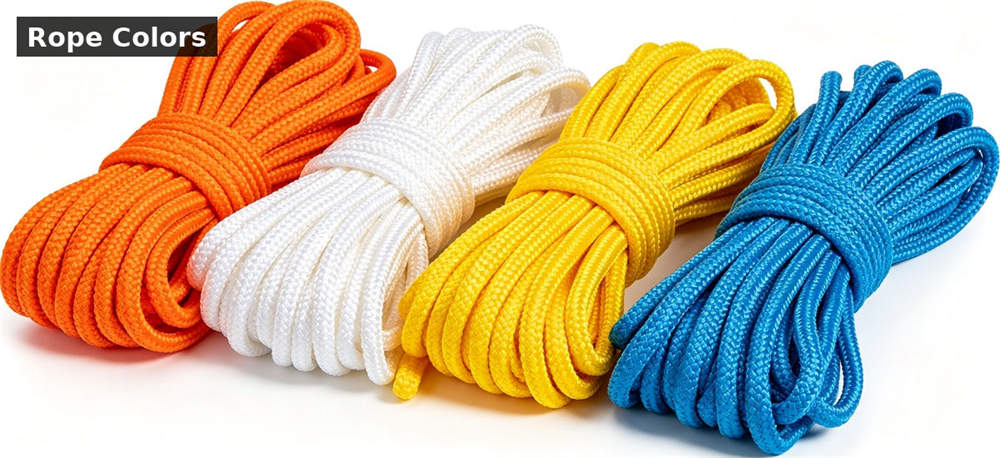
Material options: Nylon (static/dynamic), Polyester, Dyneema (UHMWPE), Kevlar (heat-resistant)
Diameter: 10mm, 11mm, 12mm, 14mm, 16mm
Breaking strength: 22kN-40kN (2200-4000 kg) depending on material and diameter
Kevlar heat resistance: -196°C to +204°C continuous use, zero shrinkage at 150°C
Dyneema features: Ultra-high strength-to-weight ratio, floats on water, UV resistant
Nylon features: Dynamic stretch (absorbs fall impact), good for rescue belaying
Length: Custom cut to project requirements
End fittings: Sewn eye splice, thimble, or custom termination
Certifications: EN 892, UIAA, NFPA (available on request)
Best for: Professional fire departments, rescue teams, industrial safety, rope access
|
Material |
Breaking Strength |
Heat Resistance |
Weight |
Best Use |
|
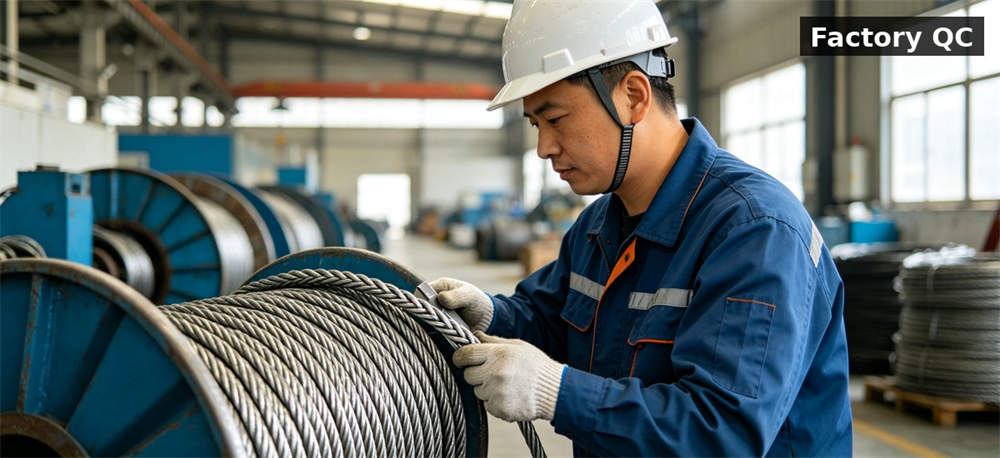
Steel-core (wire + polypropylene) |
~432 kg (4328N) |
Good (flame-resistant outer) |
Medium |
Civilian high-rise escape, budget projects |
|
Nylon (static) |
22-30 kN (2200-3000kg) |
Melts at ~215°C |
Medium |
Rescue belaying, general purpose |
|
Polyester |
20-28 kN |
Melts at ~250°C |
Medium |
Static lines, hauling |
|
Dyneema (UHMWPE) |
30-40 kN |
Melts at ~145°C (low!) |
Very light |
Water rescue, lightweight kits |
|
Kevlar (Aramid) |
25-35 kN |
Excellent (-196°C to +204°C) |
Light |
Fire rescue, high-heat environments |
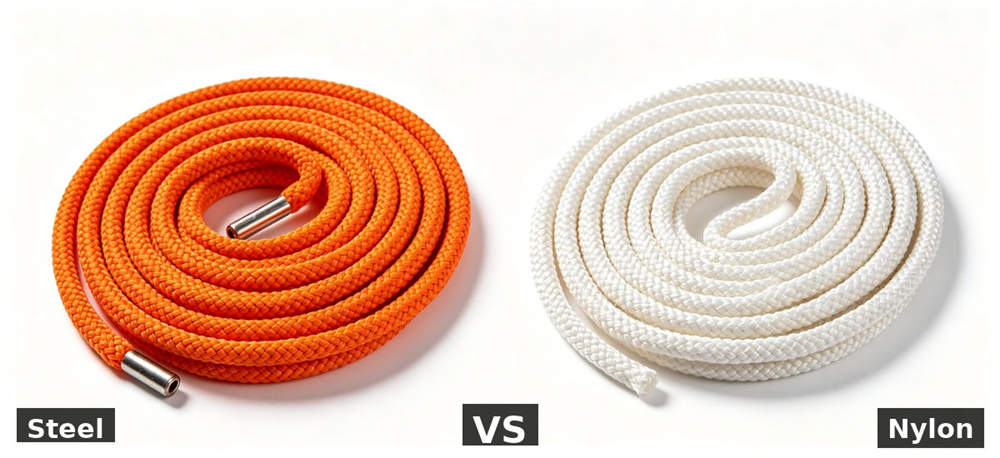
Key point: For civilian fire escape, steel-core rope is the standard choice — it offers the best balance of strength, heat resistance and cost. Dyneema is very strong but melts at low temperature, making it unsuitable for fire scenarios. Kevlar is ideal for professional fire rescue but costs significantly more.
Do not guess the length. Measure from the anchor point to the ground, then add 3-5 meters of reserve. The table below gives standard floor-to-length matching for typical residential and commercial buildings (3 meters per floor):
|
Rope Length |
Floors Covered |
Typical Building Type |
Approx. Descent Time (at 0.86m/s) |
|
10m |
1-2 floors |
House, small shop |
~12 seconds |
|
15m |
3-4 floors |
Apartment, small office |
~17 seconds |
|
25m |
6-8 floors |
Mid-rise apartment, hotel |
~29 seconds |
|
30m |
~10 floors |
Office building, school |
~35 seconds |
|
50m |
14-16 floors |
High-rise residential |
~58 seconds |
|
100m |
31-33 floors |
Skyscraper, tower |
~116 seconds |
|
180m (custom) |
55+ floors |
Super high-rise |
~210 seconds |
Always add 3-5 meters of reserve length beyond the measured drop — the rope must reach the ground with slack, and the user needs room to step off safely. If the anchor point is not directly above the landing area, add extra length for horizontal offset.
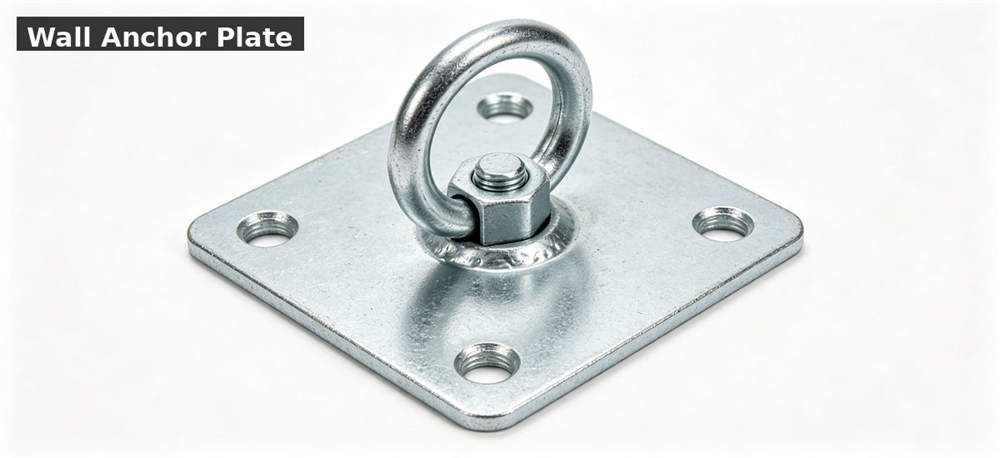
A descent system is only as safe as its anchor point. A poorly installed anchor is the number one cause of escape rope accidents.
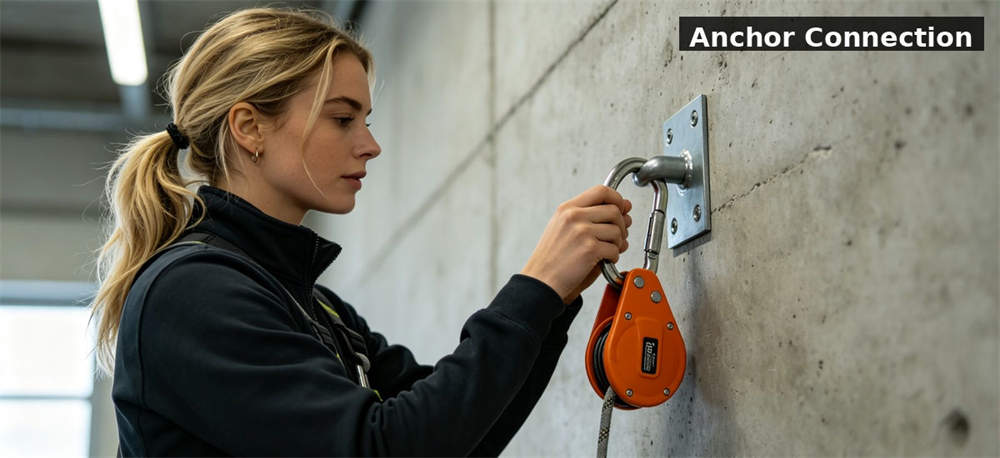
We provide: Wall anchor plates, installation instructions and can recommend local installers in your region. Never use an anchor point that has not been professionally installed and inspected.
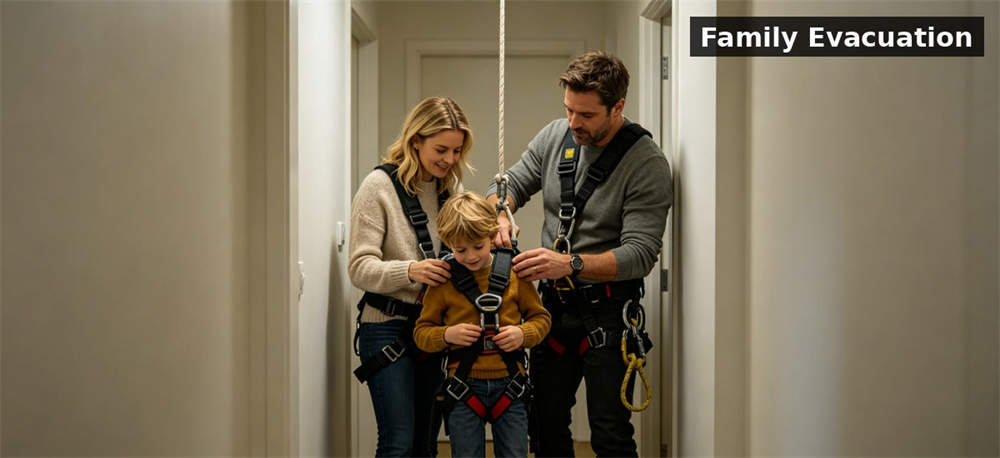
A reciprocating descent kit is designed for continuous use by multiple people — this is its biggest advantage over a simple rope.
Example bulk order for a 20-floor apartment building with 4 units per floor (80 units, ~200 occupants):
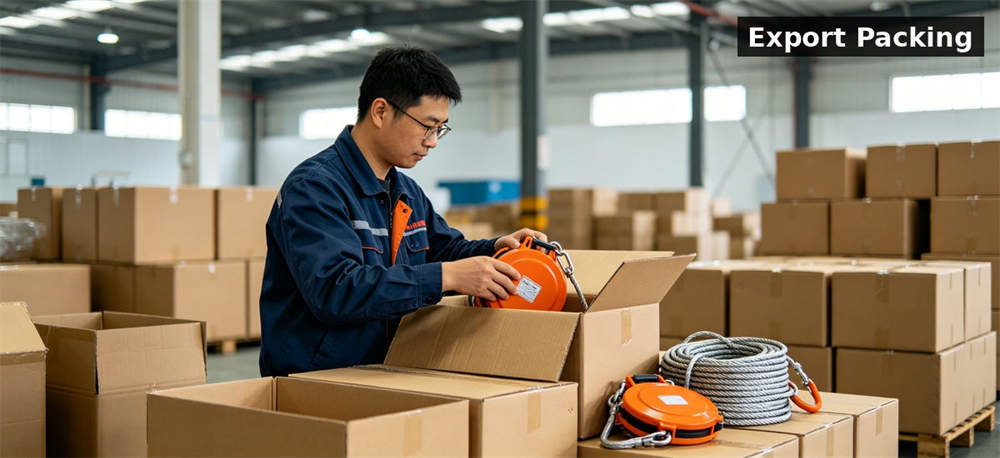
All items can be packed in labeled cartons by floor for easy distribution during installation. Professional installation and staff training are recommended for all descent kit locations.
Lead time reference: Standard stock items (15m, 25m, 50m kits): 15-25 working days. Custom rope length or logo printing: 25-40 working days. Professional-grade rescue ropes (Kevlar/Dyneema): 30-50 working days. Emergency rush orders for standard items can start production within 72 hours.
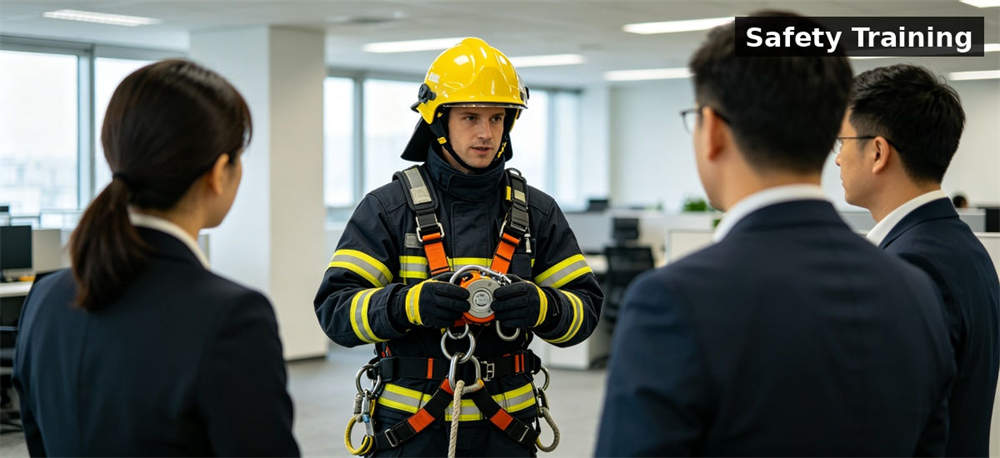
A descent kit includes a mechanical device that automatically controls your speed (0.16-1.5m/s) — anyone can use it with minimal training. A simple escape rope has no device; the user must control speed manually by wrapping the rope around their body, which requires training and strength. For high-rise civilian evacuation, always choose a descent kit.
A 50m rope (for 14-16 floors) takes about 58 seconds at average speed (0.86m/s). A 100m rope (31-33 floors) takes about 2 minutes. Heavier users descend slightly faster (up to 1.5m/s), lighter users slower (as low as 0.16m/s). The total evacuation time includes harness changeover — about 1-2 minutes per person.
Can children use a descent kit?
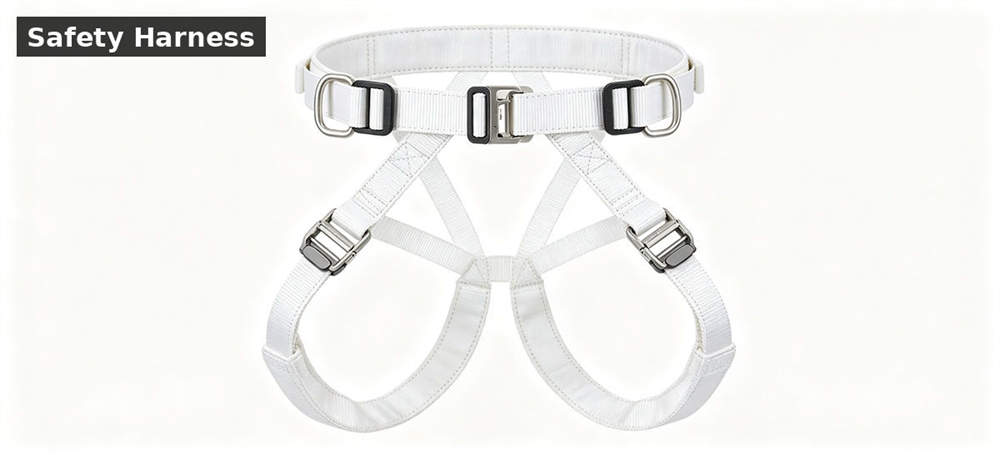
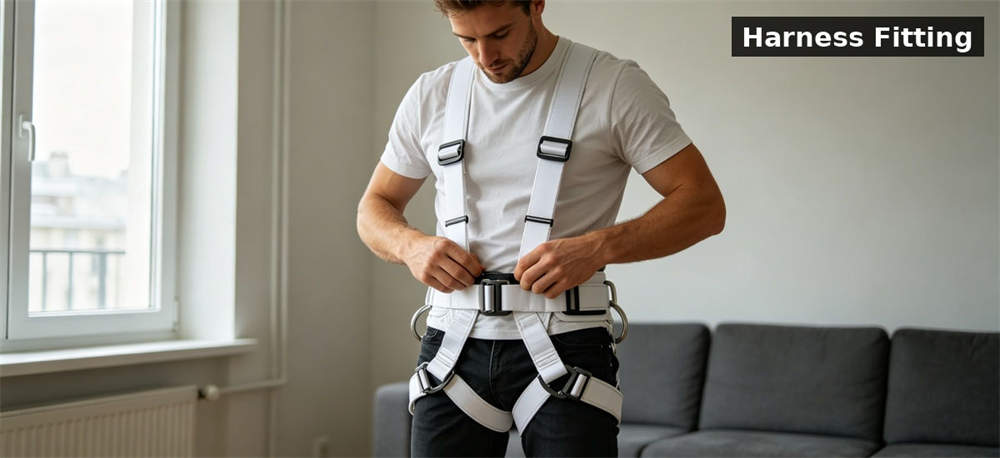
Standard harnesses fit users from 35kg to 100kg. Children below 35kg need a child-specific harness (available on request, minimum 50 units). Children should always be supervised and, if possible, descend with an adult using a tandem harness setup. Never allow a child to use the system alone without prior practice.
One person at a time during descent. The reciprocating design returns the hook to the top automatically, so the next person can go immediately. One kit can handle up to 200 consecutive descents per session. For a building with 200 occupants, plan for 4-6 kits to keep evacuation time under 1 hour.
Do I need professional training to use this?
For the reciprocating descent kit, basic orientation is enough — the device auto-controls speed. However, we strongly recommend at least one practice descent per user, and one trained supervisor at each anchor point during an emergency. Steel-core ropes without a descent device require more training to control speed manually.
Modern reciprocating devices are designed with a centrifugal braking system that cannot lock up — if the rope jams, the user simply stops descending and can call for help. The system will not free-fall. Always test the device by pulling the rope through before each use. If it does not move smoothly, do not use it.
Can the rope burn through in a fire?
Steel-core ropes have a flame-resistant polypropylene outer layer and a steel wire core that does not burn. The outer layer may char in direct flame, but the steel core maintains strength. Avoid prolonged contact with direct flame — descend through smoke, not through active fire. Kevlar ropes offer even higher heat resistance for professional fire rescue.
How do I know what length I need?
Measure the vertical distance from your anchor point to the ground, then add 3-5 meters of reserve. As a rough guide: 15m for 3-4 floors, 25m for 6-8 floors, 50m for 14-16 floors, 100m for 31-33 floors. If your anchor is not directly above the landing area, add extra for horizontal distance.
No. Anchor installation requires drilling into structural concrete or steel with expansion bolts, and must be load-tested. A poorly installed anchor is the most dangerous failure point. We provide anchor plates and installation instructions, but recommend a qualified local installer. Never install into drywall, plaster or hollow walls.
What certifications do these products have?
Reciprocating descent kits: GB 21976.2-2012, CCC certified. Steel-core escape ropes: GB/T 8834-2016. Professional rescue ropes: EN 892, UIAA, NFPA (available on request). We can help arrange additional third-party test reports based on your project requirements, including EN standards for European markets.
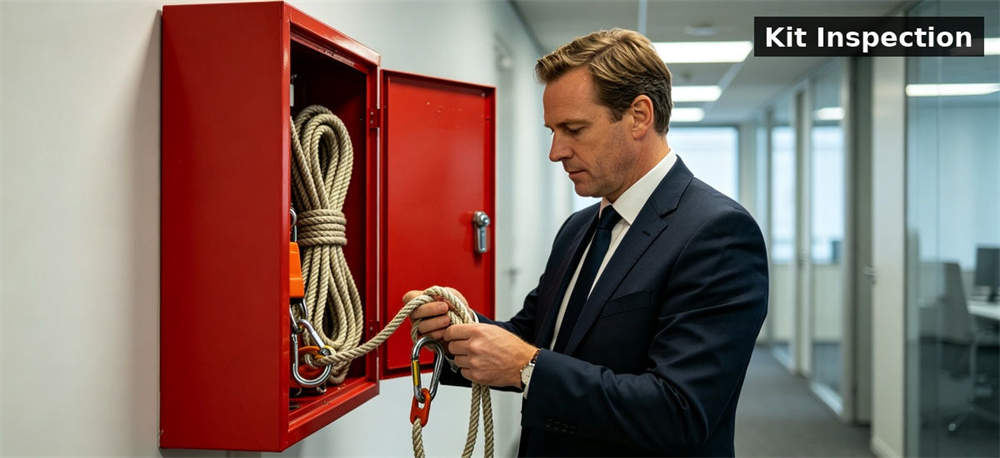
Every 6 months for systems in storage. Before each use for active systems. After any emergency use, retire the entire system (rope, harness and device should be replaced). Rope and webbing have a 5-year maximum service life from manufacture date, even if never used.
Yes, if the balcony has a structurally reinforced anchor point. Do not attach to balcony railings — they are designed for horizontal load (people leaning), not vertical load (a person hanging). Install a proper wall anchor plate on the structural wall near the balcony door.
What is the difference between static and dynamic rope?
Static rope (polyester, low stretch) is used for descent and hauling — it does not absorb fall impact. Dynamic rope (nylon, stretches 6-8%) is used for climbing and rescue belaying — it absorbs the shock of a fall. For fire escape descent systems, static or steel-core rope is correct; dynamic rope is not recommended because stretch makes descent control harder.
Can two people descend together (adult + child)?
Standard systems are rated for one person (35-100kg). An adult + child tandem typically exceeds 100kg and is not safe on a standard kit. For tandem use, specify a heavy-duty harness rated to 150kg and confirm with the supplier. Alternatively, the adult descends first, then sends the hook back for the child.
Store in a clearly marked, unlocked cabinet near the anchor point. The cabinet should be visible from the hallway and not blocked by furniture. Include an instruction poster on or near the cabinet. Do not store in a locked room or high cabinet — in a fire, every second counts.
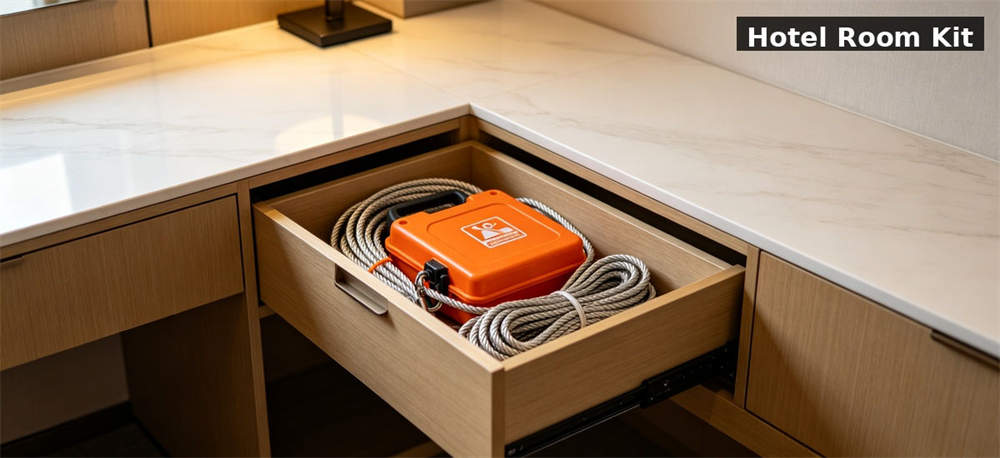
What is the maximum building height for these systems?
Standard rope lengths go up to 100m (31-33 floors). Custom lengths up to 180m are available for super high-rise buildings (55+ floors). For buildings taller than 180m, multiple descent points at different heights (e.g., one at floor 30, one at floor 60) are more practical than a single very long rope.
Yes, replacement ropes are available. However, after any damage or emergency use, we recommend replacing the entire system (rope + device + harness) because the descent device's internal friction components may also be worn. Always replace rope and harness as a matched set from the same manufacturer.
For mobile patients and staff, yes. For non-ambulatory patients (bedridden, wheelchair users), descent kits are not suitable — these buildings should have protected stairwells and evacuation chairs instead. Always check local fire code requirements for healthcare facilities before specifying escape equipment.
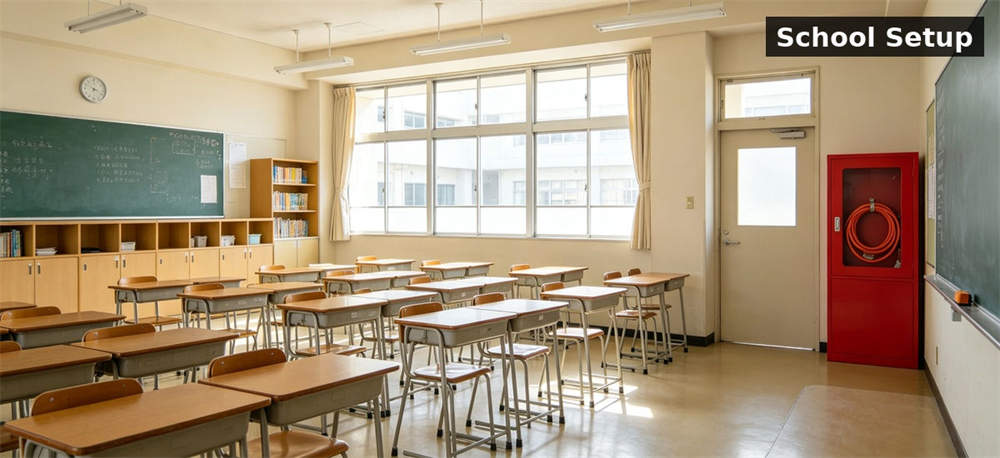
What information do I need for a quotation?
Building height and floor count, number of anchor points needed, occupant count and profile (adults/children/elderly), desired rope length, any custom requirements (logo, language, harness sizing), destination country, and target delivery date. The more detail you provide, the more accurate the quote.
Yes. Standard descent kits and steel-core ropes are typically available for sample evaluation. Samples help you verify quality, test the descent mechanism, and show decision-makers before committing to a bulk order. Contact us with your project details to arrange samples.
Escape ropes are often procured alongside these categories:
Send us your building height, floor count, number of anchor points and occupant profile. We will recommend the right product mix, confirm rope lengths and provide a project quotation.
 |
|
INTERNAL LINK CARD AREA - target page and URL pending
روابط ودية :
حقوق النشر © Custom Disaster - Relief Bedding: Tents, Sleeping Bags, Blankets كل الحقوق محفوظة
الفريق المحترف للخدمة !