التصنيفات
Yes—each component must be confirmed independently through separate sheet duvet pillowcase sizing verification, because each one matches a completely different object. For institutional bedding wholesale buyers looking to buy in bulk with volume pricing and commercial bedding manufacturer and wholesale suppliers offering custom dimensions and bulk order capabilities, sourcing for emergency shelters, hospitals, and dormitories, The sheet matches the mattress (too large = fabric drags on floor and wastes money; too small = cannot cover the mattress).

Duvet cover size vs insert dimensions is the critical matching principle—the cover matches the duvet insert, not the bed frame (wrong size = insert shifts or cannot be loaded). The pillowcase matches the pillow insert, not the bed size (wrong size = seam tears or loose fit).
When procuring institutional bedding for emergency shelters, dormitories, hospitals, or correctional facilities, a single "three-piece set size" label is never enough. The sheet must match the mattress dimensions and depth, the duvet cover must match the insert (not the bed frame), and the pillowcase must match the pillow loft and opening style.
Over 20 years of wholesale bedding manufacturing, we have seen that 60-70% of fit complaints trace back to buyers who confirmed only one dimension for the entire set. This guide explains exactly why each component needs its own size confirmation, how to group sizes across mixed bed types, and how to build a component-level procurement schedule that reduces returns by 20-30%.

|
|
This complete guide to institutional bedding sizes covers wholesale bedding sets for emergency shelters, bedding for emergency shelter cots, and bedding for bunk beds in dormitories. Use as a bedding component sizing guide for procurement.
Free samples within 7 days · 24-hour quotation response · 20+ years of institutional bedding manufacturing experience
Specifically, a three-piece bedding set—sheet, duvet cover, and pillowcase—contains three objects that match three entirely different reference points. Treating them as one size is the most common and most expensive error in commercial bedding and institutional bedding procurement. Each component has its own matching object, its own tolerance range, and its own shrinkage profile. Confirming them separately is not bureaucracy; it is the only way to ensure every piece fits on the first delivery.
Furthermore, the sheet's reference point is the sleeping surface: mattress length, width, and depth. A 90×190cm bed frame can hold a mattress that is 8cm deep (folding bed) or 25cm deep (premium single bed), requiring completely different fitted bottom bottom sheet pocket depths. The bed frame name tells you almost nothing about the bottom bottom sheet size you actually need.
In contrast, the duvet cover encloses the duvet insert, which has its own length, width, and loft. Two facilities with the same bed width may use 150gsm summer inserts or 300gsm winter inserts, requiring different cover dimensions. Deriving a duvet cover size from bed width is a shortcut that fails 100% of the time when insert specifications differ.
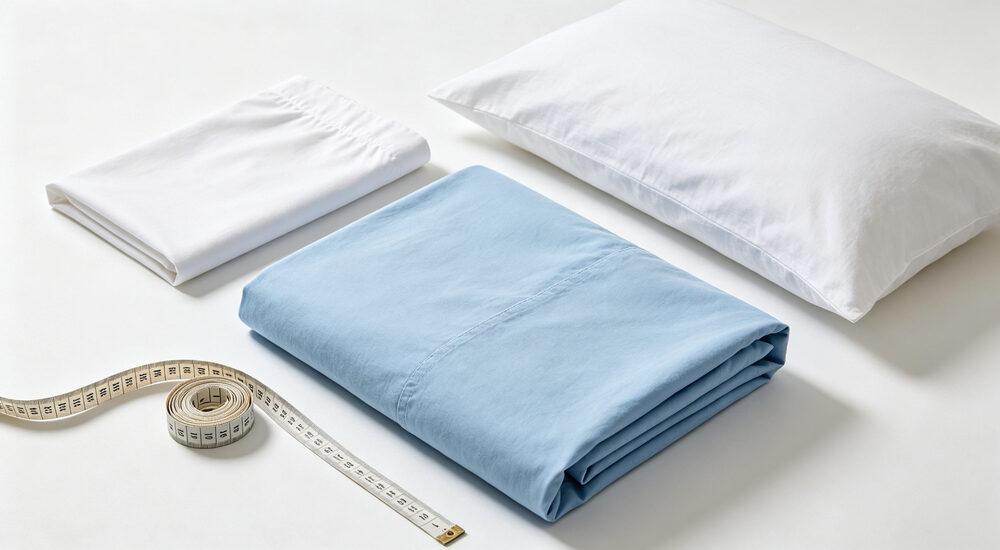
Similarly, pillowcases must account for pillow length, width, depth (loft), and the opening style (envelope, zipper, button). A pillow with the same length and width but 5cm more loft will not fit a standard pillowcase without straining the seams. The opening style also affects required dimensions—zipper openings need less overlap than envelope closures.
Our mattress protector sizing guide recommends measuring mattress depth before ordering. A protector that is too short will pop off corners; one that is too large will bunch and create discomfort. Confirm protector pocket depth alongside fitted sheet pocket depth.
While a three-piece set focuses on sheet, duvet cover, and pillowcase, mattress protectors are a critical fourth component in institutional settings. A waterproof mattress protector extends mattress life by 3-5 years and is essential for hospital bed linen infection control and emergency shelter bedding where spills are common.
Mattress protectors have their own sizing logic—they must match mattress height and have a fitted skirt with elastic. Confirm protector dimensions separately from sheets, as a protector that is too shallow will pop off, and one that is too deep will bunch under the sleeper.
Component-level sizing refers to the practice of specifying, ordering, and tracking each bedding item — sheet, duvet cover, pillowcase — as an independent SKU with its own dimensions, rather than treating a "bedding set" as one undifferentiated unit. This is the standard approach for institutional procurement.
Manufacturers label sets by bed type (single, twin, queen, king) because it is convenient for retail, but these labels are not standardized across markets. A "single" in Europe means 90×190cm; in North America it means 99×190cm; in Australia it means 92×188cm. Even within one market, institutional bedding manufacturers may use different allowances for tucking, shrinkage, and seam construction. The only reliable approach is to specify final product dimensions for each component, in writing, before production.
|
Component |
Must Match |
Key Dimensions |
If Too Large |
If Too Small |
|
Flat Sheet |
Mattress top + side drop |
Length, width, drop allowance |
Fabric touches floor, trip hazard, wasted money |
Insufficient coverage, mattress exposed, cannot tuck |
|
Fitted Sheet |
Mattress length × width × depth |
Length, width, pocket depth, elastic |
Loose corners pop off, bunched fabric, hygiene risk |
Cannot install, elastic tears, corner stress failure |
|
Duvet Cover |
Duvet insert (NOT bed frame) |
Length, width, insert loft, opening |
Insert shifts, cold spots, unkempt appearance |
Insert hard to load, seam strain, zipper failure |
|
Pillowcase |
Pillow insert (NOT bed size) |
Length, width, pillow loft, opening |
Pillow shifts, excess fabric bunches, facial irritation |
Pillow hard to load, opening tears, seam failure |
|
Mattress Protector |
Mattress depth + skirt |
Length, width, fitted skirt depth |
Bunches under sleeper, reduces comfort |
Pops off corners, no protection, mattress damage |

However, flat sheet vs fitted sheet sizing means sheets are the least shareable component in any mixed-bed facility because they must conform to the mattress, which varies more than any other bedding element. Understanding the difference between flat and fitted sheet sizing logic is essential for hospital bed linen standardization and dormitory bedding bulk orders.
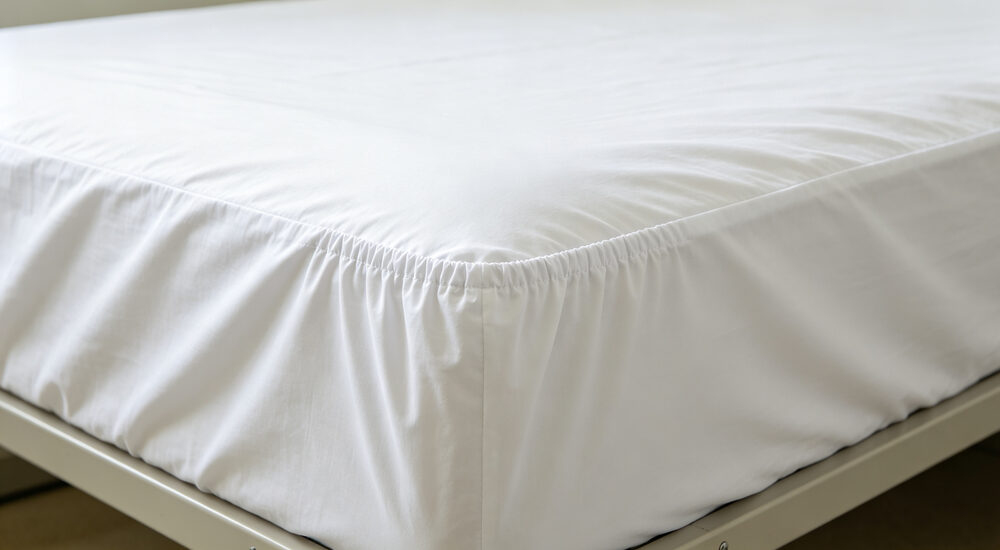
When selecting bedding, how to measure mattress depth for fitted sheets is critical. Measure corner height from base to top. A fitted sheet for 10cm mattress depth needs a 14-15cm pocket; 15cm mattress needs 18-20cm.

Specifically, a flat sheet relies on coverage, drop, and tucking allowance. The width must cover the mattress top plus both side drops, and the length must cover the mattress top plus foot tuck and head overlap. For institutional use, a minimum 20cm side drop and 30cm head/foot tuck is standard. Flat sheets are more forgiving than fitted sheets—extra fabric can be tucked—but too much excess creates tripping hazards near bed rails and increases laundry weight.

Meanwhile, a fitted sheet relies on pocket depth, elastic coverage, and corner construction. The pocket depth must exceed the mattress depth by 3-5cm to allow for mattress compression and shrinkage. Elastic should cover at least 360° around the bottom hem for institutional durability, not just corner elastic. The most common fitted bottom bottom sheet failure is a pocket that is too shallow: the sheet pops off during use, creating discomfort and increasing staff workload.

A flat sheet that is too small lacks coverage and tucking allowance, exposing the mattress and making bed-making difficult. A fitted sheet that is too small may not install at all, or may install under such tension that the elastic tears within weeks. In emergency shelter bedding, where staff time is limited, sheets that pop off corners create unsanitary conditions and increase complaints.
Excess flat sheet fabric can touch the floor, bunch under the sleeper, or approach bed rails and passageways, creating trip hazards. Oversized fitted sheets have loose corners that pop off during use and excess fabric that wrinkles. In correctional facility bedding, loose fabric is both a hygiene and security concern. Oversized sheets also increase laundry costs by 10-15% due to extra weight and drying time.
|
Sheet Type |
90×190cm Single (15cm mattress) |
Upper Bunk (12cm mattress) |
Folding Bed (8cm mattress) |
|
Flat Sheet (finished) |
180×260cm |
170×250cm |
160×240cm |
|
Fitted Sheet (finished) |
90×190×25cm pocket |
90×190×20cm pocket |
80×190×15cm pocket |
|
Key Risk |
Standard fit |
Shallow pocket, rail obstruction |
Very shallow pocket, hinge clearance |
Notably, a bedding size chart for institutional use must account for folding beds, bunk beds, and medical beds that do not appear in retail charts. Always request factory-toleranced dimensions, not consumer-grade approximations.
European standard single beds are typically 90x200cm; US Twin is 99x190cm; UK Single is 90x190cm. These 10cm length differences mean a sheet made for EU beds will be too long for US/UK beds. Always confirm the regional standard your facility follows before ordering.
In a single facility, mattress depths can range from 5cm (folding cots) to 25cm (premium single beds). Grouping beds by mattress depth (within 5cm) is the only way to minimize fitted bottom bottom sheet SKUs. A facility with 500 beds across 4 depth groups needs 4 fitted sheet sizes, not 1. Attempting to use one "universal" fitted sheet results in either shallow-mattress beds having loose, bunched fabric or deep-mattress beds having sheets that pop off.

Consequently, duvet covers are the most shareable component because they match the insert, which is often standardized across bed types in institutional settings. However, this shareability depends entirely on confirming the insert dimensions separately from the bed dimensions.
A duvet cover encloses the duvet insert, not the bed frame. The same 90cm wide bed can use a 135×200cm insert (single duvet), a 150×200cm insert (generous single), or a 200×200cm insert (double duvet for cold climates). The bed width tells you nothing about which insert the facility has chosen. Conversely, a 120cm bed and a 90cm bed can use the same 135×200cm insert, meaning they can share duvet covers even though they cannot share sheets.

For example, two inserts with the same length and width can have different loft (thickness), which changes how easily they load into a cover and how the cover fits after closure. A 150gsm summer insert (2cm loft) loads easily into a cover with minimal extra space. A 300gsm winter insert (6cm loft) requires a cover with 2-3cm extra in each dimension to avoid seam strain. Institutional bedding manufacturers should ask for insert GSM and loft, not just length and width.

The insert becomes difficult to load, corners compress, and the opening or seams carry extra tension that leads to tearing. In hospital bedding, where staff must change covers quickly under infection control protocols, a too-small cover increases changeover time by 30-40%. Zipper failures are the most common complaint when covers are undersized for high-loft inserts.
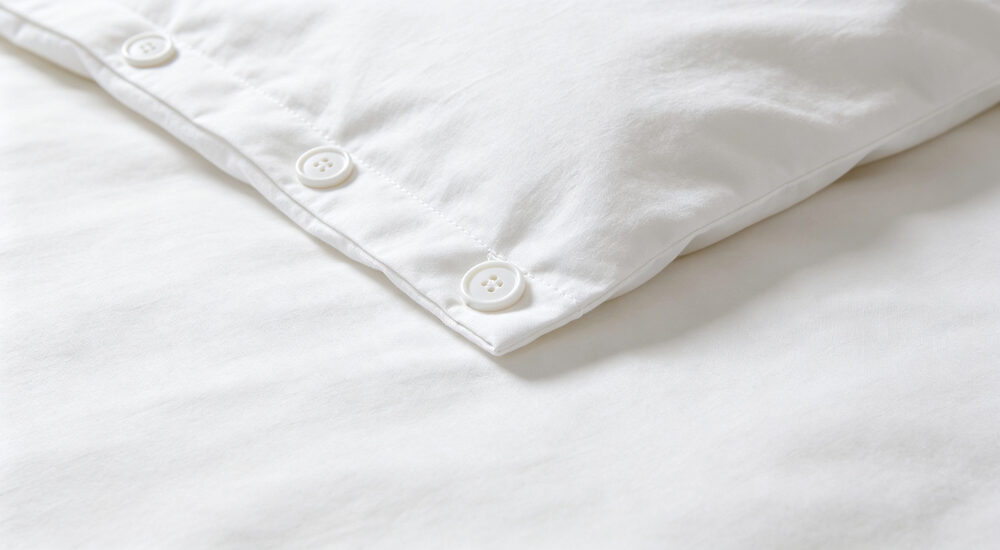
The insert shifts inside, collects on one side, or loses corner position, creating cold spots and an unkempt appearance. A correctly sized cover should hold the insert in place with minimal movement. Oversized covers also increase fabric cost unnecessarily and add weight to laundry cycles.
Facilities that change inserts by season (summer 150gsm vs winter 300gsm) must account for loft variation in duvet cover sizing. A cover designed for a 2cm-loft summer insert may be too tight for a 6cm-loft winter insert.
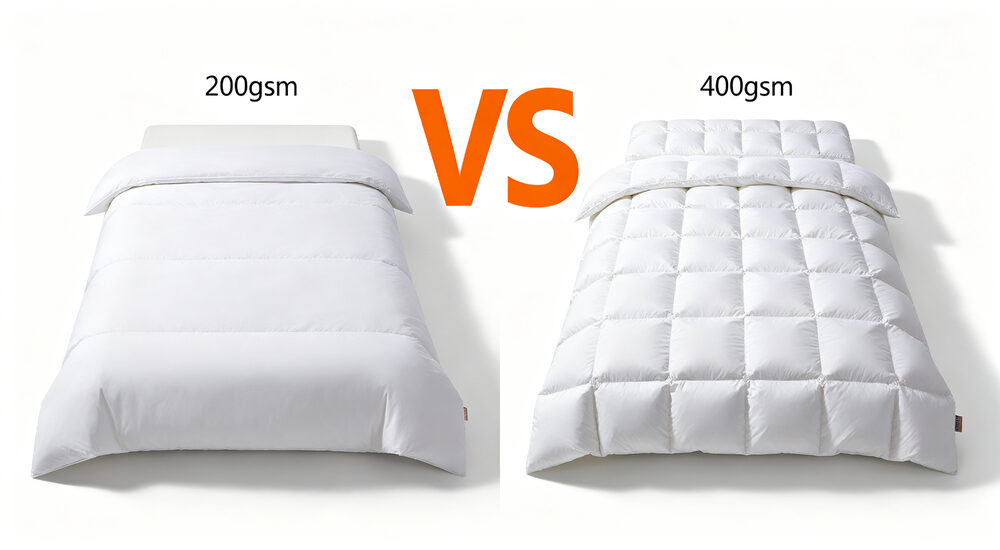
The solution is to size the cover for the thickest insert used year-round, or to order two duvet cover SKUs if the loft difference exceeds 4cm. Institutional bedding for shelters often uses a single year-round insert to avoid this complexity, but hospitals and universities may require seasonal changes.
A duvet cover for 200gsm insert (summer) needs 2-3cm ease; a duvet cover for 400gsm winter insert needs 3-5cm ease. This summer vs winter distinction matters for fit and durability.
For zipper-style duvet covers, confirm zipper quality (YKK or equivalent) and zipper length (typically 60-80cm). Poor-quality zippers are the #1 cause of duvet cover returns in institutional settings.
Zipper openings require less overlap than envelope closures. Button closures need button placket allowance. Tie closures (common in budget institutional bedding) need the most extra fabric for tie placement. When comparing quotations, always confirm the opening style alongside dimensions—a "135×200cm duvet cover" with a zipper is not the same usable size as one with an envelope closure.
Pillowcase opening type comparison reveals that pillowcases are often treated as "one size fits all," but this is another area where institutional buyers lose money. Pillow dimensions, loft, and opening style all affect fit, and mixing pillow types within one facility is common.
A pillowcase must match pillow length, width, and depth, and must account for the opening style. Standard institutional pillows are typically 50×75cm, but hospital pillows may be 45×70cm (infection control), dormitory pillows may be 50×80cm (student preference), and emergency shelter pillows may be 40×60cm (compact, easy to store). Assuming one pillowcase size fits all is a mistake that leads to either strained seams or excess fabric.
Pillows with the same length and width can have very different loft depending on fill material (polyester fiber, memory foam, feather). A high-loft pillow needs a pillowcase with extra depth allowance, just like a high-loft duvet insert. Memory foam pillows, in particular, are denser and require more loading space than fiber pillows of the same dimensions.
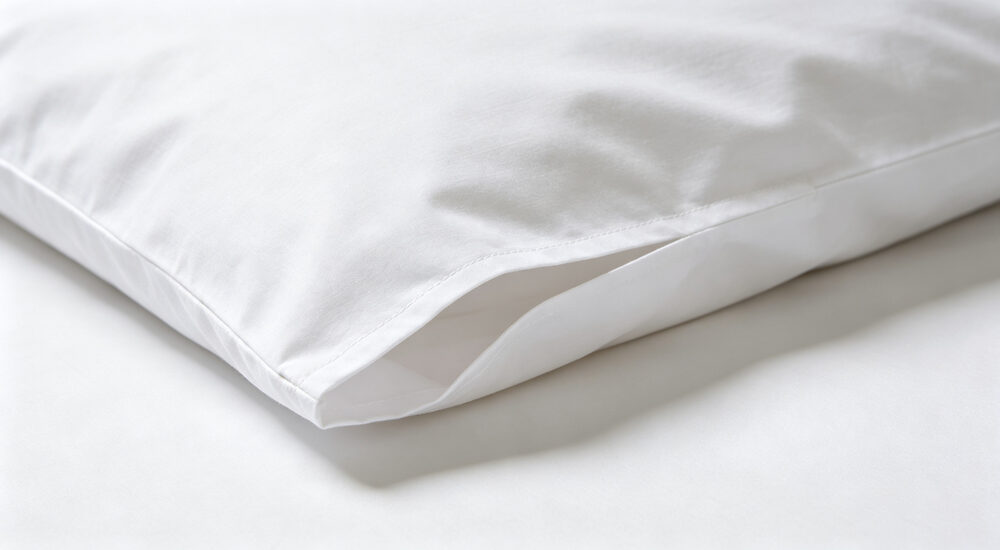
The pillow is difficult to load, the opening turns inside out, and zippers or seams carry extra tension. In high-turnover environments like university housing, pillowcases that are too small tear at the seams within the first semester. Envelope closures are especially vulnerable when the pillow is too large for the case.
The pillow shifts inside, excess fabric bunches, and an envelope opening may not cover the pillow end correctly. Oversized pillowcases look unkempt and can irritate sleepers' faces. In hospitality bedding, oversized pillowcases are a visible quality issue that affects guest perception.
Different facility types use different pillow standards. Hospital bed linen often uses 45×70cm pillows with waterproof covers for infection control. University housing may use 50×80cm pillows with higher loft for student comfort. Emergency shelter bedding typically uses compact 40×60cm pillows that are easy to store and distribute. Correctional facility bedding uses tear-resistant 45×70cm pillows with no removable covers. Each pillow type requires a different pillowcase dimension, opening, and fabric weight.
A pillowcase for 45x70cm pillow needs 47x72cm finished; a pillowcase for 50x75cm standard pillow needs 52x77cm. Measure at fullest point, not seam.

|
Opening Style |
Extra Length Needed |
Best For |
Institutional Durability |
|
Envelope |
15-20cm overlap |
Budget, low-turnover |
Medium (flap wears) |
|
Zipper |
2-3cm (zipper placket) |
Hospital, high-turnover |
High (zipper may fail) |
|
Button |
5-8cm (placket) |
Hospitality, premium |
Medium-High |
|
Tie |
10-15cm (ties) |
Budget emergency |
Low (ties tear) |

One of the most misunderstood concepts in wholesale bedding procurement is the institutional bedding size tolerance and the difference between cut size, finished size, and post-care size. Confirming the wrong one leads to fit failures even when "the dimensions were correct on paper."
Cut size is the fabric dimension before sewing. It includes seam allowances, hems, elastic casings, and shrinkage allowance. A cut size of 195×295cm for a flat sheet may result in a finished size of 180×275cm after hems and seams. Buyers should never specify cut size—always specify finished dimensions.
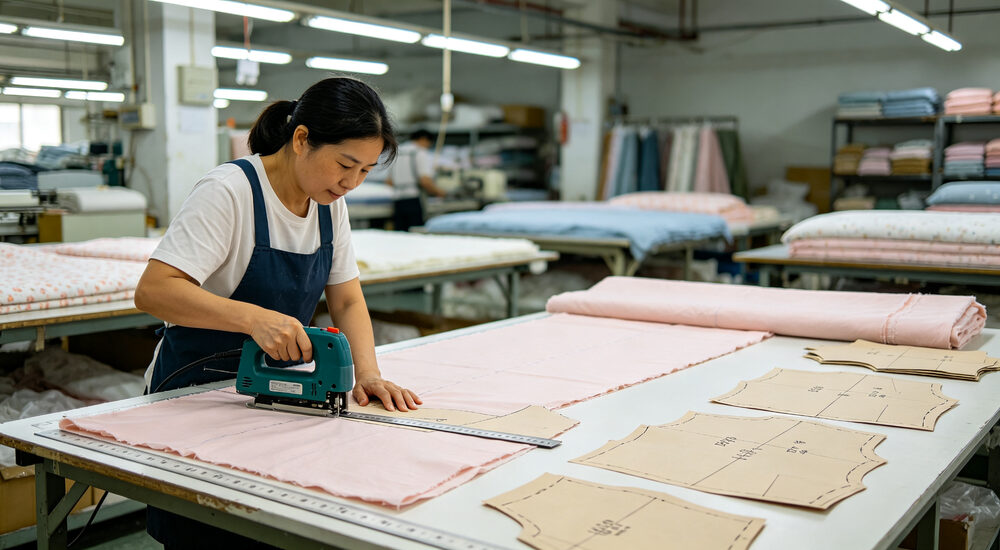
Finished dimensions are the measurements of the product after manufacturing, before any washing. This is what you should confirm with the supplier and what should be printed on packaging. Finished dimensions are the baseline for fit testing—if the finished sheet is 180×275cm and your mattress needs 175×270cm, you have a 5cm safety margin before shrinkage.
Cotton and polycotton fabrics shrink after commercial washing. A 100% cotton sheet can shrink 3-5% in length and width after 10 commercial laundry cycles, while a 50/50 polycotton blend shrinks 1-2%. The post-care size is what actually fits the bed in real use. Always ask the supplier for shrinkage data and confirm that the post-care dimensions still meet your requirements.
Critical rule: Specify finished dimensions, require shrinkage data, and verify that post-care dimensions still exceed your minimum required size. A sheet that fits on delivery but shrinks 5cm after washing is a failure.
Post wash shrinkage bedding data is critical for long-term fit. Poly-cotton (65/35) typically shrinks 1-2%; 100% cotton can shrink 3-5% if not pre-shrunk. Always ask for post-wash dimensions, not just cut or finished dimensions.
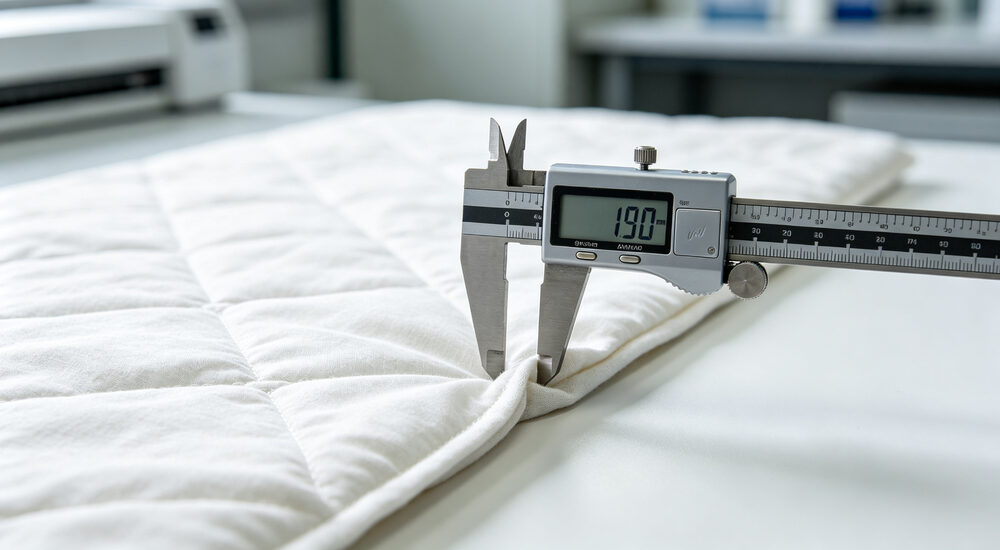
Common weave type options include plain weave (durable, cost-effective), twill (soft, wrinkle-resistant), and sateen (smooth, premium). Key performance metrics include color fastness (Grade 4+), tear strength (≥25N), pilling resistance (Grade 3+), and seam strength (≥120N). Sanforized (pre-shrunk) fabric reduces post-wash shrinkage rate to under 2%.
Different materials shrink at different rates and in different directions. 100% cotton shrinks 3-5% in both length and width, with more shrinkage in the warp direction. 50/50 polycotton shrinks 1-2% uniformly.
100% polyester microfiber shrinks under 1%. Blends with rayon or viscose can shrink 5-8% and should be pre-washed before cutting. Always ask the supplier for material-specific shrinkage data, not a generic "3% shrinkage" estimate. A 5% shrinkage on a 270cm sheet is 13.5cm—enough to turn a well-fitting sheet into one that does not cover the mattress.
The tolerance standard bedding dimensions for institutional orders is ±2cm per component. Tighter tolerances (±1cm) are available for medical facilities but may increase unit cost by 5-8%.
A clear bedding tolerance standard should follow the product type, finished dimensions, material, and agreed requirement. Standard institutional tolerance is ±2% for flat items and ±3% for fitted items with elastic. Always measure tolerance at the finished product stage, before any washing. Always write tolerance into the purchase order—without it, a supplier may deliver sheets that are 5cm smaller than specified and claim it is "within industry standard."
Material, construction, finishing, and care conditions all change finished performance. A pre-care fit does not guarantee a post-care fit. We recommend washing 3 samples per SKU for 10 commercial cycles and remeasuring before approving bulk production. This single step prevents 80% of post-delivery fit complaints.

Notably, few institutional facilities have only one bed type. Most have a mix of fixed singles, bunk beds, folding cots, and sometimes hospital beds. The key to cost-effective mixed bed style bedding procurement is grouping components separately—sheets by mattress depth, duvet covers by insert size, pillowcases by pillow type.
Facility types vary widely in their bedding dimension requirements. Refugee camp bedding typically uses compact folding cots with 5-8cm mattresses and standardized inserts, while homeless shelter bedding may mix folding cots with donated mattresses of varying depths. Military barracks bedding uses metal bunk beds with standardized 10-12cm mattresses and prioritizes durability over softness. Each facility type requires a separate dimension audit before ordering, even if they all use "single bed" labels.
Healthcare facilities require hospital bed linen with infection control standards, often using waterproof mattress protectors and 45×70cm pillows. School gymnasiums converted to emergency shelters use folding cots with compact 5-8cm mattresses, requiring shallow-pocket fitted sheets. Community centers serving as temporary shelters may mix folding cots with donated mattresses of varying depths, making a component-level dimension audit essential before ordering.
In a mixed bed configuration bedding environment, group components by actual mattress dimensions, not by room type. A 90x200cm folding bed and a 90x200cm standard bed can share the same sheet group even if they are in different buildings.

Unlike bed-type sharing analysis (which asks whether one set fits multiple bed frames), component grouping asks which components can share the same SKU across different mattress/insert/pillow sizes. Sheets group by mattress depth, duvet covers group by insert dimensions, and pillowcases group by pillow dimensions—independently.
A facility with 3 mattress depths, 2 insert sizes, and 2 pillow sizes needs 3×2×2=12 component SKUs, not 12 complete sets. This component-level approach reduces total SKU count by 30-40% compared to ordering complete sets for every combination.
Group beds by sleeping surface dimensions, mattress depth (within 5cm), corner access, and fitting clearance. Only bed types with the same mattress depth and corner access can share a fitted sheet. A typical facility might form 2-3 bottom bottom sheet groups: deep-mattress singles (15-25cm), shallow-mattress bunks (10-15cm), and folding cots (5-10cm). Flat sheets can sometimes be shared across adjacent groups if the drop difference is under 5cm.
Duvet covers can remain common when different beds use the same insert size, material, opening style, and care protocol. This is the easiest component to standardize. If your facility uses the same 135×200cm, 200gsm insert across singles, bunks, and folding beds, you need only one duvet cover SKU. This standardization is where most facilities achieve significant cost savings—standardize the insert first, then the cover follows.
Pillowcases can be shared across bed types when pillow dimensions, loft, opening style, material, and use intensity are identical. If your facility uses one standard pillow type, one pillowcase SKU suffices. If you have different pillows for hospital wings vs. Dormitory wings, you need separate SKUs. Pillowcases are the second-easiest component to standardize after duvet covers.
|
Component |
Shareable Across Bed Types? |
Condition for Sharing |
Typical SKUs in Mixed Facility |
|
Fitted Sheet |
Rarely |
Same mattress depth ±5cm, same corner access |
2-4 |
|
Flat Sheet |
Sometimes |
Drop difference under 5cm |
1-2 |
|
Duvet Cover |
Usually |
Same insert size, loft, opening |
1 |
|
Pillowcase |
Usually |
Same pillow size, loft, opening |
1-2 |
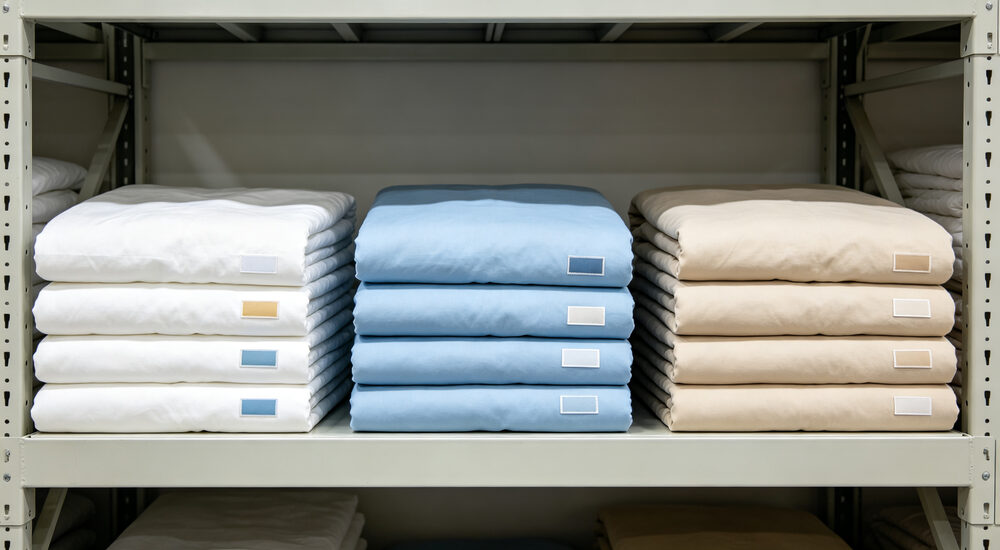
Color coding bedding components by bed type prevents staff from placing a single-bed sheet on a bunk bed. Use white for standard, blue for medical, beige for refugee shelters — never rely on size labels alone.
Color coding is the most effective way to prevent distribution errors in mixed-bed facilities. Assign one color per sheet group: sky blue for deep-mattress singles, white for bunk beds, beige for folding cots.
Duvet covers and pillowcases can remain white if standardized, but the bottom sheet color immediately tells staff which bed it belongs to. Color coding should be reflected in the component SKU naming, carton labels, and warehouse bin locations. Facilities that implement visual color coding report 20-30% fewer distribution errors and less wasted bedding.
Component-level sizing applies across disaster relief field hospitals, temporary housing in gymnasium shelters, university dormitory and school dormitory bunk beds, nursing home adjustable beds, and even prison metal-frame beds. Each scenario has unique mattress dimensions that a one-size-fits-all approach cannot accommodate.
Consider a facility with 200 fixed singles (20cm mattress), 200 bunk beds (12cm mattress), and 100 folding cots (8cm mattress), all using the same 135×200cm insert and 50×75cm pillow. The component schedule would be:
Total: 7 component SKUs instead of 3 "set" SKUs. This reduces inventory complexity and allows replenishment of only the components that wear out fastest (typically fitted sheets, which tear 2-3x faster than duvet covers).
Therefore, sample testing is where dimension confirmation becomes real. A supplier can provide a dimension sheet, but only a physical sample test confirms that the dimensions translate to actual fit on your beds.
Follow this sample testing protocol bedding checklist:
(1) measure before washing,
(2) wash at 60°C,
(3) tumble dry medium,
(4) measure after 1 cycle,
(5) measure after 5 cycles,
(6) compare against approved tolerances.

Test components in this order:
(1) Fit the sheet on the actual bed, checking corner grip and excess fabric.
(2) Load the duvet insert, check opening operation and corner position.
(3) Load the pillow, check opening closure and loft accommodation.
(4) Make the full bed and assess appearance.
(5) Fold the folding bed with bedding installed (if applicable) to check clearance. Testing in this order isolates which component fails, rather than blaming "the set."

Use a fixed flat surface, closed edge-to-edge measurement, and record the sample condition (washed/unwashed, temperature). Number each sample and record measurements in a standardized template. Measure length and width at three points (top, middle, bottom) and record the average, not just one point. Inconsistent measurement methods between buyer and supplier are the #1 cause of dimension disputes.
When comparing samples from multiple suppliers, test all samples under identical conditions: same bed, same insert, same pillow, same laundry cycle. Do not compare a premium sample from one supplier with an economy sample from another—match fabric weight, material blend, and construction first. A fair comparison requires that the only variable is the manufacturer, not the product specification.
Every sample test should produce a written record that includes: component name and SKU, finished dimensions before washing, dimensions after 10 washes, shrinkage percentage, fit assessment (pass/fail with notes), opening operation rating, and overall recommendation. This documentation becomes the baseline for future reorders and supplier evaluations.
Without written records, institutional memory fades when staff turn over, and the same dimension mistakes are repeated. We recommend storing sample records in a shared spreadsheet linked to the component schedule, with photos of each fitted component on the actual bed.

Sample testing typically takes 2-3 weeks per supplier, including shipping, fitting, and laundry cycles. Sample costs range from $30-80 per component set, usually refundable against bulk orders. For a facility with 7 component SKUs, budget $210-560 for samples from one supplier. Testing two suppliers doubles this cost but reduces the risk of selecting a manufacturer whose dimensions do not hold up after washing.

Subsequently, once dimensions are confirmed and samples are approved, bulk bedding component ordering, packing, and replenishment process must maintain component-level records. A single "three-piece set" order code creates confusion when only one component needs replenishment.
Yes, but components, dimensions, colors, and quantities must be grouped separately, with matching unit and carton labels. A mixed-size order is standard for institutional bedding suppliers—they are accustomed to producing multiple SKUs in one production run. The key is to provide a component-level schedule that lists each SKU's dimensions, material, color, and quantity, not just "500 single sets."
A single three-piece label cannot distinguish different sheet, duvet-cover, and pillowcase combinations. If your facility has 3 fitted sheet SKUs, each carton must clearly label which SKU it contains. We recommend printing the component name, finished dimensions, and bed group on every carton and every individual bundle. This prevents warehouse staff from distributing the wrong sheet to the wrong bed type—a mistake that causes 30% of fit complaints in mixed facilities.

Component level replenishment lets you reorder pillowcases every 6 months while duvet covers last 18-24 months. This reduces waste by 30-40% compared to replacing entire sets.
A project may need only sheets or only pillowcases during replenishment. Fitted sheets typically wear out 2-3x faster than duvet covers due to elastic fatigue and corner stress. Component-level dimension records allow you to reorder the correct bed-group sheet without changing duvet covers or pillowcases. Without these records, buyers often reorder entire sets, wasting 40-60% of the replenishment budget on components that were still in good condition.
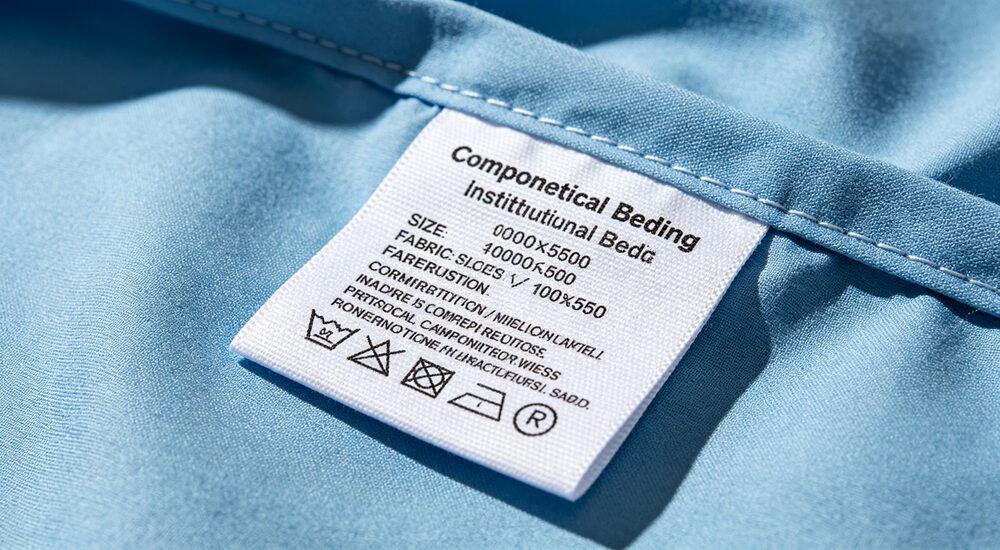
Component-level records also enable proper first-in-first-out (FIFO) inventory rotation. Each component SKU should have its own bin location and rotation schedule. White cotton items yellow after 12+ months of storage, so FIFO is critical for emergency shelter bedding that may be stored for surge capacity. Color-coded labels by production month make FIFO visual and error-proof.
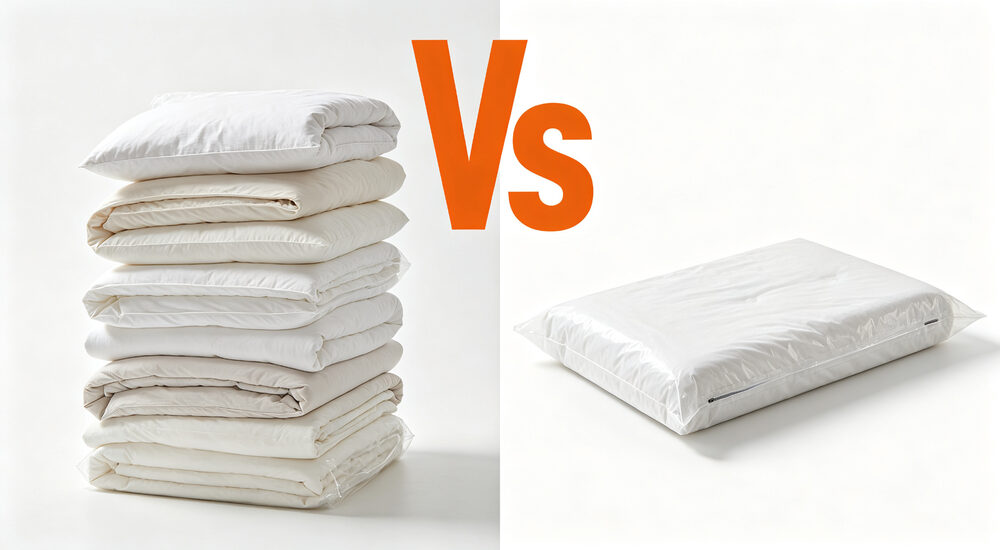
For large facilities, component-level ordering enables cross-docking: sheets ship directly to laundry facilities, duvet covers to central storage, pillowcases to distribution centers. This reduces handling by 25% compared to receiving pre-bundled sets and breaking them down. Just-in-time delivery for high-wear components (fitted sheets) reduces inventory holding costs while ensuring stock availability.
Moreover, comparing quotations from different wholesale bedding suppliers is impossible unless every component dimension is aligned. A lower-priced quote may use smaller sheets, different duvet cover sizes, or cheaper opening styles.
Furthermore, a component level bedding quote lists each item separately, so you see exactly what you pay for. This transparency prevents hidden markups and lets you adjust quantities per component without renegotiating the entire order.

One quotation may include a smaller sheet or different duvet cover size. Price becomes comparable only when bottom bottom sheet dimensions, duvet cover dimensions, pillowcase dimensions, opening styles, fabric weight, and material blend are identical across all quotes. A $2 difference per set that comes from a 5cm smaller sheet is not a savings—it is a different product.
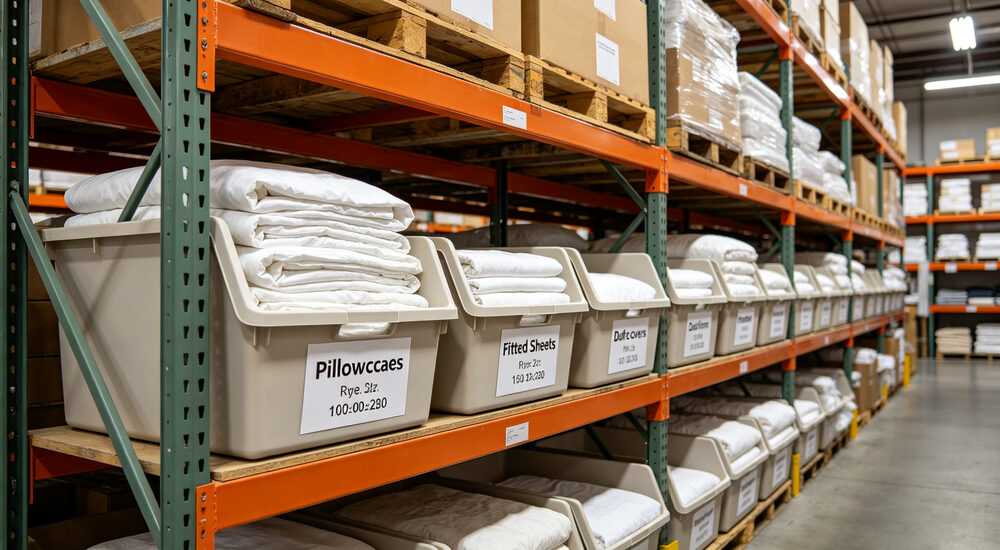
Two three-piece quotations may differ because of: bottom bottom sheet allowance (180×270 vs 170×260), duvet cover size (135×200 vs 140×205), pillowcase opening (zipper vs envelope), fabric weight (120gsm vs 150gsm), or material blend (50/50 vs 100% cotton). Each of these variables affects price by 5-15%. By listing dimensions separately, you can see exactly where the price difference comes from and decide whether the cheaper option meets your requirements.
|
Variable |
Option A |
Option B |
Price Impact |
|
Flat sheet size |
180×270cm |
170×260cm |
-8% (B) |
|
Duvet cover opening |
Zipper |
Envelope |
-5% (B) |
|
Fabric weight |
150gsm |
120gsm |
-12% (B) |
|
Material blend |
100% cotton |
50/50 polycotton |
-15% (B) |
|
Fitted sheet pocket |
25cm |
20cm |
-3% (B) |
Certain patterns in supplier quotations indicate potential dimension problems:
(1) refusal to provide finished dimensions, only "set size" labels;
(2) no shrinkage data or generic "3% shrinkage" without material specification;
(3) tolerance not stated or "industry standard" without definition;
(4) pricing per set without component-level breakdown;
(5) no sample policy or non-refundable sample fees.
Any of these red flags should prompt a follow-up question before considering the quote. A supplier that cannot answer dimension questions in writing will likely deliver products that do not match your requirements.
Reputable institutional bedding manufacturers hold certifications such as OEKO-TEX Standard 100 (textile safety), ISO 9001 (quality management), and GRS (Global Recycled Standard for sustainable fabrics). Based on our 20+ years of experience, facilities that require certification documentation before ordering reduce quality disputes by 40%. Always ask for certificate copies and verify expiry dates, as expired certifications are a common red flag in low-cost quotations.
Every bulk order passes a 3-stage quality control inspection:
(1) in-line inspection during sewing,
(2) post-wash dimensional verification,
(3) pre-shipment AQL 2.5 sampling. Inspection reports are available upon request.
A reputable institutional bedding manufacturer should return: per-SKU pricing with MOQ tiers, final measurements with tolerance, construction details (stitch density, elastic coverage, opening type), fabric specifications (weight, blend, certifications), shrinkage data after 10 commercial washes, sample availability and lead time, production capacity, and spare parts policy (extra buttons, zipper sliders). Suppliers that decline to share per-component dimensions should be approached with caution.
We offer volume discount tiers with clear price break points at 1K, 5K, and 10K pieces. OEM customization and private label services are available. Factory audit reports (BSCI, SEDEX) and trade assurance protect your order. Standard payment terms are 30% deposit / 70% before shipment, and shipping cost is quoted separately per destination.
The cheapest per-set price is rarely the cheapest over a 3-year lifecycle. Consider: replacement frequency (cheaper elastic fails faster), laundry cost (heavier fabric costs more to wash), staff time (hard-to-load covers increase labor), and waste (wrong-size components are discarded). A component-level dimension schedule lets you calculate total cost of ownership, not just unit price. Facilities that switch from "cheapest set" to "best TCO" typically save 15-25% over 3 years.
Send your mattress, insert, and pillow dimensions for a precise component-level quotation within 24 hours.

Based on 20+ years of manufacturing experience, of commercial bedding manufacturing, we have seen the same size mistakes repeated across emergency shelters, universities, hospitals, and correctional facilities. Here are the most common ones and how to prevent them.
This is the #1 mistake. Buyers assume a "single bed" needs a "single duvet cover" without checking the insert dimensions. The fix: always request insert length, width, and GSM from the facility, then specify duvet cover dimensions based on the insert, not the bed.

Two "single beds" in the same facility can have 8cm and 22cm mattresses. The fix: conduct a mattress depth audit before ordering, group beds by depth (±5cm), and order fitted sheets per group.

A sheet that fits on delivery may shrink 3-5% after 10 washes. The fix: wash 3 samples per SKU for 10 cycles and remeasure before approving bulk. This single step prevents 80% of fit complaints.
Folding beds with bedding installed must fold without binding or excessive bulk. The fix: include a fold-test in the sample check, and specify maximum bedding thickness for folding bed SKUs.
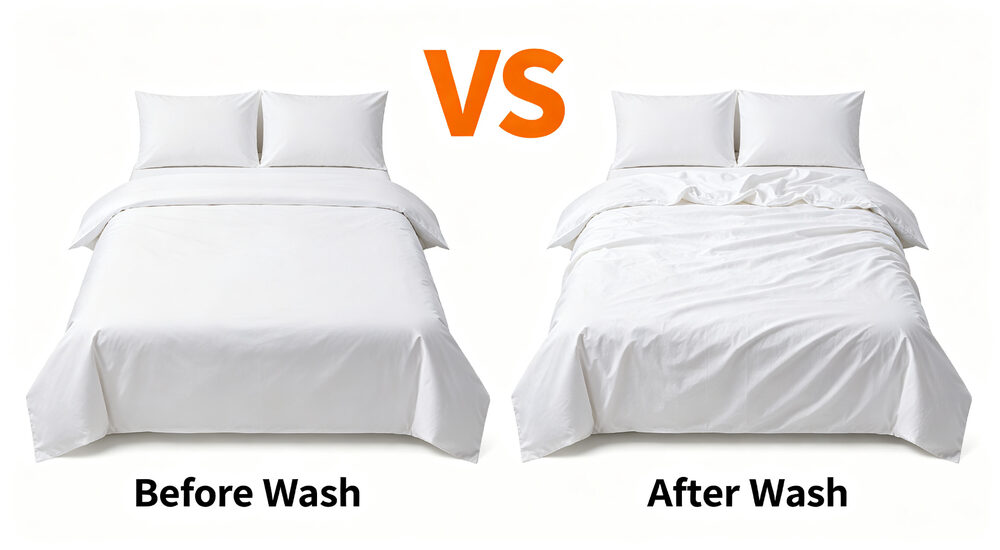
Without visual labels, correct sheets get distributed to wrong beds and are wasted. The fix: implement color coding by bed group from day one, and print component dimensions on every carton and bundle.
Fitted sheets wear out faster but are ordered at the same MOQ as duvet covers, leading to overstock of covers and stockouts of sheets. The fix: set MOQ per component based on wear rate, not per set.
Bottom line: Every size mistake traces back to treating a three-piece set as one dimension. Confirm each component separately, test each component separately, and reorder each component separately.

Zippers fail, buttons break, and elastic fatigues—especially in high-turnover institutional environments. Ordering 5% spare closure components (zipper sliders, buttons, elastic) with every bulk order ensures that maintenance staff can repair bedding on site rather than discarding entire sets. Facilities that ignore spare parts typically discard 10-15% of bedding prematurely due to minor, repairable failures. Component-level dimension records make it easy to reorder matching spare parts, because each component's construction details are documented separately.
Retail bedding size charts (twin, full, queen) are designed for consumer mattresses 20-30cm deep with decorative drops. Institutional mattresses are typically 8-15cm deep with no box spring, and require functional rather than decorative drops. Applying retail dimensions to institutional beds results in sheets that are 20-30cm too long and 10-15cm too wide, creating tripping hazards and laundry waste. Always use institutional-specific dimensions, not retail charts.

Different fabric weights and constructions have different commercial wash count lifespans: 120gsm polycotton lasts 50-80 washes, 150gsm cotton lasts 80-120 washes, 180gsm cotton lasts 120-180 washes. Ignoring wash count limits leads to either premature failure (thinner fabric) or overpaying (heavier fabric than needed). Specify the expected wash count based on your facility's laundry frequency, and select fabric weight accordingly. A shelter washing bedding weekly needs 150gsm minimum; a dormitory washing monthly can use 120gsm.
Key takeaway: A "single bed set" label describes the bed type, not the dimensions of three independent components. Always request final product dimensions for each component separately.
Use this checklist before every bedding order to catch sizing errors before they become costly returns:
Based on 20+ years of industry experience, facilities that use this checklist report 20-30% fewer sizing-related returns and 15-25% lower total bedding cost over 12 months.
The final output of a proper dimension confirmation process is a component-level schedule that serves as the purchase order, the packing specification, and the replenishment record. Here is what belongs in it.
List for each component: matching object (mattress/insert/pillow), quantity per set, finished dimensions (length×width×depth where applicable), material, construction, color, sample identity, tolerance, shrinkage allowance, and unit price. The schedule should be a standalone document that any supplier can quote from without asking follow-up questions.

A consistent naming convention prevents errors in ordering, packing, and replenishment. We recommend: [Component Type]-[Key Dimension]-[Color]-[Opening]. Examples: FS-20-SKY (Fitted Sheet, 20cm pocket, Sky Blue), DC-135-ZIP-WHT (Duvet Cover, 135×200cm, Zipper, White), PC-50-ENV-BGE (PillowCase, 50×75cm, Envelope, Beige). This convention lets any staff member identify the component and its key specification at a glance, without referencing a separate lookup table. The naming convention should be printed on every carton, bundle label, and inventory bin.
Give the sheet, duvet cover, and pillowcase separate names or line numbers. Keep the matching bed group, insert type, and pillow type in the component name. For example: "FS-20-SKY" = Fitted Sheet, 20cm pocket, Sky Blue. "DC-135-ZIP-WHT" = Duvet Cover, 135×200cm, Zipper, White. This naming convention makes warehouse distribution and replenishment error-proof.
The buyer should have: three matching objects (sheet, duvet cover, pillowcase), three sets of finished dimensions, three sample test results, three shrinkage profiles, and one integrated component schedule. This documentation package reduces future procurement errors by 70% and makes supplier comparison objective rather than subjective.
The final record states, for each component: the matching object, finished dimension, construction detail, sample result (pass/fail with measurements), and unit price. It also states the post-care dimension and whether it still meets the minimum requirement. This record becomes the baseline for all future reorders and supplier evaluations.
The complete process is:
(1) audit bed and insert dimensions,
(2) form component groups,
(3) request component-specific quotes,
(4) order samples per SKU,
(5) fit-test and wash-test,
(6) finalize component schedule,
(7) place bulk order with component-level packing. Skipping any step increases the risk of fit failure and waste.
In summary, the most cost-effective strategy for institutional bedding procurement is to confirm each component dimension separately, test each component separately, and reorder each component separately. In conclusion, a single "three-piece set size" label is never sufficient for mixed-bed facilities. Component-level dimension confirmation reduces returns by 20-30%, lowers total cost of ownership by 15-25%, and ensures every piece fits on first delivery.
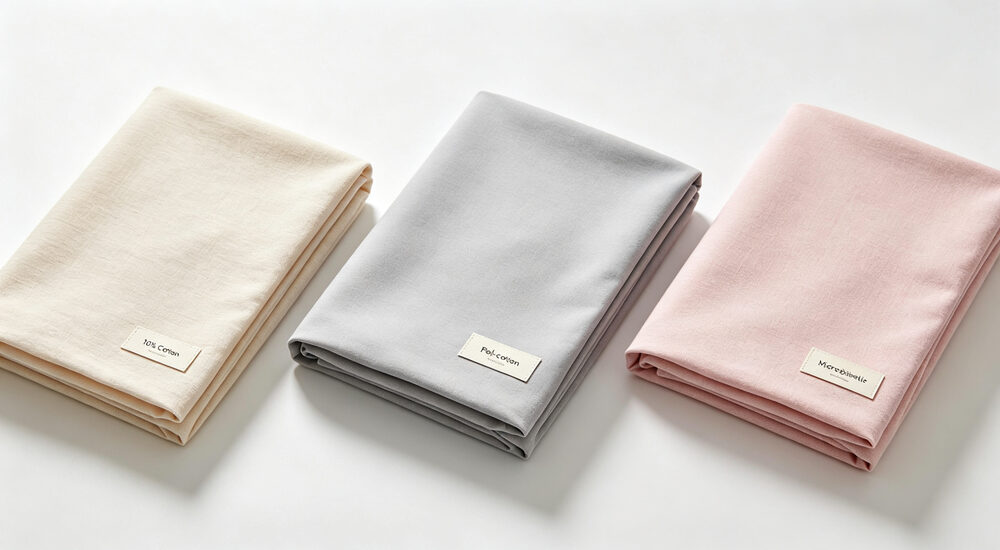
With over 20 years in custom bedding manufacturing, we supply bulk bedding and hotel bedding to institutional buyers worldwide. As a bulk institutional bedding supplier and custom size bedding manufacturer, private label bedding supplier, and institutional bedding factory direct source, with 20+ years of institutional bedding manufacturing experience, we understand that emergency shelters, hospitals, and dormitories cannot afford sizing mistakes.

Every component is manufactured to your confirmed dimensions, tested on matching objects during sample approval, and labeled for traceability. Our facilities hold OEKO-TEX Standard 100, ISO 9001, and GRS certifications, with monthly production capacity of 50,000+ bedding sets and minimum order quantity (MOQ) as low as 500 pieces per item, with standard production time of 25-35 days.
Component-level pricing · Free sample testing · Custom dimensions and private labeling available
Related Reading:
Q: Is bed width alone enough to order a three-piece set?
A: No. Bed width describes only one direction. You need mattress depth for fitted sheets, insert dimensions for duvet covers, and pillow dimensions for pillowcases.
A: No if mattress depths vary. A 15cm mattress needs a deeper pocket than an 8cm mattress. Measure each mattress type separately.
A: Duvet covers match the insert, not the bed frame. A 200x200cm bed may use a 220x240cm insert.
A: Cotton 5-8%, polycotton 2-4%, polyester under 1%. Confirm via sample wash testing.
A: ±2% of finished dimensions, measured post-wash. Specify in your purchase order.

A: Yes if inserts are the same size. Duvet covers are the most shareable component.
A: One per component group (sheet group, duvet group, pillow group). Test each on its matching object.
A: Enables FIFO rotation, lifecycle tracking, and prevents cross-contamination between facility zones.
A: Using retail size charts for institutional mattresses (retail 20-30cm deep vs institutional 8-15cm).
A: Compare per-SKU pricing with MOQ tiers, finished dimensions, fabric specs, shrinkage data, and lead time.

A: Components. Fitted sheets wear 2-3x faster than duvet covers. Reordering sets wastes 40-60% budget.
A: Per-SKU pricing, finished dimensions with tolerance, construction details, fabric specs, shrinkage data, sample lead time.
A: 500 pieces per item. Component-level MOQ reduces initial inventory by 25-35% vs set-based ordering.
A: $30-80 per set, 7-10 day production. Refundable on orders over 2,000 sets.
A: Yes. Custom sizes, colors, and woven labels. 3-5 days extra, 1,000-piece minimum per custom SKU.

A: 25-35 days standard. Rush 15-20 days for 10-15% premium. Approve samples 45-60 days before delivery.
A: Components can be packed in compressed vacuum bags (saves 60% shipping volume), standard polybags, or labeled cartons. Each carton shows component name, size, color, and quantity for easy receiving.
A: Yes. We offer GRS-certified recycled polyester blends, organic cotton (GOTS), and low-impact dyeing processes. These options may increase unit cost by 10-15% but support ESG procurement requirements.
A: If post-wash dimensions exceed agreed tolerances, we offer free replacement or credit. Claims must be submitted within 30 days of receipt with measurement photos and batch numbers.

 |

|
روابط ودية :
حقوق النشر © Custom Disaster - Relief Bedding: Tents, Sleeping Bags, Blankets كل الحقوق محفوظة
الفريق المحترف للخدمة !