التصنيفات
Yes, partially. Can single beds. Bunk beds, and folding beds share one bedding set? The short answer: partially yes—duvet covers and pillowcases often work across all three, but fitted sheets rarely do. After 20+ years supplying over 500 institutional facilities, we've found that 60-70% of bedding components can be standardized across mixed bed types.

While fitted sheets remain the one component that must be bed-specific. This guide breaks down exactly what shares, what doesn't, and how to structure a cost-effective procurement strategy for emergency shelters, dormitories, and healthcare facilities.
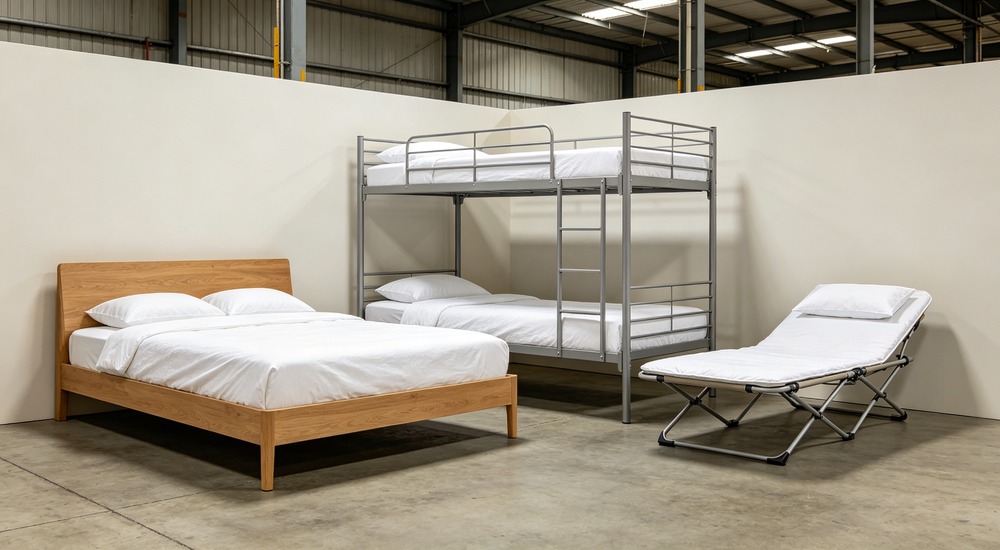
A single-bed label does not prove that fixed single beds, bunk beds, and folding beds use the same bedding. As institutional bedding experts with 20+ years of field experience supplying certified bedding to emergency shelters, universities, and healthcare facilities across 30+ countries, we have observed that bed type alone is an unreliable basis for bedding standardization. Buyers need a component-level comparison that accounts for mattress depth, corner access, folding clearance, and post-wash shrinkage.
Short answer: Sheets may need separate bed groups, while duvet covers and pillowcases can remain common when their inserts match. Verify every result on actual beds and after planned care cycles. This guide walks through each component, each bed type, and the procurement decisions that reduce cost without sacrificing fit.

Understanding the physical differences between single beds, bunk beds, and folding cots is the first step toward a cost-effective bedding standardization strategy for your facility.
|
1. Can the Three Bed Types Use the Same Bedding Set? 2. Bed Type Differences That Affect Bedding Fit 3. Component-by-Component Reuse Analysis 4. Key Factors That Determine Sharing Feasibility 5. Application Scenario Guide 6. Sample Testing and Dimension Verification |
7. Packing and Inventory Management 8. Procurement Process for Mixed Bed Types 9. Advanced Considerations 10. Pricing and Final Decision Framework 11. Common Procurement Mistakes to Avoid 12. Frequently Asked Questions |
Our bedding component reuse analysis below breaks down each component individually.
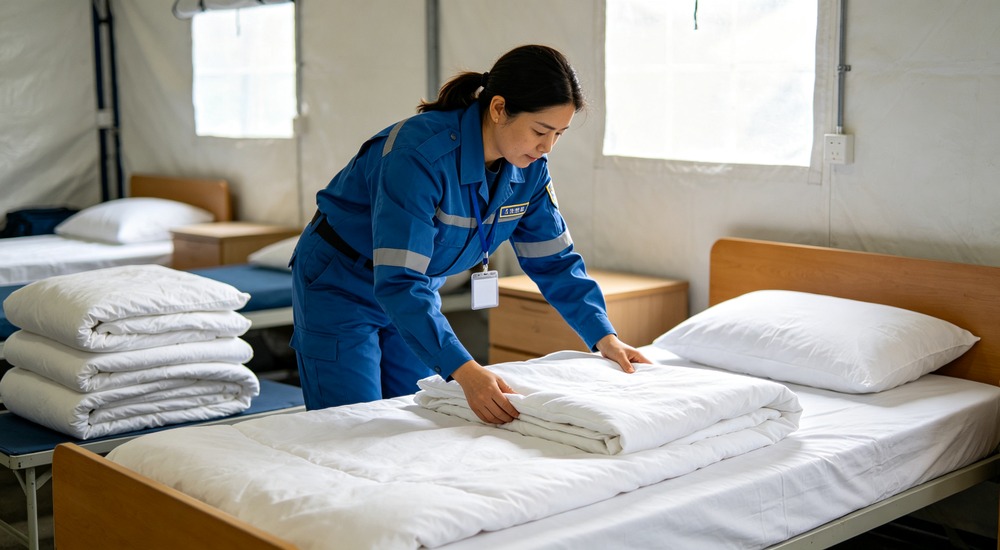
Understanding mattress depth for bunk beds is critical for a proper bed sharing feasibility study.
From hospital bedding sets wholesale orders to standardized bedding for facilities of all types, the sharing logic remains consistent across sectors.
This mixed bed type bedding procurement guide helps institutional buyers navigate the complexity of ordering bedding for facilities with multiple bed configurations.
Not automatically. The three bed types appear similar in name but differ in mattress depth, frame obstruction, corner access, and folding mechanics. A bedding set that fits a fixed single bed may fail on an upper bunk bed due to rail clearance, or on a folding bed due to hinge interference.
Therefore, the decision must be made component by component, not set by set. A facility may share duvet covers across all three bed types while maintaining three separate bottom sheet SKUs. This partial standardization is often the most cost-effective approach.

|
Bed Type |
Typical Mattress Depth |
Corner Access |
Key Bedding Challenge |
|
Fixed Single Bed |
15-25cm |
Full access on all four sides |
Standard fit, few obstructions |
|
Upper Bunk |
10-18cm |
Limited by safety rails and ladder |
Fitted sheet corner placement, tucking space |
|
Lower Bunk |
15-20cm |
Reduced by upper frame overhead |
Headroom for making beds, duvet volume |
|
Folding Bed |
8-15cm |
Hinge line may interfere |
Folding action must not bind bedding, thin mattress |
As this table shows, mattress depth alone varies by up to 17cm across bed types. A bottom sheet designed for a 25cm fixed single mattress will pool and wrinkle on a 10cm upper bunk or 8cm folding bed.
For procurement teams asking can single beds and bunk beds share bedding, the answer depends entirely on component type and mattress depth. roll-away cot bedding size differs from standard single bedding primarily in bottom sheet depth and duvet thickness. Bunk bed fitted sheet depth is typically 15-20cm, compared to 25-30cm for fixed singles. Institutional bedding standardization is achievable for duvet covers and pillowcases but rarely for fitted sheets in mixed-bed facilities.
In contrast, procurement teams often assume that because all three are called "single beds," they share dimensions. In reality, even within a single facility, fixed singles from different manufacturers may have different mattress depths. Emergency shelters frequently receive donated or mixed beds, compounding this problem. The only reliable method is to measure and test each bed group separately.
Before diving into component details, use this simple matrix to identify which components warrant further investigation. The matrix scores each component on sharing feasibility from 1 (never share) to 5 (always share):
|
Component |
Fixed→Upper Bunk |
Fixed→Folding |
Upper→Folding |
Overall Feasibility |
|
Fitted Sheet |
2/5 |
1/5 |
2/5 |
Low — separate by depth |
|
Flat Sheet |
4/5 |
3/5 |
3/5 |
Moderate — usually shareable |
|
Duvet Cover |
5/5 |
5/5 |
5/5 |
High — standardize |
|
Pillowcase |
5/5 |
5/5 |
5/5 |
High — standardize |
|
Mattress Protector |
3/5 |
2/5 |
2/5 |
Moderate — verify depth |
This matrix is a starting point, not a final decision. Always verify with physical samples on your actual beds. A wholesale wholesale institutional bedding supplier with experience in mixed-bed facilities can help interpret these scores for your specific inventory.

Specifically, understanding the physical differences between bed types is the foundation of any sharing decision. Each difference affects at least one bedding component.
The fixed single bed is the baseline against which other bed types are compared. It typically offers full access to all four mattress corners, a standard mattress depth of 15-25cm, and no frame obstructions. Bedding designed for a fixed single bed will generally fit well, but this does not mean it will transfer to other bed types.
When evaluating a fixed single bed, buyers should check: mattress depth, whether the mattress is standard or extra-deep, and whether the frame has any headboard or footboard that might tuck sheets.
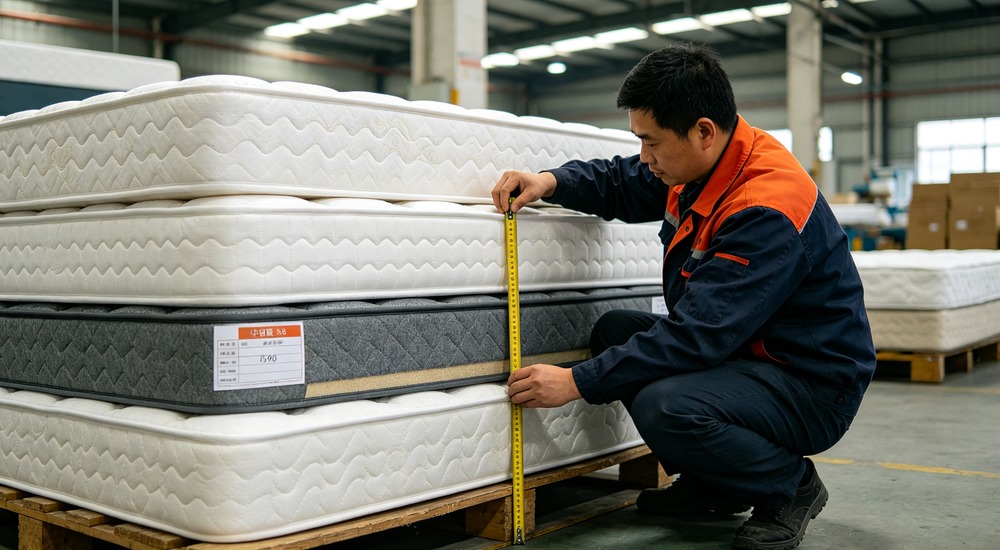
Even within the "fixed single bed" category, significant variation exists. Standard single beds measure 90×190cm or 99×190cm, but extra-long singles (90×200cm) are common in healthcare and military settings. Mattress depth ranges from 15cm (economy) to 25cm (premium). Some fixed singles have integrated headboards that prevent sheet tucking at the head end. Never assume two fixed single beds are identical—measure each model in your facility.
Upper bunks present the greatest bedding challenges. Safety rails reduce access to the mattress edges, making it difficult to tuck fitted sheets properly. The ladder may block one corner entirely. Mattress depth is typically shallower (10-18cm) to keep the sleeper below the rail height, which means standard fitted sheets are too deep.
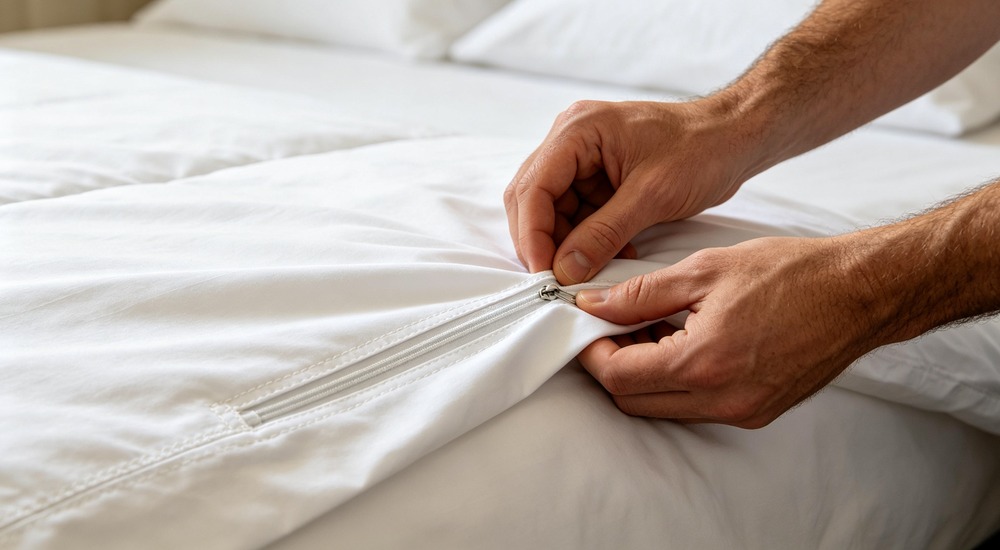
Also, the upper bunk user must make the bed from a confined position, often kneeling or sitting on the mattress. Bedding that requires extensive tucking or corner work is impractical. Duvet covers with zipper closures are preferred over button closures, as they are faster to change in confined spaces.

The lower bunk shares dimensions with the upper bunk in many bunk bed units, but the access pattern differs. While the lower bunk has no safety rail obstruction, it has reduced overhead clearance due to the upper bunk frame above. This makes it harder to fluff duvets and shake out sheets during bed making.
In some bunk designs, the lower bunk mattress is slightly deeper than the upper, or the frame may have storage drawers that reduce side access. Always verify lower bunk dimensions separately from upper bunk.
Folding beds (also called rollaway beds or cot beds) are the most variable. Their mattresses are typically thin (8-15cm) and may be attached to the frame. The hinge line running across the mattress can create a ridge that interferes with fitted sheet placement and duvet distribution.
Critically, folding beds must be folded and stored with bedding sometimes still attached. If the bedding is too thick or the fitted sheet too deep, it may prevent the bed from closing properly or cause premature wear at the hinge point. Always test the folding action with the bedding in place before approving a shared bedding set.
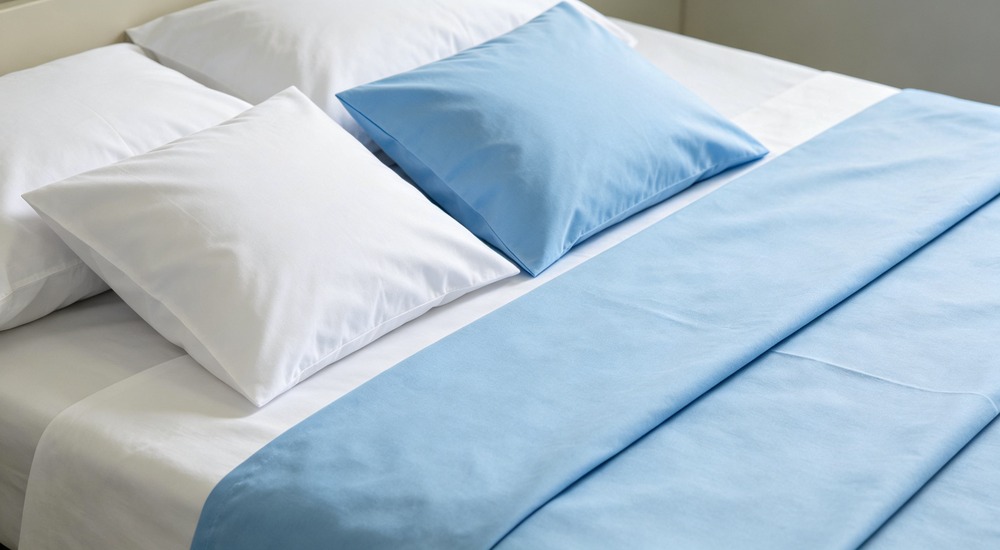
Each bedding component has different sharing potential. Analyzing them separately reveals where standardization is possible and where separate SKUs are necessary.
Specifically, fitted sheets are the most bed-type-specific component. Their elastic corners must grip the mattress precisely, and mattress depth is the critical variable. A fitted sheet for a 25cm fixed single mattress will not stay in place on a 10cm upper bunk mattress—the excess fabric bunches and may come loose during use.
Corner access compounds the problem. On upper bunks, safety rails may prevent the sheet corner from being pulled down fully. On folding beds, the hinge line may create a gap where the sheet cannot grip. For these reasons, fitted sheets typically require separate SKUs for at least two and often three bed groups.
|
Bed Type |
Recommended Fitted Sheet Depth |
Can Share With |
Notes |
|
Fixed Single (15-25cm) |
25-30cm pocket |
Lower bunk (if depth matches) |
Standard institutional size |
|
Upper Bunk (10-18cm) |
15-20cm pocket |
Lower bunk (if depth matches) |
Shallow pocket prevents bunching |
|
Folding Bed (8-15cm) |
12-18cm pocket |
Usually none |
Must clear hinge when folded |
Flat sheets are more forgiving than fitted sheets because they have no elastic corners. A flat sheet designed for a fixed single bed can often be used on an upper bunk or folding bed, though there may be excess fabric that needs tucking.

The main concern with flat sheets is length relative to mattress position. On upper bunks, excess flat sheet length may hang into the ladder area, creating a tripping hazard. On folding beds, excess fabric may interfere with the folding mechanism. If flat sheets are shared, instruct staff to tuck excess fabric securely and monitor for hazards.
Flat sheet installation varies by bed type. On fixed singles, standard hospital corners work well. On upper bunks, the rail-side corner cannot be tucked traditionally—use a modified tuck that folds excess fabric under the mattress from the accessible side. On folding beds, ensure the flat sheet does not extend beyond the hinge line, where it can bind during folding. Train staff on bed-type-specific tucking techniques to reduce installation time and improve fit consistency.
Meanwhile, duvet covers are the easiest component to standardize across bed types. As long as the duvet insert dimensions match, the duvet cover will fit regardless of bed type. Most institutional facilities use standard single-size duvet inserts (typically 135×200cm or 140×210cm) across all bed types.
The closure type is the main consideration. Zipper closures are recommended for upper bunks because they are faster to operate in confined spaces. Button closures may be acceptable for fixed singles and lower bunks where staff have more room to work. If sharing duvet covers, choose a closure type that works for the most constrained bed type (usually the upper bunk).
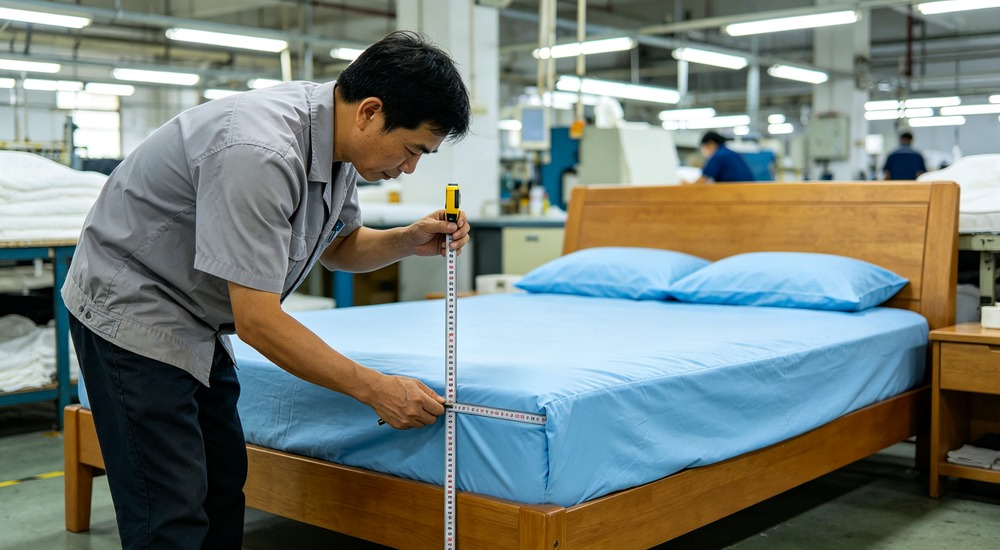
Related: Zipper vs Button vs Tie Duvet Covers for Emergency Shelters
Pillowcases are almost always shareable across bed types, provided the pillows themselves are the same size. Standard institutional pillows are typically 50×75cm, and pillowcases are designed to fit. The only exception is if a facility uses different pillow sizes for different bed types (e.g., smaller pillows for roll-away cots to save storage space).

When sharing pillowcases, ensure that the fabric weight and closure type (usually envelope closure) are suitable for commercial laundry. Pillowcases undergo frequent washing and should be durable enough for institutional use.
Some facilities use bed scarves, runners, or decorative pillows for a more polished appearance. These elements are almost never shareable across bed types because they are sized to specific mattress dimensions. For emergency shelters and high-turnover facilities, we recommend eliminating decorative elements entirely—they add cost, laundry burden, and confusion without functional benefit. If decorative elements are required (e.g., for a hotel-style facility), procure them separately for each bed type.
Blankets and throws (used without duvet covers) are generally shareable across bed types, as they are not fitted to the mattress. However, blanket weight should be considered for roll-away cots—heavy blankets may prevent proper folding. For bulk wholesale bedding procurement, standardize on medium-weight blankets (200-300gsm) that work across all bed types and storage conditions.

Mattress protectors are not always considered part of the bedding set, but they are critical for institutional facilities. Like fitted sheets, they must match mattress depth precisely. Waterproof mattress protectors for upper bunk beds and folding beds may need different depths than those for fixed singles.
For folding beds, the mattress protector must be flexible enough to withstand repeated folding. A stiff or bulky protector may crack at the hinge line over time. Specify stretchable, vinyl-free protectors for folding bed applications.
Beyond bed type, several operational factors influence whether bedding can be shared. These factors should be evaluated before making procurement decisions.

Ultimately, this is the single most important factor. Even within the same bed type, mattress depth can vary. Measure every mattress in the facility, or at minimum, sample each bed group. A 5cm depth difference can make a fitted sheet unusable. Record depths in a spreadsheet and group beds by depth range rather than by bed name.
Safety rails, ladders, headboards, footboards, and upper bunk frames all reduce access to mattress corners. Fitted sheets require full corner access to install properly. If a bed type has obstructed corners, the fitted sheet may need adjusted elastic tension or alternative fastening (such as sheet straps or clips).
In practice, for folding beds, the bedding must not prevent the bed from folding. Test with the actual bedding: fitted sheet, flat sheet, duvet, and pillow. If the bed cannot close fully, the bedding is too thick or the fitted sheet pocket is too deep. Thin mattresses (8-12cm) paired with shallow-pocket fitted sheets usually fold without issue.

Bedding shrinks after commercial washing, typically 2-5% in length and width. A fitted sheet that fits perfectly when new may become too tight after 20-30 wash cycles. Always test bedding after a minimum of 10 commercial wash cycles before approving for full deployment. Factor shrinkage into initial sizing—choose slightly generous dimensions that will shrink to a perfect fit.
Related: Commercial Laundry Care Guide for Institutional Bedding
Facilities with limited storage may need bedding that compresses well. Folding bed bedding, in particular, must be thin enough to fold with the bed. Duvet fill weight affects storage volume—choose 200-250gsm fills for folding beds, while 300+gsm fills work for fixed singles and bunks. Coordinate bedding weight with storage capacity before finalizing orders.

Emergency shelters and institutional facilities often have high staff turnover. Bedding that is complex to install (e.g., deep-pocket fitted sheets on upper bunk beds with limited access) will be installed incorrectly by new staff. Choose bedding that is forgiving of imperfect installation, or invest in training and visual guides. Color-coded bedding by bed group reduces installation errors significantly.
Not every bedding factory can efficiently produce multiple SKUs in a single order. When evaluating suppliers, ask: Can they produce 3 different fitted sheet depths in one production run? Will they keep each SKU separate during packing? Do they have experience with institutional bedding manufacturer orders for mixed-bed facilities? A supplier that primarily serves residential customers may struggle with the complexity of multiple SKUs, color coding, and institutional specifications.
Facilities with daily bed changes (e.g., emergency shelters) need bedding that is fast to change. Facilities with weekly changes (e.g., university dorms) can accommodate more complex bedding. Match bedding complexity to changeover frequency: high-turnover facilities should prioritize easy-fit sheets and zipper duvet covers.

This guide covers correctional facilities, university housing, and other institutional settings beyond the standard emergency shelter context.
Different facility types have different bed mixes and operational priorities. The sharing strategy should be tailored to the scenario.
Emergency shelters often have a mix of fixed singles, bunk beds, and folding cots, with daily or near-daily bed changes. In this scenario, standardize duvet covers and pillowcases across all bed types, but maintain separate bottom sheet SKUs for each bed group. Use visual labels to identify which fitted sheet belongs to which bed type.
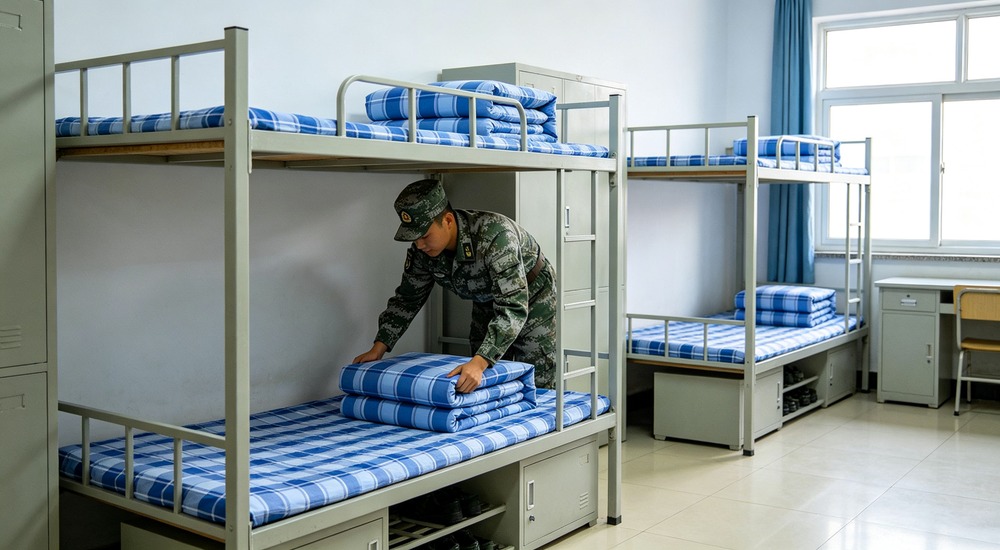
Choose zipper duvet covers for speed, and select durable, stain-resistant fabrics. Folding beds should have thin, easy-fold bedding that can be stored quickly. Related: Emergency Shelter Bedding Setup Guide
University dorms are dominated by bunk beds (both upper and lower) with some fixed singles in single rooms. If the bunk beds use standard-depth mattresses (15-20cm), fitted sheets may be shareable between lower bunks and fixed singles. Upper bunks with shallower mattresses need their own fitted sheets.
Duvet covers and pillowcases can be fully standardized. Consider -comparison">cotton vs polycotton fabric based on dorm laundry capacity and student comfort preferences.
Standardized hospital bed linen is critical for infection control. Healthcare facilities primarily use fixed single beds (often adjustable), with occasional folding beds for overflow. Infection control is paramount, so bedding must withstand high-temperature washing and bleach. Fitted sheets standardize if all beds use the same mattress depth; otherwise, separate by depth group.
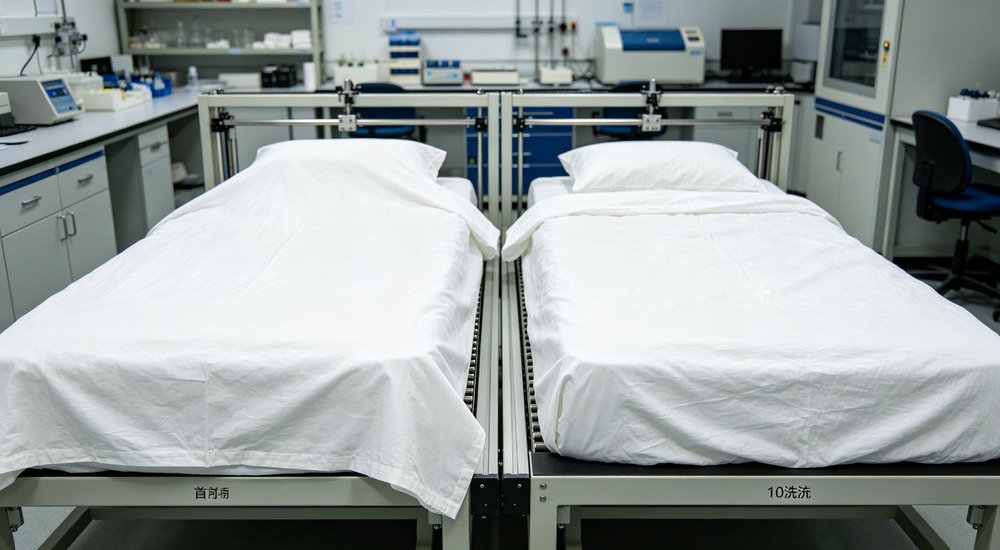
Healthcare facilities may use different pillow sizes for different wards, so verify pillow dimensions before standardizing pillowcases. Related: Institutional Bedding Fabric Weight Guide
Military barracks typically use bunk beds with standardized mattresses. If all bunks use the same mattress depth, full bedding standardization is possible. Durability and ease of care are more important than subtle fit differences. Choose heavy-duty fabrics and reinforced seams.
Correctional facilities typically use standardized bunks or fixed singles with uniform mattresses. Full standardization is usually possible, but durability and tamper-resistance are critical. Choose reinforced seams, tear-resistant fabrics, and closure types that cannot be used as ligature points. Zipper pulls should be small or concealed. Verify that all bedding meets facility safety regulations before procurement.
Hotels may have single rooms, twin rooms, and sofa beds (folding beds) in the same property. While duvet covers and pillowcases can be standardized, fitted sheets must match each mattress type. Hotels with sofa beds should maintain a separate fitted sheet SKU for sofa bed mattresses, which are typically thinner and may have unique dimensions. Visual labeling by room type helps housekeeping staff select the correct bedding.
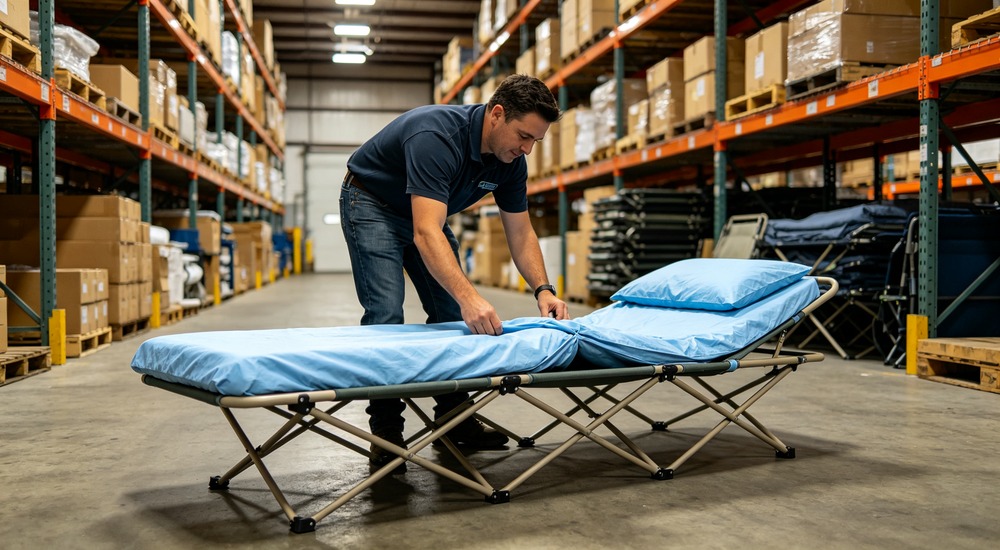
Refugee camps often use a mix of folding cots, mattresses on the floor, and occasional bunk beds in community centers. Bedding must be lightweight for transport, durable for outdoor conditions, and easy to clean in field laundry setups. Folding bed bedding is the primary SKU in refugee camp operations, with standardized duvet covers and pillowcases. School gymnasiums converted to emergency shelters typically use folding beds on the gym floor, requiring bedding that can be quickly deployed and stored.
While not a sleeping facility, warehouse operations affect bedding standardization. Bedding stored in bulk warehouse conditions must be packaged to prevent moisture damage and pest infestation. Pre-packaged bed sets by bed model reduce picking errors during emergency distribution. Community center shelters often receive bedding from central warehouses, so packaging labels must clearly indicate bed category compatibility.
Homeless shelters often have the most variable bed inventory—donated beds, mixed models, and occasional folding cots. In this scenario, avoid assuming any sharing is possible. Measure and group every bed, and procure wholesale bedding in batches by verified dimension group. Label each bed group clearly.
Ready to standardize your bedding across mixed bed types?

Get a free dimension audit and custom quote within 24 hours.


Therefore, sample testing is non-negotiable for mixed bed style facilities. Never approve a shared bedding set based on measurements alone—test on actual beds under actual conditions.

Before ordering samples, conduct a facility-wide dimension audit. For each bed, record: bed variant, mattress length, mattress width, mattress depth, frame obstructions (rails, ladders, headboards), and folding mechanism (if applicable). Group beds by dimension similarity, not by bed name.
When samples arrive, test each bedding component on each bed group:
When comparing samples from different suppliers, ensure all samples are tested on the same beds by the same staff. Wash all samples together under identical conditions. Do not compare a premium sample from one supplier with an economy sample from another—specify fabric weight, thread count, and closure type in your enquiry.

Follow this structured process to determine sharing feasibility:
Document every test result in a standardized format that can be shared with procurement teams and suppliers. For each component and bed category, record: fit score (1-5), installation time, issues observed, post-wash fit score, and recommendation (share / separate / not recommended). This documentation becomes valuable when reordering or when expanding to new facilities.
Based on 20+ years of institutional bedding supply experience, a proper sample testing program for mixed-bed facilities requires 3-4 weeks and a budget of $300-$800 depending on sample quantity.

The timeline typically breaks down as:
Week 1 — dimension audit and supplier enquiry;
Week 2 — sample receipt and initial fit testing;
Week 3 — commercial laundry cycling (minimum 10 washes);
Week 4 — final fit verification and procurement decision. Rushing this process is the most common cause of post-delivery fit problems.
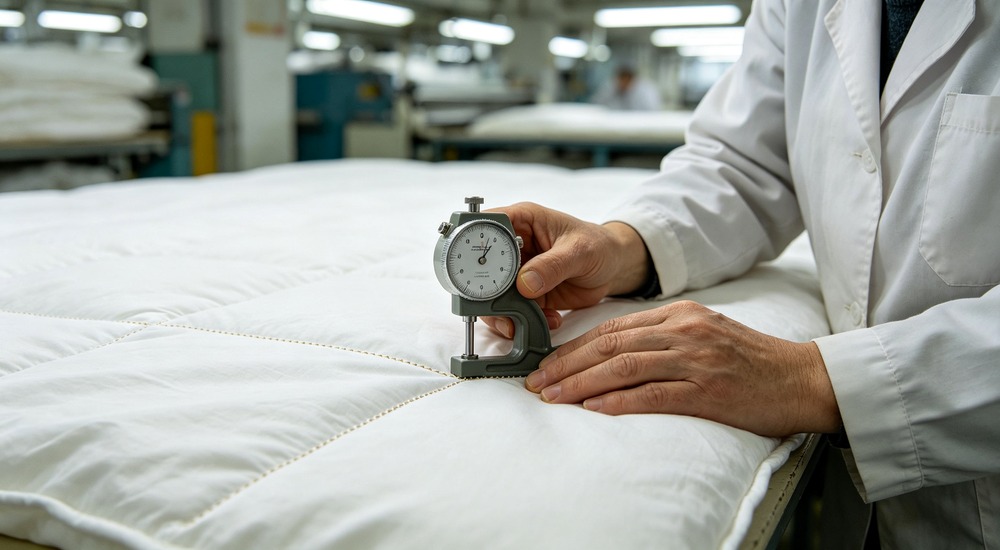
For facilities with limited sample budgets, prioritize testing the least shareable component first—fitted sheets. If fitted sheets cannot be shared across bed style, no amount of duvet cover standardization will solve the core problem. Allocate 60% of sample budget to fitted sheets, 25% to duvet covers, and 15% to pillowcases and mattress protectors.
Related: Institutional Bedding Quality Control Guide
Meanwhile, once sharing decisions are made, packing and inventory systems must prevent mixing and support consistent replenishment.
If fitted sheets are not shareable, use color coding or labeling to identify which bedding belongs to which bed configuration. For example: white piping for fixed singles, blue piping for upper bunks, gray piping for folding beds. This allows staff to identify bedding at a glance and reduces installation errors.
Visual labels should be subtle (piping, labels, or thread color) rather than full-color bedding, to maintain a clean institutional appearance and avoid clashing with facility decor.
When packing bedding for storage or distribution, separate bed groups by box or by clearly labeled sections. Each box should indicate which bed model it contains. If using shared components (duvet covers, pillowcases), pack them separately from bed-specific components (fitted sheets).

For folding beds, pack bedding in a way that allows quick deployment: pre-made bedding sets that can be unfolded and placed on the bed in one motion. This reduces setup time during emergency activations.
Bedding stored for extended periods can degrade due to moisture, pests, and UV exposure. Implement a first-in-first-out (FIFO) rotation system, especially for emergency shelter bedding requirements that may sit in warehouses for months between activations. Store bedding on pallets at least 15cm off the floor, in climate-controlled conditions (15-25°C, 40-60% humidity), and away from direct sunlight. Vacuum-sealed packaging extends shelf life but may require fluffing before deployment.
For facilities managing 500+ bedding sets, a barcode or RFID tracking system linked to bed category reduces picking errors by up to 40%. Each bedding bundle should carry a label indicating: bed style compatibility, fabric composition, manufacture date, and wash count. This level of traceability becomes essential when managing multiple SKUs across mixed bed variant.
For large institutions managing multiple sites, cross-docking bedding shipments directly from supplier to end facility reduces warehouse handling costs by 15-20%. However, this requires precise SKU labeling at the factory level—each carton must clearly indicate bed configuration compatibility before it leaves the production line. In practice, facilities that implement factory-level labeling report 30% fewer receiving errors compared to those that sort at a central warehouse.
Just-in-time delivery models work well for predictable bed configurations (fixed singles, standard bunks) but are risky for folding bed surge inventory, which must be pre-positioned before emergency events occur. Therefore, maintain a 2-week safety stock of bedding for folding cots and folding beds at regional distribution centers, while fixed-bed bedding can be ordered on a 30-day replenishment cycle.
Emergency shelter bedding demand follows predictable seasonal patterns. Natural disaster season (June-November in the Northern Hemisphere) can increase demand by 200-300% compared to off-peak months. Institutions in hurricane zones should pre-position 30% of annual folding bed bedding inventory before June 1. Meanwhile, dormitory bedding demand peaks in July-August (back-to-school) and January (winter semester). Plan production lead times accordingly to avoid stockouts during critical periods.
When reordering, reference the original dimension groups and SKUs, not just "single bed sheets." Maintain a master list that maps each bed group to its specific bedding SKU, dimensions, and supplier. This prevents the common error of ordering the wrong fitted sheet depth during replenishment.
Related: Institutional Bedding Storage and Inventory Guide
Procuring bedding for mixed bed model requires a structured approach that captures all relevant information upfront.
Your enquiry should include:

A reputable institutional bedding manufacturer should return:
For mixed bed style bedding procurement. The enquiry should clearly separate shared components (duvet covers, pillowcases) from bed-specific components (fitted sheets, mattress protectors). Wholesale bedding for shelters often requires multiple fitted sheet SKUs in a single order. Commercial bedding for multiple bed variant is a specialized category—not every supplier can efficiently produce and pack 3-4 fitted sheet depths in one production run. Hospital bed linen standardization follows similar principles.
With the added constraint of infection control protocols. Dormitory bedding bulk orders typically have fewer bed configuration variations than shelters, making fuller standardization possible.
Not every bedding factory can handle mixed-SKU institutional orders efficiently.
Before placing an order. Verify:
(1) Does the supplier have experience with 3+ fitted bottom sheet depths in one production run?
(2) Can they maintain SKU separation during cutting, sewing. And packing?
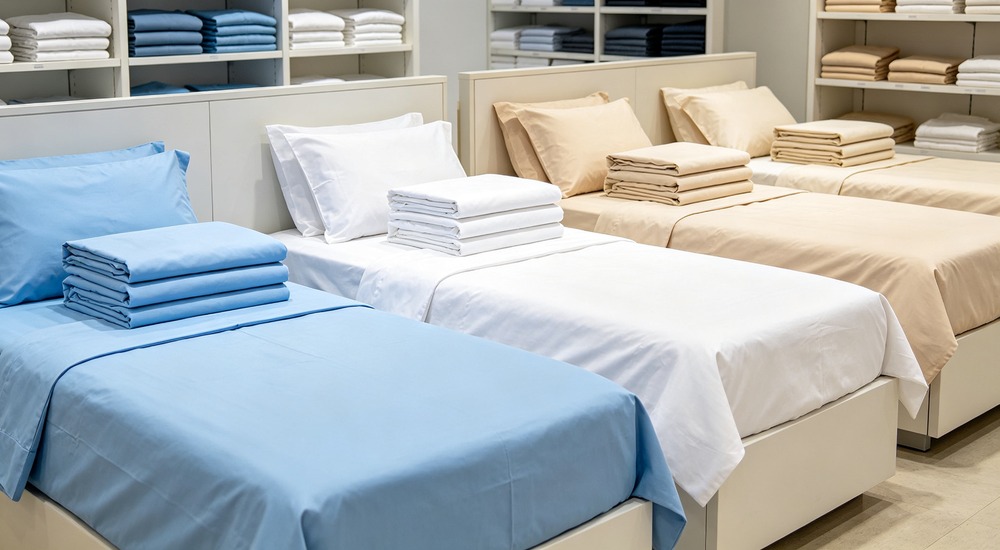
(3) Do they provide pre-production samples (PPS) for approval before bulk production?
(4) What is their defect rate for institutional orders—target is <2%?
(5) Can they provide third-party test reports for shrinkage, colorfastness, and tensile strength? A supplier that cannot answer these questions confidently will likely cause mixing errors or quality problems.
For emergency relief organizations and government procurement, additional documentation may be required: certificate of origin, sanitary/phytosanitary certificates for certain destinations, and compliance with international humanitarian standards (such as SPHERE standards for shelter and non-food items). Factor these documentation requirements into your lead time planning.
For institutional orders exceeding $50,000, negotiate performance guarantees into the contract: dimensional tolerance (±2cm on fitted sheet pocket depth), shrinkage guarantee (≤5% after 50 commercial washes), and defect replacement rate (≤2% defective units replaced free of charge). Specifically, suppliers confident in their quality will offer these terms without significant price premium. In contrast, suppliers that refuse performance guarantees often have higher hidden defect rates.
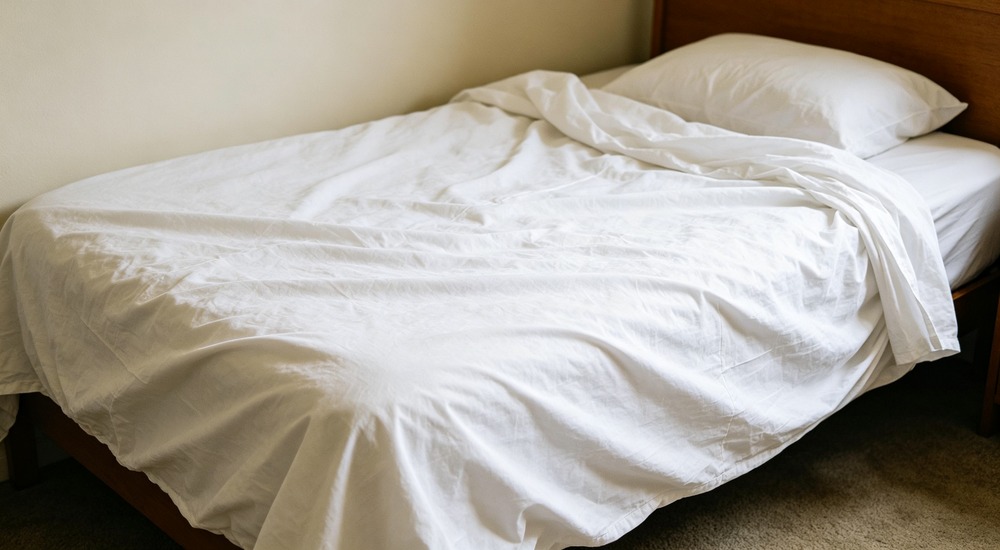
Include a "fit failure" clause: if bedding fails fit testing on specified bed configurations after delivery, the supplier bears rework or replacement costs. Ultimately, this clause shifts the quality risk back to the supplier and incentivizes proper pre-production dimension verification.
For mixed bed configuration orders, most institutional suppliers require a minimum of 200 sets per SKU (e.g., 200 single-bed fitted sheets + 200 bunk-bed fitted sheets + 200 folding-bed fitted sheets), while shared components (duvet covers, pillowcases) can be combined into a single 600-set production run. Lead time for mixed-SKU orders is typically 25-35 days, 5-7 days longer than single-SKU orders due to additional cutting and sorting labor. Specifically, plan for 40-45 days total including sample approval for first-time orders.
Reputable suppliers offer a pre-shipment inspection (PSI) at the factory, covering dimension verification (±2cm tolerance), stitch density (≥8 stitches/cm), and fabric weight check. After delivery, a 30-day quality window allows for defect reporting and replacement. In contrast, suppliers without structured after-sales support may leave you with non-returnable defective stock. Therefore, always confirm inspection reports and after-sales terms before placing a mixed-bed order.
Sample costs for mixed-bed testing typically range $50-$150 (3-5 bottom sheet sizes + shared components). Many suppliers refund sample costs on orders exceeding $5,000. For reorders, maintain a "golden sample" archive—label each approved sample with bed configuration, fabric lot, and dimensions—to ensure consistency across production runs. Ultimately, this reduces reorder lead time to 15-20 days and eliminates re-testing.
MOQ varies by component and customization. Standard colors and sizes typically have lower MOQs (50-100 sets), while custom colors or embroidered labels may require 500+ sets. Lead time for bulk orders is typically 20-35 days after sample approval. Confirm MOQ separately for each SKU if you are maintaining multiple bottom sheet groups.
Related: Institutional Bedding Procurement Guide
Large facilities may use more than one bedding configuration. For example, an emergency shelter might use standard bedding for fixed singles and lower bunks, but thinner, easier-fold bedding for folding beds stored for surge capacity. Document each configuration clearly and train staff on which bedding goes where.
Some jurisdictions require bedding to meet fire safety standards (e.g., CFR 1633 in the US, BS 7175 in the UK). Verify that shared bedding meets the strictest standard applicable to any bed model in your facility. Folding beds may have additional requirements due to their proximity to the floor and storage conditions.
The choice of bedding material interacts with bed category sharing. Cotton vs polycotton blends shrink differently, and fabric weight affects roll-away cot clearance. Polycotton blends typically shrink less and dry faster, making them preferable for high-turnover facilities, while 100% cotton offers better comfort for long-stay settings.
Facilities in cold climates may use heavier duvets in winter and lighter ones in summer. If sharing duvet covers across seasons, ensure the cover dimensions accommodate both fill weights. A duvet cover designed for a 300gsm winter duvet may be too large for a 150gsm summer duvet, causing the insert to shift. Consider separate duvet cover sizes by season if seasonal duvet changes are part of your operation.
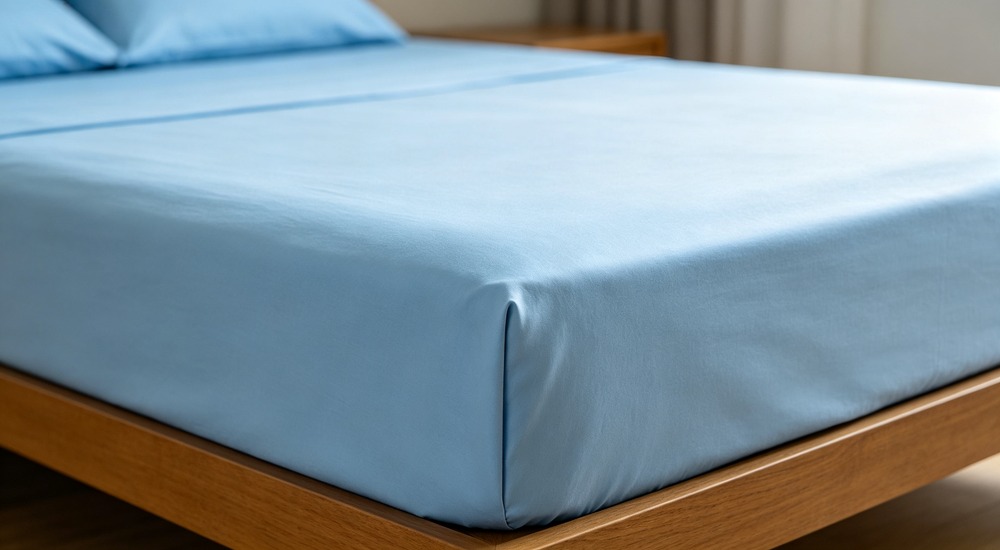
Each bedding component plays a different role in overall comfort and durability for institutional use cases.
Institutions increasingly face pressure to reduce textile waste.
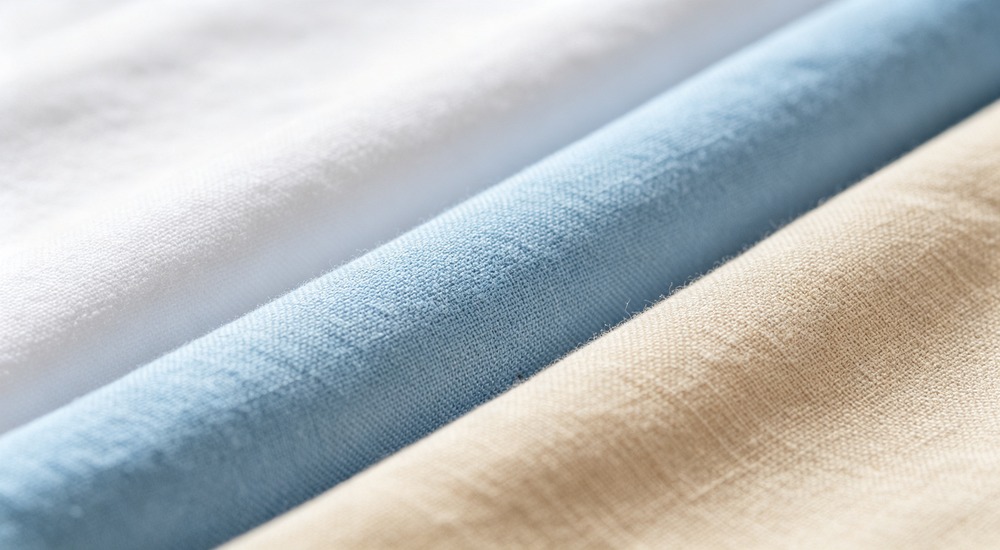
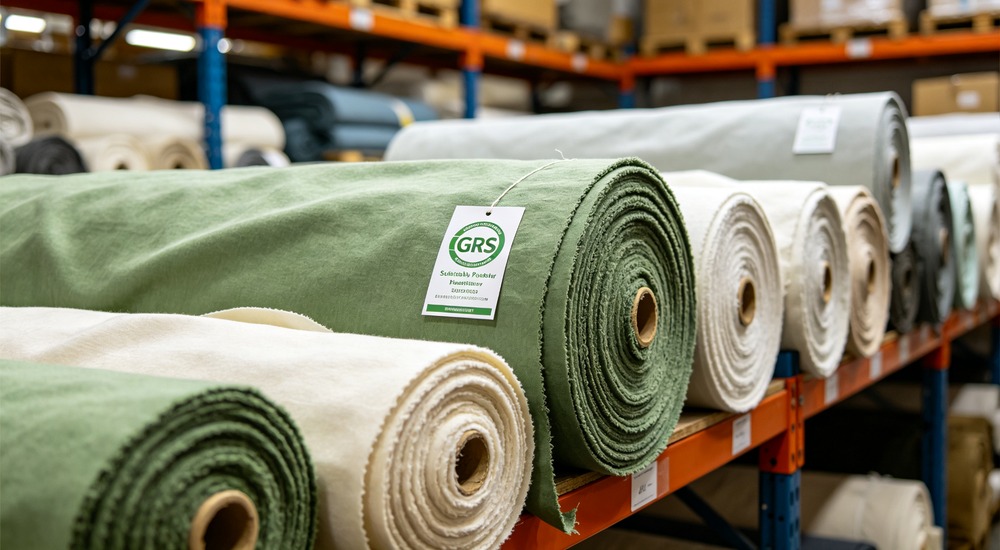
Partial standardization supports circular economy goals by extending bedding usable life—duvet covers that fit multiple bed style can be redistributed when bed configurations change, rather than being discarded. Choose fabrics with recycled content (GRS-certified polyester blends) where performance requirements allow, and specify take-back or recycling programs with your supplier. Over a 5-year lifecycle, facilities with standardized duvet covers and pillowcases report 15-20% less textile waste (per 5-year lifecycle analysis) than those with fully bed-specific sets.
For facilities serving elderly or disabled populations, bedding choice affects accessibility and dignity. elasticated sheet with all-around elastic are easier to install for staff with limited mobility. Zipper duvet covers require less dexterity than button closures. Weighted blankets (not typically shared across bed variant) may be needed for specific residents. While these considerations do not change the core sharing logic, they may add specialized SKUs that must be tracked separately from the standard inventory.

|
Component |
Shareable? |
Conditions |
Recommended Action |
|
fitted bottom sheet |
Rarely |
Only if mattress depth and corner access match |
Separate SKUs by depth group |
|
Flat Sheet |
Usually |
Excess fabric manageable |
Standardize, train staff on tucking |
|
Duvet Cover |
Almost always |
Duvet insert dimensions match |
Standardize, choose zipper for upper bunks |
|
Pillowcase |
Almost always |
Pillow dimensions match |
Standardize |
|
Mattress Protector |
Sometimes |
Depth matches, flexible for folding |
Verify by bed configuration |
Full standardization (one SKU for all components) is the cheapest per unit but may result in poor fit and increased waste. Partial sharing (standardized duvet covers and pillowcases, separate bottom sheet) typically offers the best balance of cost and fit.
|
Strategy |
SKU Count |
Per-Unit Cost |
Fit Quality |
Best For |
|
Full standardization |
1 set SKU |
Lowest |
Poor for some bed model |
Single bed category only |
|
Partial sharing |
3-4 SKUs |
Moderate |
Good for all types |
Mixed bed facilities |
|
Full separation |
6+ SKUs |
Highest |
Perfect fit |
Premium facilities |
Based on feedback from emergency shelter operators, facilities that implement partial sharing with visual bed-group labels report 20-30% lower bedding waste (per shelter operator feedback survey) compared to full standardization, because staff no longer force ill-fitting sheets onto wrong bed style. Setup time decreases because staff can identify correct bedding at a glance.
Based on actual institutional orders, a 500-bed facility with mixed bed variant (200 fixed singles, 200 bunks, 100 folding beds) implementing partial sharing typically spends:
Compared to full standardization (one elasticated sheet SKU for all 500 beds), partial sharing adds approximately 10-15% to fitted bottom sheet cost but reduces replacement waste by 20-30%, resulting in net savings over a 3-year lifecycle. Request a detailed quote from your wholesale bedding supplier for exact pricing based on your specifications.
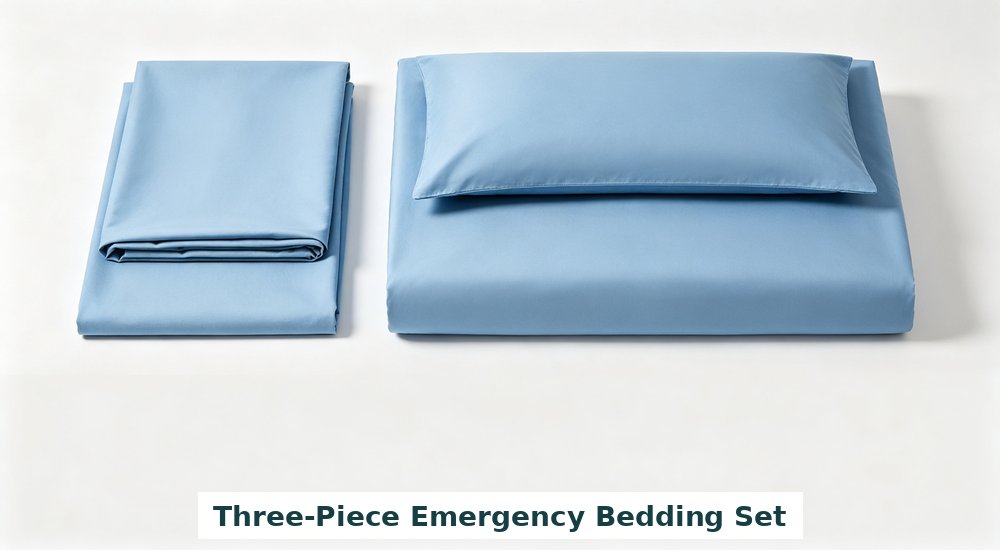
The cheapest per-unit bedding often has the highest total cost of ownership (TCO).
A $8 bottom sheet that fails after 30 washes costs $0.27 per wash. While a $12 elasticated sheet lasting 80 washes costs $0.15 per wash—44% cheaper per use. For mixed-bed facilities, calculate TCO per bed configuration separately: folding bed bedding may have shorter life due to hinge wear.
While upper bunk bedding may suffer more damage from constrained installation. Include replacement frequency, labor cost for bed making (complex bedding takes 2-3 minutes longer per change), and laundry cost (heavier fabrics cost more to wash and dry) in your analysis.
Based on actual institutional data, facilities implementing partial sharing with proper dimension grouping achieve a 3-year TCO that is 12-18% lower than facilities using full standardization with high replacement waste, and 25-30% lower than facilities using fully bed-specific sets with higher unit costs.
Follow this decision order:
(1) audit all bed dimensions,
(2) group by depth and access,
(3) decide sharing by component,
(4) order samples,
(5) test on all bed model and after washing,
(6) finalize SKUs and color coding,
(7) place bulk order. Do not skip the post-wash test—this is where most sharing failures are revealed.
Based on 20+ years of institutional bedding supply experience, these are the most common and costly mistakes when procuring for mixed bed category.

This is the most common and most expensive mistake. bed classification alone does not guarantee bedding compatibility. Fixed singles, upper bunks, lower bunks, and folding beds each have unique characteristics. Always measure and test each bed group separately, regardless of what the bed is called.
Bedding that fits perfectly when new may shrink 2-5% after commercial washing. A fitted bottom sheet that fits a 15cm upper bunk mattress when new may become too tight after 20 washes, causing corners to pop off. Test after a minimum of 10 commercial wash cycles before approving.
Ordering standard-thickness bedding for folding beds without testing the folding action. Thick duvets or deep-pocket bottom sheet can prevent the bed from closing, making storage impossible and damaging the bedding at the hinge. Always fold-test with the actual bedding.
When multiple elasticated sheet SKUs are in circulation without visual identification, staff will mix them up. Ill-fitting sheets get damaged, and correct sheets get wasted on wrong beds. Implement visual labeling from day one, even if it adds a small per-unit cost.
When standardizing duvet covers across bed style, facilities often forget to order spare closure components (zipper sliders, buttons, tie fabric). A broken zipper on an upper bunk is more problematic than on a fixed single because the confined space makes repair harder. Order 5% spare closure components with every bulk order, and ensure your maintenance team can perform repairs on all bed variant.
Assuming that because duvet covers and pillowcases are shared, they have the same MOQ as fitted bottom sheet. Each component may have different MOQ tiers, especially if custom colors or labels are involved. Confirm MOQ per SKU and plan order quantities accordingly.
Bottom line: Single beds, bunk beds, and folding beds can share duvet covers and pillowcases when insert dimensions match, but bottom sheet almost always require separate SKUs by mattress depth group. Test on actual beds after 10+ commercial wash cycles before approving any shared component. Visual labeling by bed group reduces installation errors by 20-30%.
In summary: The most cost-effective strategy for mixed-bed facilities is partial standardization—common duvet covers and pillowcases, bed-specific elasticated sheet. This approach adds 10-15% to fitted bottom sheet cost but reduces replacement waste by 20-30% over a 3-year lifecycle.
Key takeaway: Never assume bedding is shareable based on bed name alone. Measure every mattress depth, test every component on every bed configuration, and document results per bed group before placing bulk orders.
Can all three bed model use the same bottom sheet?
No. elasticated sheet are the least shareable component because mattress depth and corner access differ significantly between fixed single beds, upper bunks, and folding beds. Always verify fitted bottom sheet on each bed category separately and maintain separate SKUs when dimensions differ.
Duvet covers and pillowcases are the most shareable components when their inserts match across bed variant. Flat sheets can often be shared if dimensions overlap and excess fabric is managed. bottom sheet and mattress protectors are the least shareable due to depth-specific fitting requirements.
Test on actual beds, not just by measuring dimensions. Check elasticated sheet depth and corner grip, upper bunk access and tucking space, folding bed clearance with full bedding, and refit after a minimum of 10 commercial washing cycles. Document results per bed model and component.
Yes. Color coding or labeling (e.g., different piping colors) helps staff identify which bedding belongs to which bed category, reducing mixing errors, installation mistakes, and bedding damage. This is especially important in high-turnover facilities with rotating staff.
What is the biggest procurement mistake with mixed bed style?
Assuming all single beds are the same. the label on a bed frame is not a reliable indicator of bedding fit. Fixed singles, upper bunks, lower bunks, and folding beds each have unique dimension, access, and clearance characteristics that verify separately before standardizing any bedding component.
Mattress depth is the critical variable for fitted bottom sheet and mattress protectors. A 5cm depth difference can make a bottom sheet unusable. Facilities should group beds by depth range (e.g., 8-12cm, 13-18cm, 19-25cm) rather than by bed variant name, and procure elasticated sheet matched to each depth group.
Yes, but choose one closure type that works for the most constrained bed configuration. Zipper closures are recommended for upper bunks because they are faster to operate in confined spaces. If sharing duvet covers across all bed model, standardize on zipper closures rather than mixing zipper and button covers.
For folding beds, test:
(1) whether the bed folds fully with all bedding attached,
(2) whether the fitted bottom sheet grips properly across the hinge line,
(3) whether the duvet distributes evenly without bunching at the hinge, and
(4) whether bedding shows wear at the hinge after repeated folding. Thin mattresses and shallow-pocket sheets work best.

Bedding typically shrinks 2-5% after commercial washing. A bottom sheet that fits when new may become too tight after 20-30 cycles. Always test bedding after a minimum of 10 commercial wash cycles before approving for shared use. Factor shrinkage into initial sizing by choosing slightly generous dimensions.
Yes, for mixed-bed facilities. Partial sharing (standardized duvet covers and pillowcases, separate elasticated sheet by depth group) typically costs 10-15% more per unit than full standardization but reduces bedding waste by 20-30% due to fewer installation errors and damaged ill-fitting sheets. The net cost is lower.
Suppliers need: bed style breakdown with quantities, mattress depth ranges per group, component sharing decisions, fabric specifications, closure type preferences, commercial bed linen laundry conditions, sample requirements, and MOQ expectations. The more specific the enquiry, the more accurate the quotation and the better the final fit.
Ready to standardize bedding across your facility?
Send us your bed variant breakdown and we'll provide a component-level quote.
 |

|
روابط ودية :
حقوق النشر © Custom Disaster - Relief Bedding: Tents, Sleeping Bags, Blankets كل الحقوق محفوظة
الفريق المحترف للخدمة !