التصنيفات
Last updated: November 11, 2026
Stockpile buyers need flannel blankets that stay warm, survive repeated washing and fit a bulk budget. This guide compares wholesale blankets by GSM, size and fabric, then lists the RFQ data every blanket supplier should confirm. Institutions preparing shelters also get packing, certification and lead-time notes before committing to a large bulk blanket order.
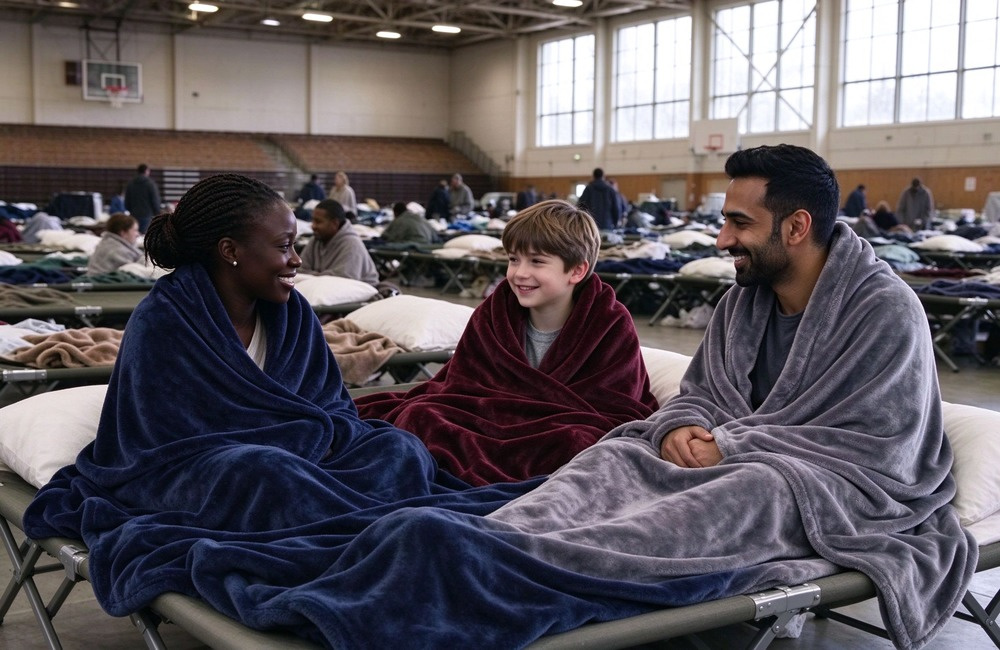
Buying flannel blankets wholesale is not a one-time purchase decision. The same blanket must keep a child warm on a cot, survive dozens of industrial washes in a central laundry and stay within a budget set by public procurement rules.
The shortcuts that work for a household purchase—picking the softest option or the cheapest price—fail in a shelter, where thousands of blankets are issued, washed and re-issued through one season.
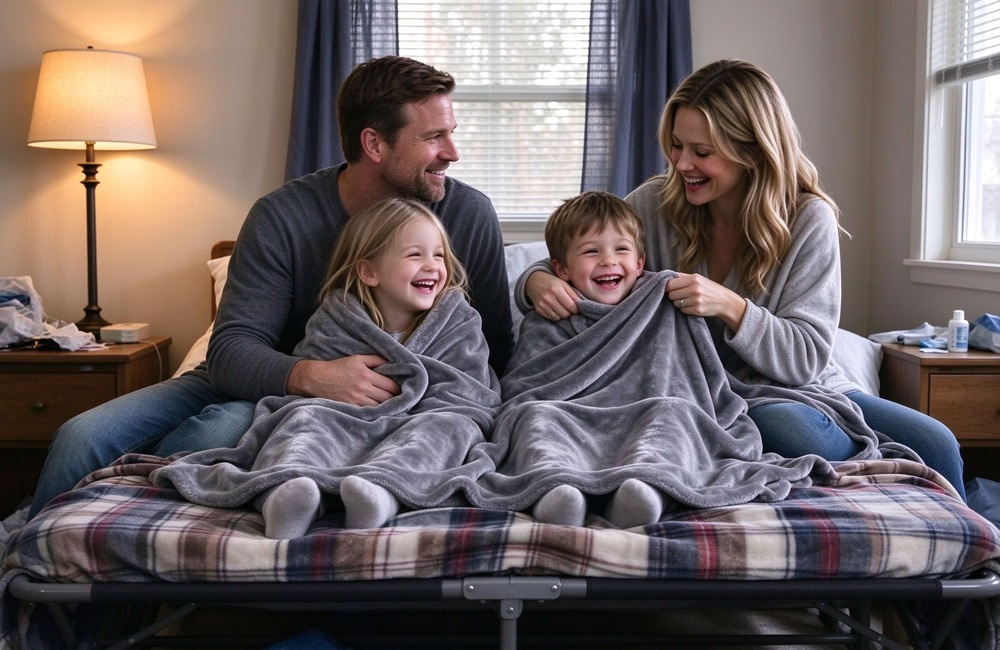
Families are the hardest users to spec for, because a shelter cot, a double mat and a child bed all need different coverage. A blanket that fits an adult cot perfectly is too short for a double mat and too long for a toddler.
The practical answer used by most shelter programmes is a family kit: one adult blanket and one child blanket per unit, in the same fabric and GSM so the whole site launders together.
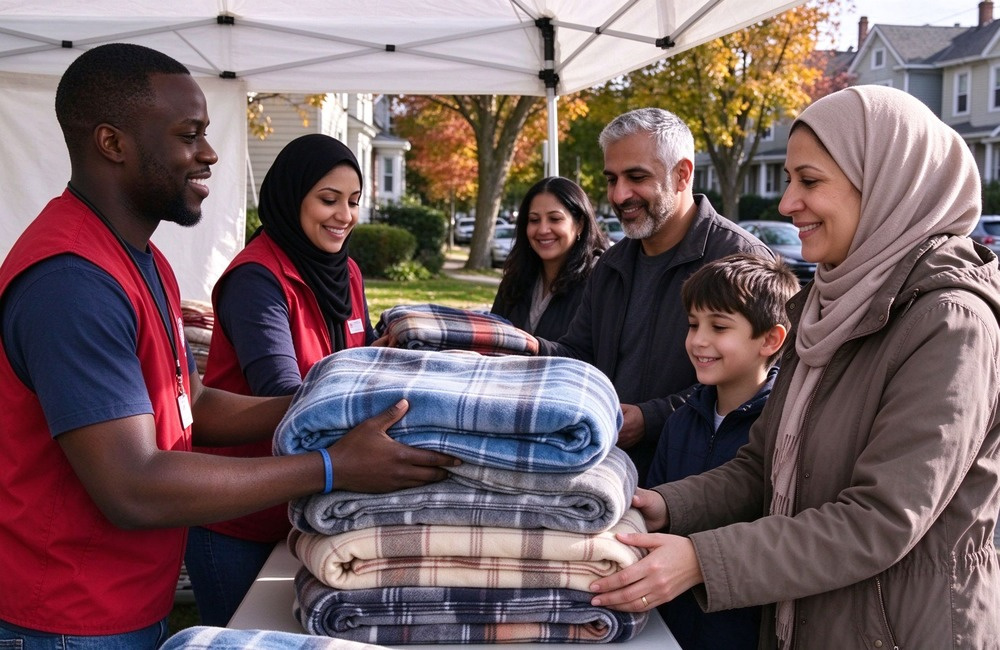
Table of Contents
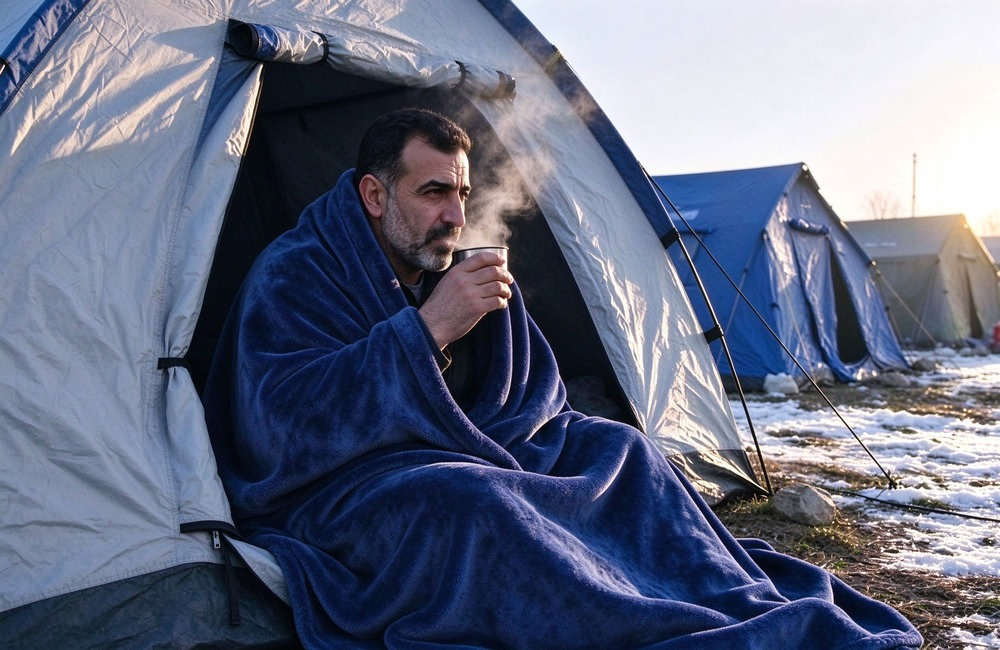
When a community is moved into a gymnasium, school hall or tent camp overnight, the first question is never about fabric technology—it is about whether people will stay warm until morning.
A flannel blanket laid over a folding cot or thin mat adds the layer that turns a cold hall into a place where families can sleep. That is why relief agencies, government stockpiles and camp operators order these blankets in bulk every cold season.
According to UNHCR guidance, bedding and blankets are among the first items distributed when families are displaced, which is why stockpile buyers keep a running reserve.
Distribution speed depends on packing. Blankets that arrive folded in individual bags can be handed out the same day; blankets in bulk cartons need repacking; compressed bales must be aired first.
Matching the packing to your distribution plan—not to habit—saves days of handling and thousands in freight. If this is your first structured buying year, start with an annual blanket procurement plan, then come back to match each packing choice to a delivery plan. The sections below walk through GSM, fabric, size, sewing, packing and the RFQ data that turns these decisions into a written specification.
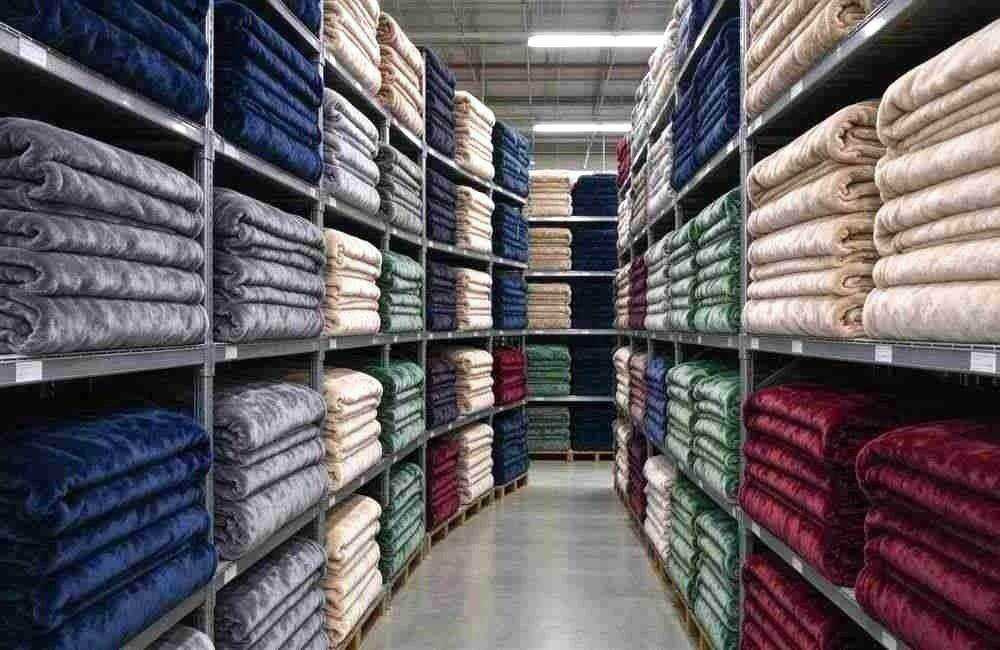
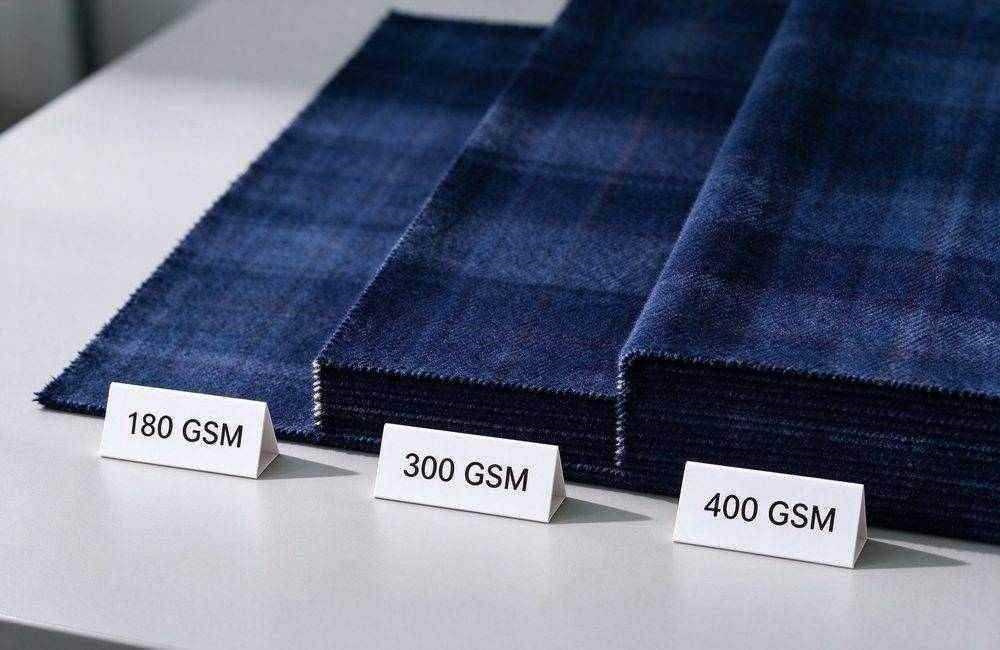
GSM (grams per square metre) is the single most useful number on a flannel blanket spec sheet, because it tells you how much fabric is actually in each blanket. A 150×200 cm blanket at 180 GSM weighs about 0.54 kg; the same blanket at 300 GSM weighs about 0.90 kg; at 400 GSM it reaches roughly 1.20 kg. The heavier the fabric, the more air is trapped between fibres, and the more warmth the blanket holds.
That does not mean "heavier is always better". A government relief buyer stocking blankets for a warm-climate camp may prefer a lighter 180–250 GSM blanket because it packs smaller and costs less per unit. A shelter manager in a cold region, or a buyer supplying night-time cots in unheated halls, will usually specify 300 GSM and above. The right GSM depends on the lowest night temperature, the sleeping setup (cot, mat, bed) and how many washing cycles the blanket must survive.
In tenders, GSM and measured unit weight matter more than a blanket count, because they let evaluators compare bids on the same basis. Two suppliers quoting the same size can propose very different fabric weight, and the lower GSM option is not always cheaper once warmth and wash life are added to the calculation. Put the target GSM and acceptable unit weight range directly in the RFQ so every bid is measured against the same line.
Bulk blankets are priced largely on weight and fibre content. Two blankets with the same GSM but different wool percentages can differ noticeably in both cost and warmth, which is why you should never compare two quotations on size alone. Always ask the supplier to state GSM, measured unit weight and fibre composition on the same line, so the comparison is honest.
GSM Range
Unit Weight (150×200 cm)
Best Fit
Trade-off
180–220 GSM
0.54–0.66 kg
Warm-climate shelters, short stays, budget stockpiles
Lighter and cheaper; less warmth, shorter service life
250–320 GSM
0.75–0.96 kg
General temporary shelters, schools, halls
Balanced warmth and cost; most common relief spec
350–400 GSM
1.05–1.20 kg
Cold-season shelters, night cots, outdoor tents
Warmer and more durable; heavier shipping, higher cost
450–500 GSM
1.35–1.50 kg
Extreme cold, military-style operations
Maximum warmth; bulky, slower to wash and dry
Takeaway: write the lowest night temperature and the sleeping setup into your enquiry first. The supplier can then recommend a GSM band, and you can compare quotes on the same basis instead of guessing.
As a rough field guide, 180–220 GSM flannel suits average night temperatures above 15°C, where the blanket mainly adds comfort rather than critical warmth. From about 10–15°C, 250–300 GSM is the dependable band for a hall or tent with a thin mattress. Below 10°C, especially in unheated halls or outdoor tents, 350 GSM and above becomes the safer choice, and a wool blend should be considered if the site is damp.
These are planning bands, not guarantees: actual warmth also depends on the mattress, the clothing the person sleeps in and whether the space is heated. State the expected conditions in your RFQ and let the supplier confirm the GSM band with production data.
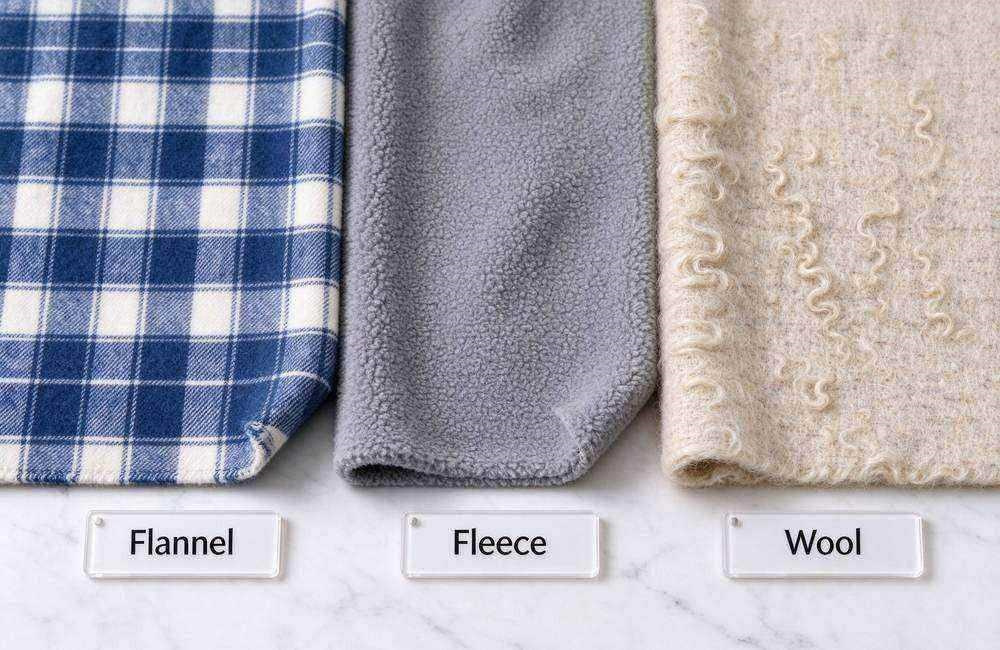
Three fabrics dominate relief blanket procurement, and buyers frequently confuse them. Polyester flannel is a brushed woven fabric with a soft, slightly fuzzy surface and a flat, dense hand feel.
Fleece is a knitted synthetic that is very soft and quick-drying but can pill after repeated washing. Wool blends hold warmth even when damp and resist odour, but they cost more and need gentler washing.
A quick field check for fabric density: hold the blanket up to a light source. Less light passing through means a tighter weave and more still air inside, which keeps a sleeper warm. Flannel drapes closely over a cot, leaving fewer draught gaps than open-knit fleece.
Flannel is also heavier per GSM than open-knit fleece, drapes well, and feels warm immediately against skin.
It is also easier to launder in industrial machines than wool. Most government and NGO specifications for family shelter kits use flannel or flannel-blend blankets at 250–350 GSM precisely because the fabric balances warmth, durability and price.
Check the fibre label carefully. "Flannel" is a finish, not a fibre: 100% cotton flannel exists, but most relief flannel is polyester or a polyester–cotton blend because it washes better in bulk laundry and resists shrinkage. If a supplier quotes "flannel" without stating the fibre percentage, ask for it in writing before you compare prices.
Fabric
Warmth When Damp
Washing & Drying
Typical Relief Use
Polyester flannel
Moderate
Industrial wash, fast dry
Family shelter kits, general relief
Fleece (polyester knit)
Moderate
Easy wash; may pill over time
Light blankets, children's kits, rapid deploy
Wool or wool blend
High (insulates damp)
Gentle wash, slow dry
Cold-climate reserves, military stores
Takeaway: for a general stockpile, polyester flannel at 250–350 GSM is the workhorse choice. Reserve wool blends for cold-climate or military line items.
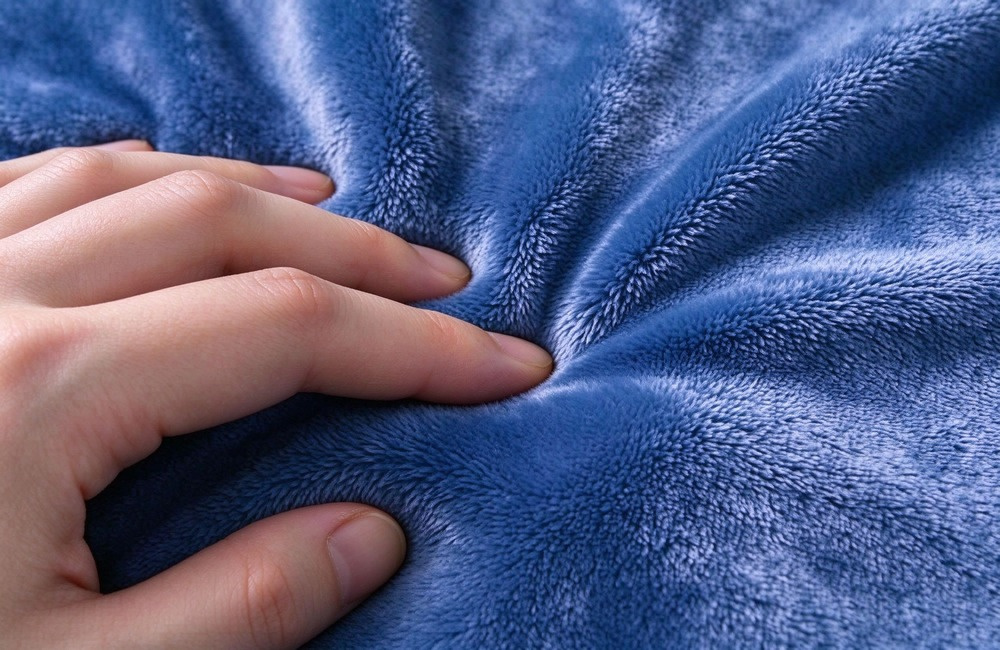
Good flannel has a dense, soft nap on both sides and feels warm to the touch almost immediately. Rub the fabric between your fingers: cheap flannel feels thin and papery, and the nap disappears when pressed.
Hold a folded sample against light—if you can see the light clearly through the weave, the fabric is too open for a winter blanket. Ask the supplier to state the brushing process; a double-brushed polyester flannel is noticeably warmer than a single-brushed one at the same GSM.
A spec sheet is only useful if the numbers can be checked. The three numbers that matter most are GSM, finished size and measured unit weight. GSM is calculated from a fabric sample, finished size is cut and sewn, and unit weight is the whole blanket weighed on a scale. When these three disagree, it usually means the GSM figure is theoretical rather than measured.
When a full carton arrives, weigh it and subtract the carton weight from the packing list to confirm the net blanket weight.
Here is a quick sanity check: multiply the area in square metres by the GSM to estimate the unit weight. For a 150×200 cm blanket, the area is 3.0 m². At 300 GSM, the fabric alone should be about 0.90 kg before hemming and labels; a real blanket with seams and a label usually comes in slightly above that. If a supplier quotes 300 GSM but the unit weight is only 0.60 kg, the GSM claim is wrong or the blanket is smaller than stated.
Ask for the measured unit weight in the packing list, not just the GSM. Weighted by the carton, you can verify a whole shipment: 500 blankets at 0.90 kg each should produce a net weight close to 450 kg plus packaging. This simple check catches the most common bulk blanket quality problems before you pay.
Bulk blanket sourcing works better when you give the supplier a target range instead of a single number, for example "300–320 GSM, 150×200 cm, measured unit weight 0.90–0.98 kg". Ranges tell the factory what is acceptable and make the final QC check objective.
Three errors cause most mismatches. First, quoting only GSM without a unit-weight range, which leaves the factory free to cut corners on size or fibre. Second, quoting a size without specifying "finished size", so the supplier measures before hemming.
Third, accepting "flannel" without a fibre percentage, which can silently switch the fabric to a cheaper smooth weave. Write the full set—fibre %, GSM, finished size, measured unit weight, hem type, stitch density—into the RFQ, and reject any quotation that omits a line item.
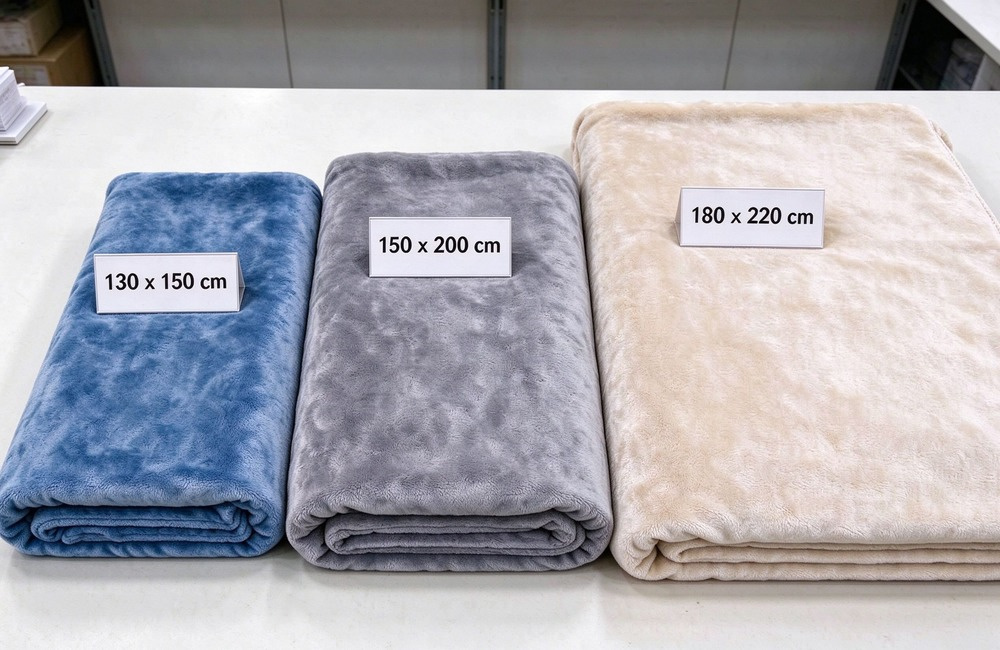
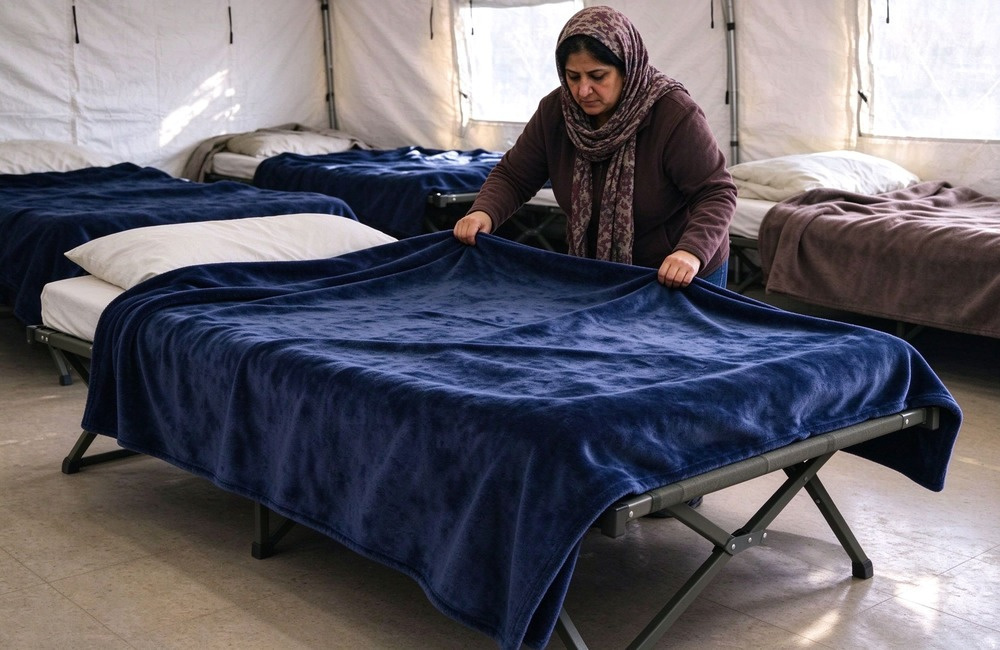
Most temporary shelters use folding cots, foam mats or single beds, and each setup needs a different blanket size. A cot mattress is usually 75–80 cm wide and 190 cm long; a blanket of 150×200 cm gives roughly 35 cm of overhang on each side and at the foot, enough to tuck in on cold nights. A 130×150 cm blanket covers a child's cot but barely reaches over a standard adult cot, so it is best reserved for children's kits.
For family shelters that use double mats or two cots pushed together, buyers often order 180×220 cm or 200×220 cm blankets. These cover the bed surface and leave room to tuck, at the cost of roughly 40% more fabric and weight than a single blanket.
Decide the size from the actual sleeping setup, not from habit: measure the cot or mat in your shelter, add 30 cm overhang per side, and you have the minimum blanket size.
Size also affects the RFQ comparison. Two suppliers may both quote "150×200 cm", but one measures finished size after sewing and the other measures before. Ask whether the dimension is the finished size, and ask for the measured unit weight so you can confirm the real fabric content.
|
Blanket Size |
Fits |
Typical Use |
Notes |
|
130×150 cm |
Children's cots, small mats |
Children's shelter kits |
Small and light; not for adult cots |
|
150×200 cm |
Standard adult cot, single bed |
General relief, most common spec |
About 3.0 m²; the default shelter size |
|
180×220 cm |
Double mat, two pushed cots |
Family shelters, cold regions |
Heavier; higher shipping cost |
|
200×220 cm |
Full double bed, large mats |
Family units, long-term sites |
Maximum coverage; slowest to wash |
Takeaway: 150×200 cm is the default for adult cots. Measure your actual sleeping setup, add 30 cm of tuck-overhang per side, and only then lock the size into the RFQ.
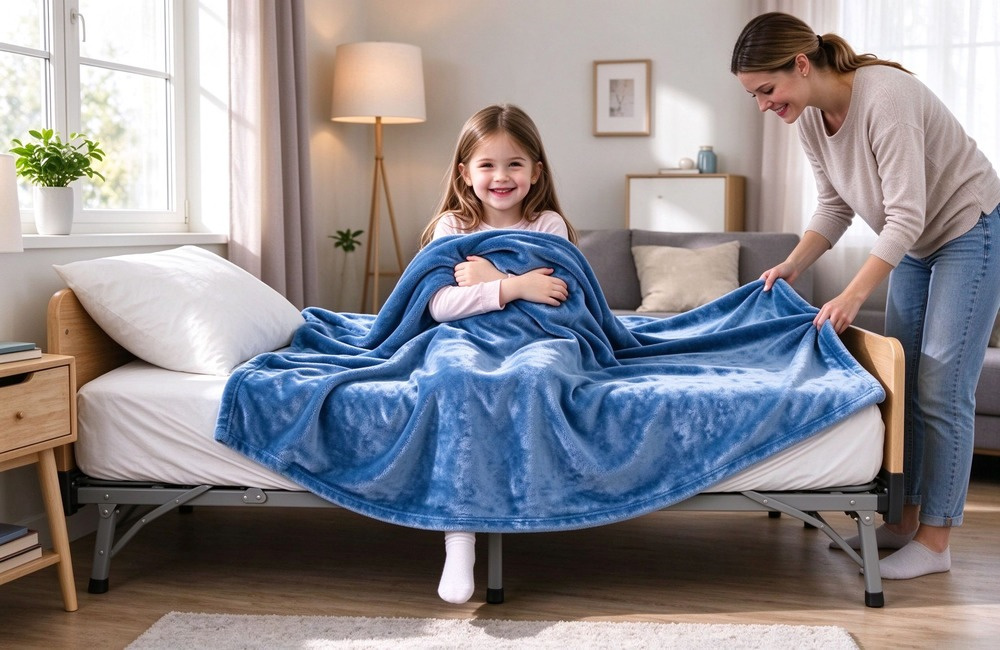
Children lose heat faster than adults, but a full-size adult blanket wraps a small child awkwardly and becomes a tripping hazard on the floor. Many shelter kits include one adult blanket (150×200 cm) and one child blanket (130×150 cm) per family unit, which also lets siblings share bedding in a single cot.
For family sites where two cots sit side by side, a 180×220 cm blanket covers both as one shared layer. Keep the child size in the same fabric and GSM as the adult size so the whole site washes identically.
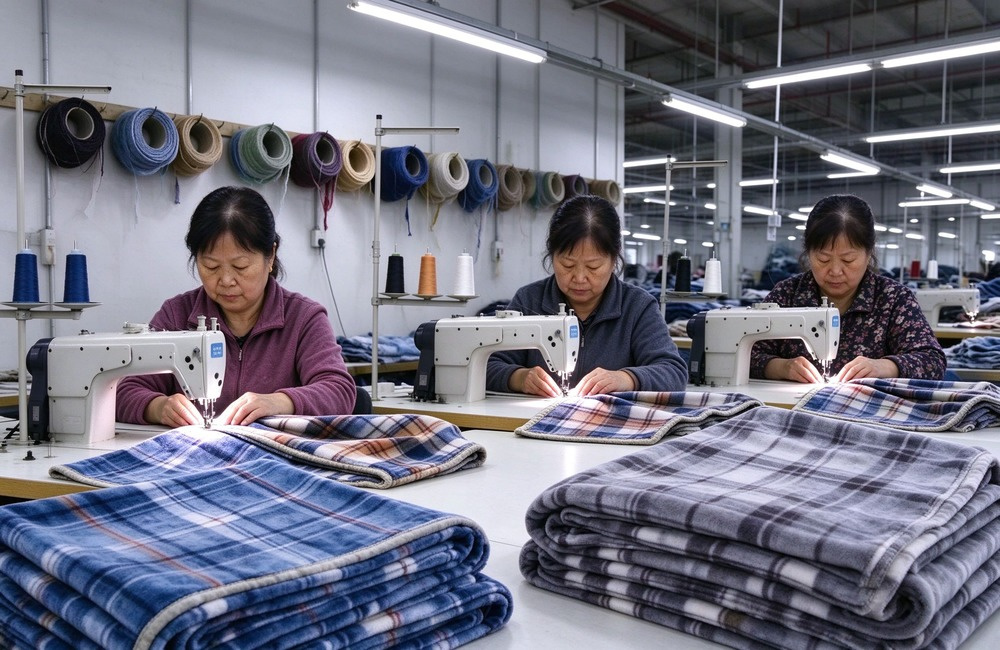
A blanket is only as good as its edges. In shelters, blankets are pulled, washed in industrial machines and used every night, so the hem and stitching take more abuse than the fabric itself. The two details to check are the hem construction and the seam density.
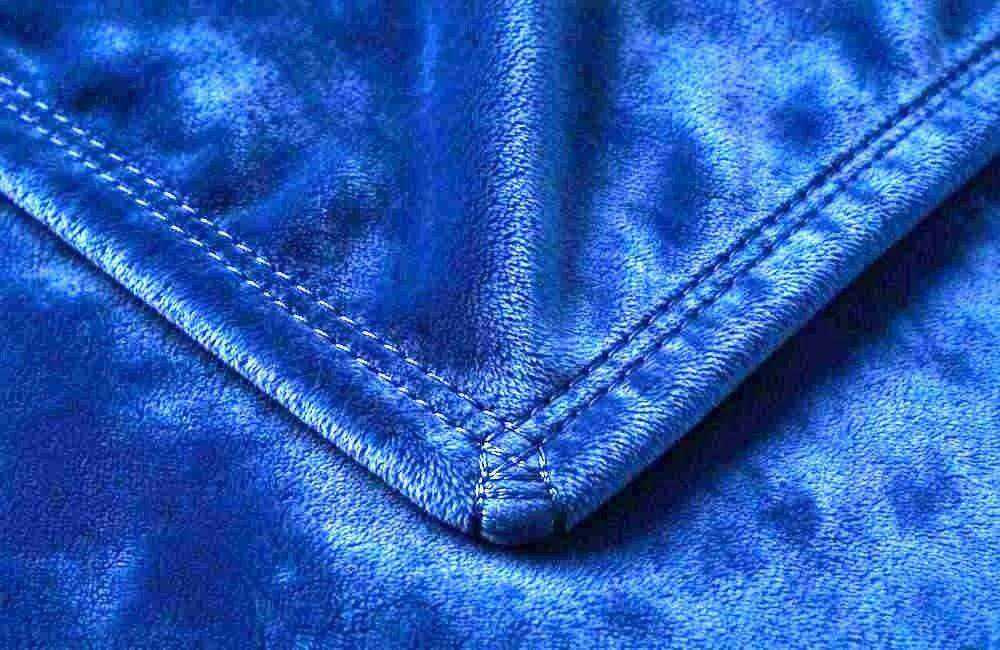
Ask about stitch density on the hem: 4–5 stitches per inch is a common durable spec for relief blankets, and loose stitching shows up quickly at the corners of a 150×200 cm blanket after the first industrial wash. Run a fingernail along the hem stitching to feel for skipped stitches, and inspect the corner reinforcement where the two hem edges meet.
Look for a folded hem sewn with a double row of stitching, or a reinforced overlock edge. A single raw edge with one line of stitching will fray within a few industrial washes.
Ask the supplier for a photo of the edge before you approve the sample, and check that the corner is reinforced—corners are the first place seams open on a cot.
Seam density matters too. Standard relief blanket specs usually ask for 4–5 stitches per centimetre. Fewer stitches than that means the edge will open under stress; more is unnecessary and slows production. Ask the factory for the stitch count in the QC sheet, and check the thread colour matches the fabric so repairs are invisible.
Finally, check for loose threads and label placement. A quality-control pass should remove loose threads at the hem, and the care label should be sewn flat so it does not catch on zippers or cots. These small details separate a blanket wholesale supplier that ships inspection-ready goods from one that ships production seconds.
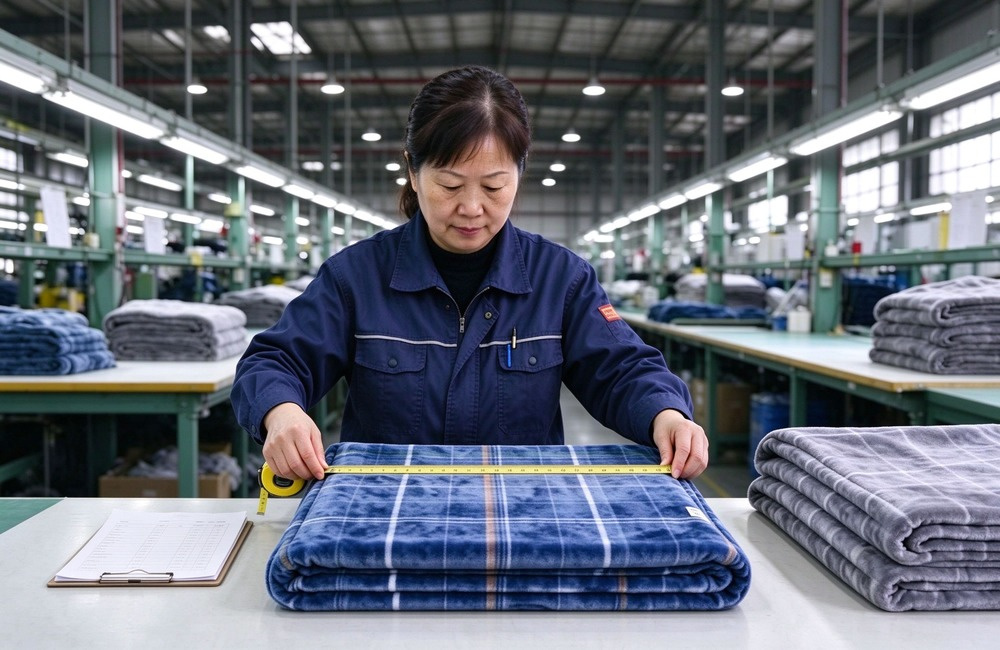
A credible quality-control sheet for bulk blankets covers measured unit weight (average and range), finished size per piece, GSM check from the production fabric roll, stitch density, hem inspection, loose-thread count and a colour-fastness result.
Ask for the QC sheet to accompany the production sample, then spot-check 5% of the delivered cartons against the same numbers. If the average unit weight of the shipment is below the approved sample, you have objective grounds to reject or renegotiate before the goods leave the factory.
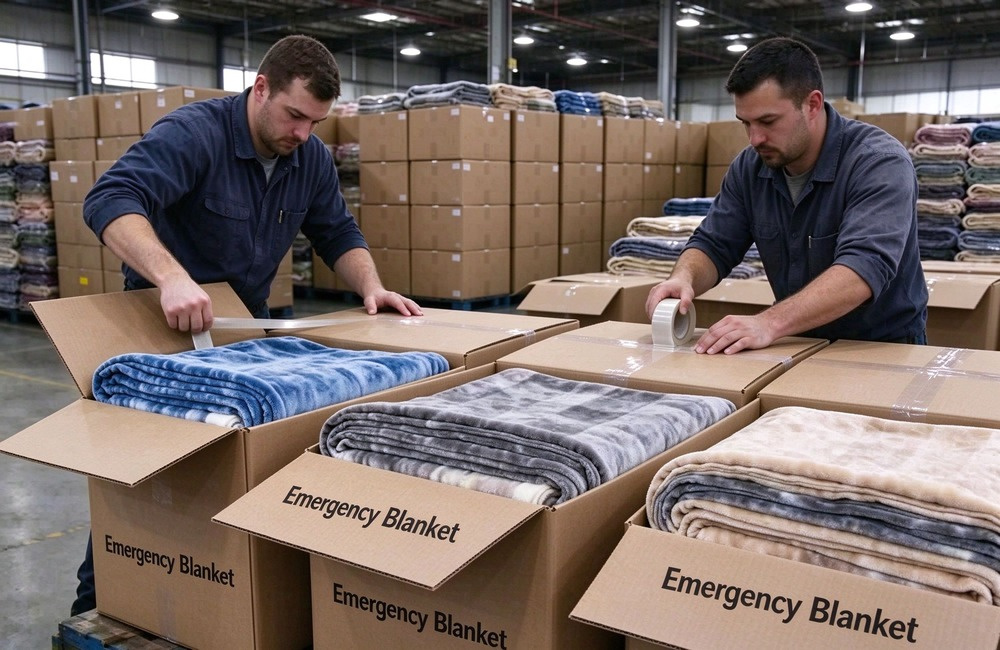
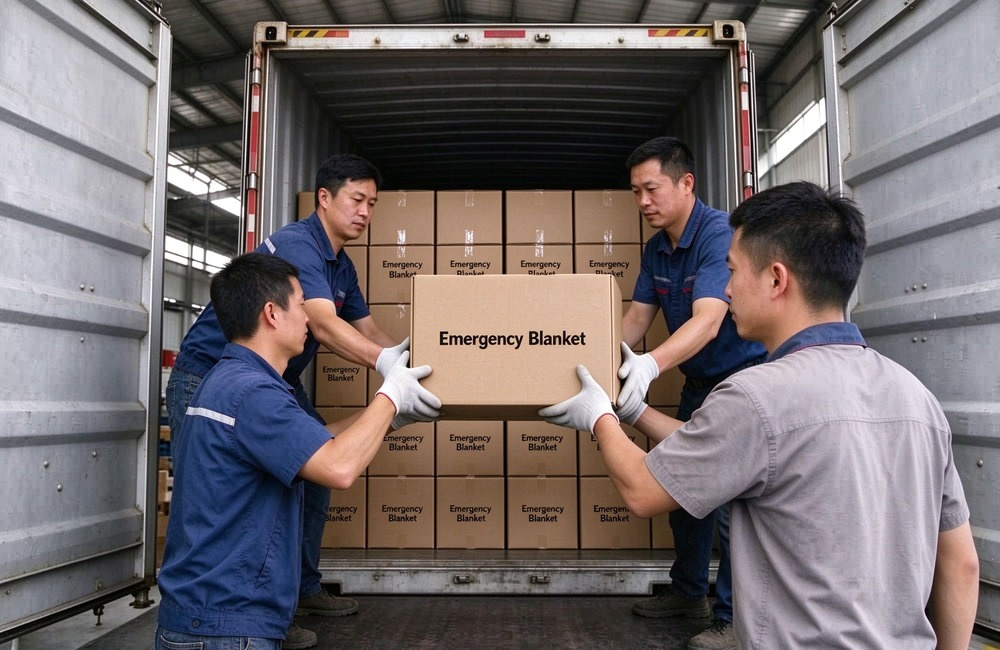
Packing is where buyers most often overpay, because shipping volume drives freight cost as much as weight does. Three options are common: individual polybag packing, bulk carton packing, and compressed bales.
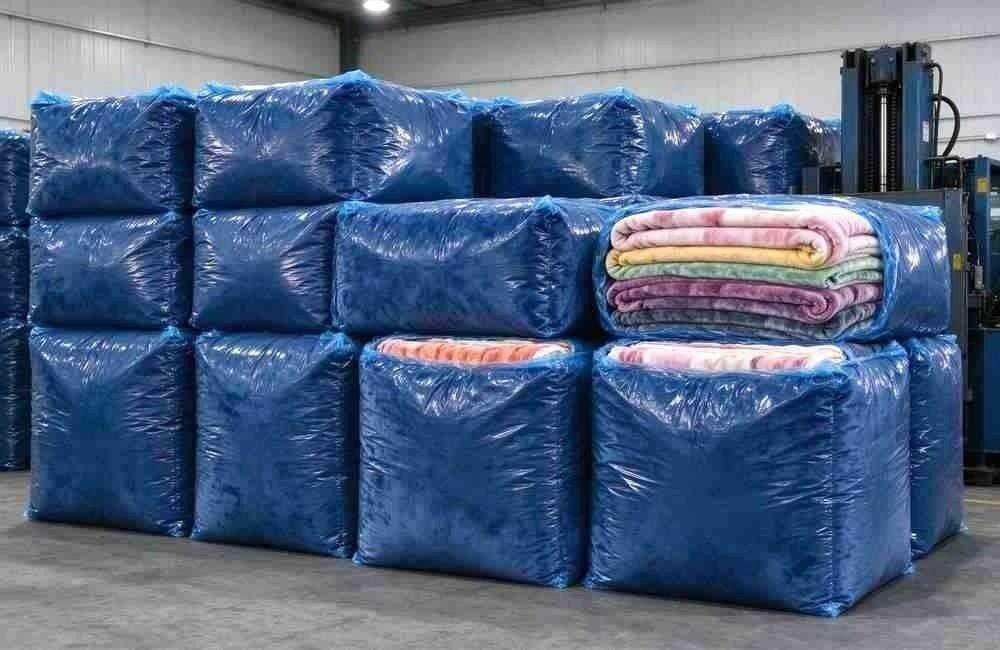
Individual polybags protect each blanket for distribution but add packaging cost and volume. They suit shelter kits where each family receives a sealed blanket. Bulk carton packing—often 10 or 20 blankets per carton—is the cheapest per unit and easiest for warehouse storage, but you need to repack before distribution. Compressed bales shrink the volume dramatically by vacuum-pressing blankets, which cuts ocean freight, but the blankets must be shaken or aired before use and some fabrics crease.
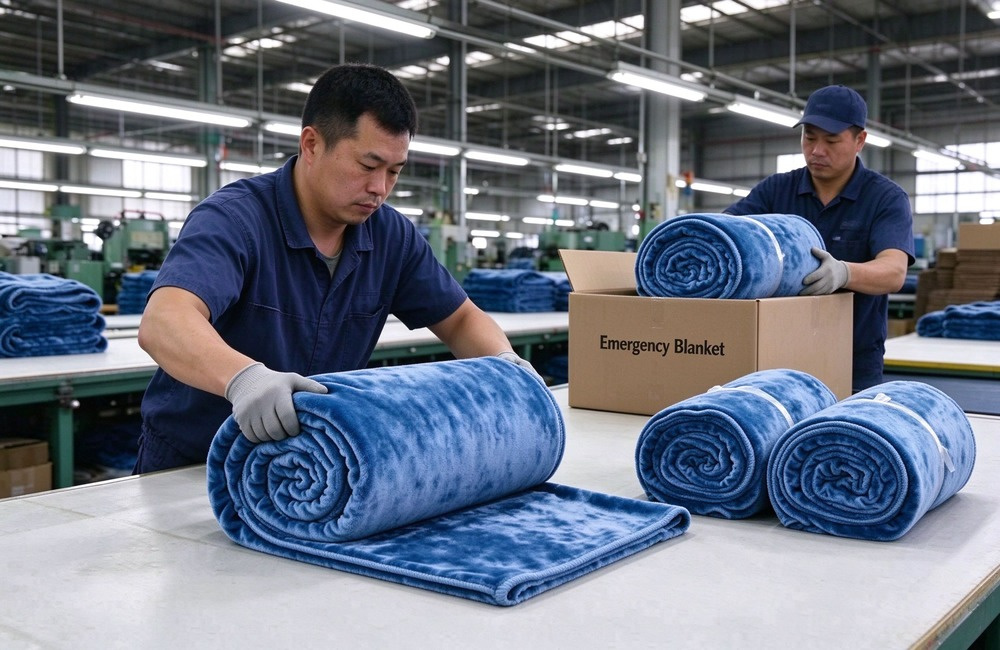
Compression changes the spec you quote to logistics. A 300 GSM flannel blanket compressed to about a third of its volume lets you fit roughly three times more per container, which can save thousands of dollars on a large order.
The trade-off is handling time and the risk of permanent creases in the flannel if the bale is stored compressed too long. Ask the supplier how long the blanket can stay compressed before it needs airing.
|
Packing Option |
Best For |
Freight Volume |
Handling Before Use |
|
Individual polybag |
Direct distribution kits |
Highest |
None—ready to hand out |
|
Bulk carton (10–20 pcs) |
Warehouse stockpiles, phased distribution |
Medium |
Repack before distribution |
|
Compressed bale |
Large overseas shipments |
Lowest (up to ~3× saving) |
Shake out, air before use |
Takeaway: match packing to your distribution plan, not to habit. If you hand blankets out directly, use polybags or cartons; if you ship across an ocean, compare compressed-bale freight savings against the extra handling time.
To estimate freight, convert the blanket volume into carton numbers. A 150×200 cm 300 GSM flannel blanket folds to roughly 30×22×8 cm loose, about 10–12 blankets per standard carton. A 40-ft container holds roughly 55–60 m³ of cargo; at 12 blankets per carton and cartons of about 0.09 m³, one container carries roughly 6,500–7,500 loose blankets.
Compressed bales reduce volume to roughly a third, pushing the same container to about 18,000–22,000 blankets. Ask the supplier for the exact carton or bale dimensions with your RFQ, then calculate freight with your forwarder before comparing unit prices.
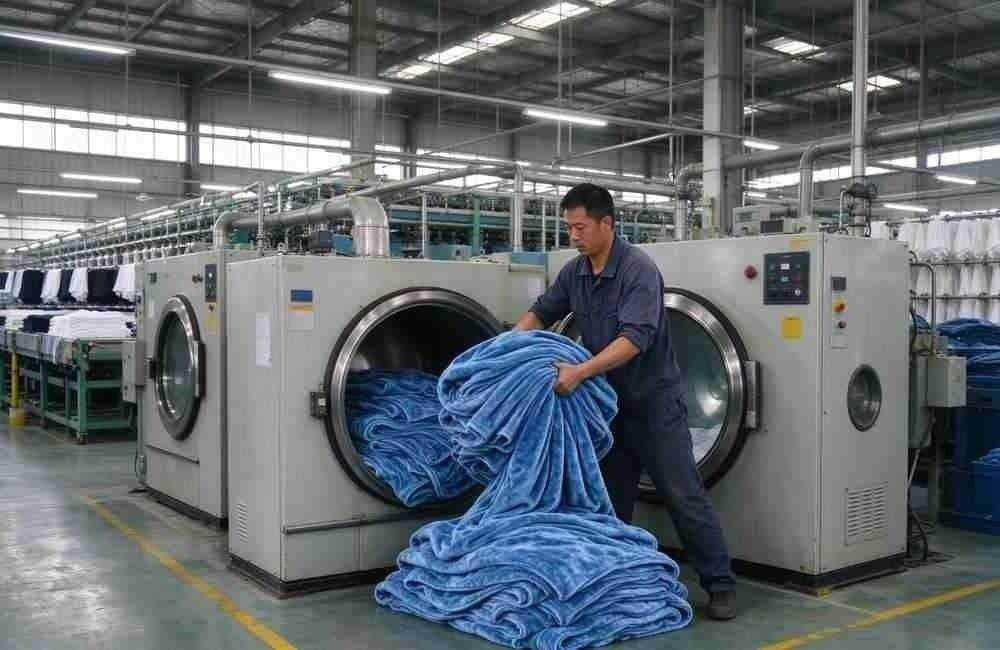
Shelter stays rarely last one night. A temporary site can operate for months, and a blanket that survives 50 industrial wash cycles is worth more than one that survives 10, even if it costs a little more. The washability of flannel depends on fibre, GSM and dye.
Polyester flannel handles industrial washing well : it dries fast, resists shrinking and holds colour. Wool blends need cooler water and gentle cycles, which complicates central laundry operations. Colourfastness matters because shelters often wash mixed batches; a blanket that bleeds dye stains the whole load. Ask for a wash-test report or a lab result for colour fastness to washing, and ask how many cycles the fabric is rated for.
Specify non-chlorine bleach on the care label if the site will wash blankets in shared machines. Chlorine bleach shortens the life of polyester flannel and can leave faded patches that make a clean blanket look dirty. A simple wash temperature and bleach rule on the label keeps every volunteer washing the same way.
Durability also depends on GSM. Light 180 GSM flannel will thin and pill faster under nightly use and weekly washing. If your site is long-term, specify 300 GSM or above and request a pilling rating in the QC data.
For emergency first-response stockpiles that may sit in a warehouse for years, check the fabric's resistance to ageing and moisture; store blankets in dry, ventilated cartons off the floor.
Write the washing standard into the contract. Common relief specifications reference ISO 105 for colour fastness and require shrinkage under 3% after five washes. If the supplier's lab data shows higher shrinkage, the blanket will distort and lose size in your laundry, so settle this before bulk production rather than after.
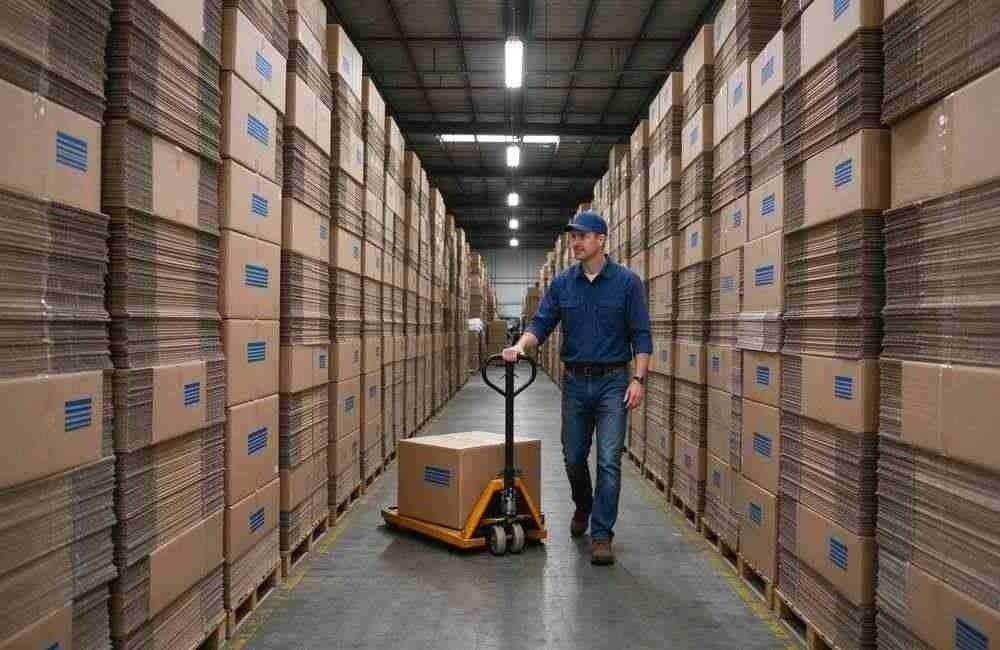
Blankets stored for years can arrive at the shelter smelling musty or stained with mildew if the warehouse is damp. Store cartons on pallets at least 15 cm off the floor, keep the warehouse ventilated and below 60% relative humidity, and avoid storing near chemicals.
For compressed bales, plan to rotate stock: blankets pressed too long can take on permanent creases, so label bales with the pressing date and air the oldest stock first. A simple storage log—date in, quantity, warehouse area—makes the stockpile easier to audit when an emergency triggers distribution.
A sample is not proof of quality—it is proof of communication. The sample tells you whether the supplier understood GSM, size, fabric finish and packing, and whether the production line can actually make what the spec sheet describes. Order a sample that mirrors the bulk order: same fabric, same GSM, same hem, same label.
Check the sample against five points: measured weight (weigh it on your own scale), finished size (measure it flat), fabric hand (is it brushed flannel, not smooth woven?), edge quality (double hem, reinforced corners) and label accuracy.
Ask whether the sample is a lab sample or a production sample. A production sample comes from the actual bulk line; a lab sample may be made by hand and look better than production output. Request both when the budget allows.
Take a photo of the sample next to a ruler so the measurement is documented. If the sample fails on weight or size, the bulk order will fail the same way—do not proceed on a verbal promise to fix it.
Ask for a production sample before mass production, not just a pre-production sample. A pre-production sample comes from the actual production line and includes the final packaging and labels, so it proves the line setup. Budget 2–3 weeks for sample transit and QC, and request the sample report (GSM, weight, size, colour fastness) in writing with the sample.
Bulk blanket RFQ processes run smoother when the sample stage is written into the timeline. Agree in the contract that bulk production starts only after you approve the production sample in writing. This one clause prevents the most common dispute in wholesale blanket buying: "the bulk looks nothing like the sample".
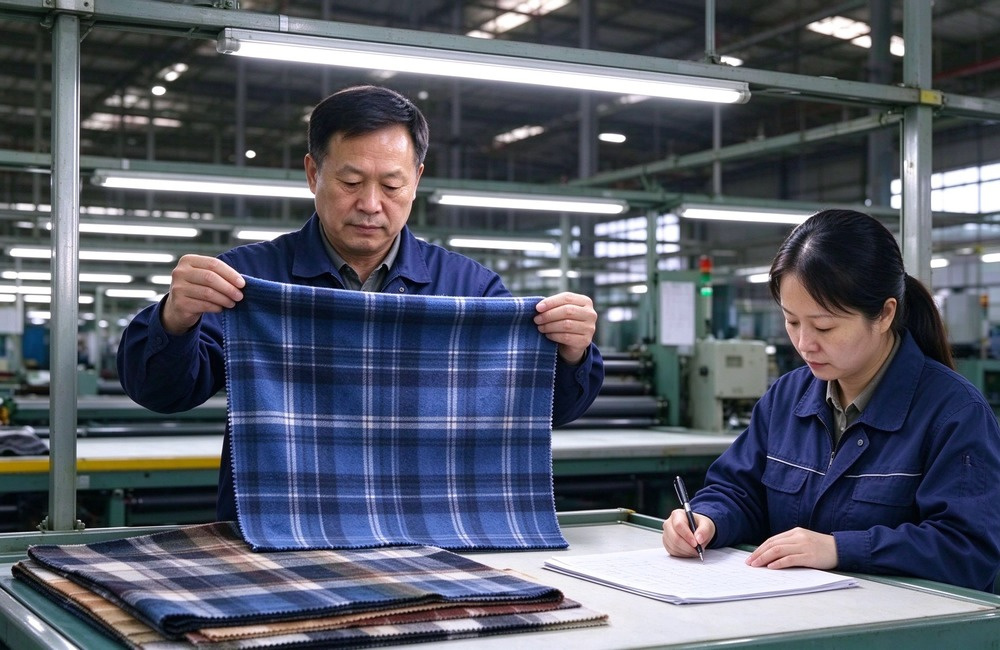
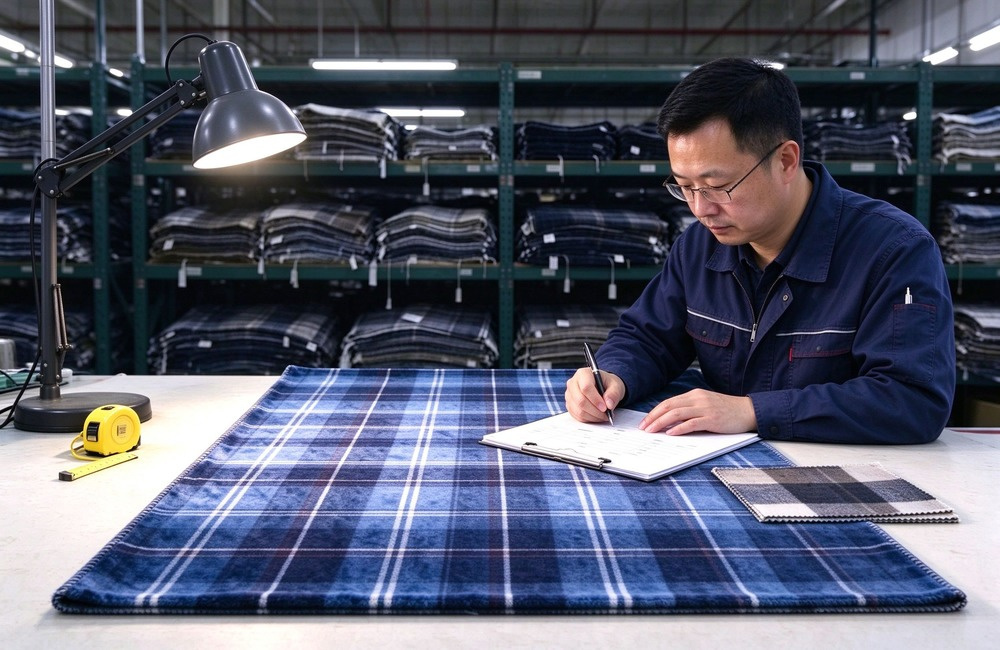
Document every sample with a photo that includes a ruler and a plain background, then store the image in your procurement file. When the bulk shipment arrives, shoot the same setup with a randomly selected blanket from a delivered carton and compare.
Size, hem and fabric hand are all visible in a side-by-side photo, and the image removes the "we never agreed to that" argument if a dispute arises. Keep the approved sample itself in a labelled bag for the duration of the order.
Send the same RFQ structure to every shortlisted supplier so the quotations are comparable line by line; a structured RFQ also improves response quality. The checklist below covers fabric, construction, packing, QC and commercial terms.
Request each item in writing. Where a supplier cannot answer a data point—for example, a wash-test report—ask them to say so explicitly. A supplier that refuses to state fibre or measured unit weight is a red flag.
|
RFQ Data Point |
Why It Matters |
Minimum You Should Accept |
|
Fibre composition % |
Determines warmth, washability |
Written percentage per component |
|
GSM and measured unit weight |
Verifies fabric content; catches underweight |
Both stated; weight ±5% of estimate |
|
Finished size |
Must match your cots and mats |
Stated as finished size after sewing |
|
Hem and seam construction |
Determines durability in industrial washing |
Double-stitched or overlocked hem; 4–5 stitches/cm |
|
Colour fastness / shrinkage data |
Prevents bleeding and distortion |
Wash-test summary; shrinkage under 3% |
|
Packing and carton details |
Drives freight cost and handling |
Pcs per carton, carton size, gross weight |
|
Lead time and payment terms |
Plans delivery schedule and cash flow |
Stated in writing; MOQ and price per contract |
Takeaway: a complete RFQ answers the same seven questions from every supplier. Compare the answers line by line, and treat missing data as a reason to ask again rather than a reason to guess.
Build one comparison sheet with a column per supplier and rows for each RFQ line : fibre %, GSM, unit weight, finished size, hem, stitch density, colour fastness, packing, carton specs, lead time and payment terms. Fill the rows from the written quotations only—never from memory or phone promises. Mark any missing cell as "not stated" and ask again.
When two suppliers differ on a data point, ask each one to confirm in writing, then compare confirmed numbers. The cheapest quote is only the cheapest after every line is filled; an unverified low price usually hides lower GSM or thinner fabric.
Add one line to the RFQ for a packing list per carton: pieces, carton dimensions, gross and net weight.
Use the comparison sheet to make the final call: a supplier who confirms GSM, unit weight, fibre percentage and lead time in writing, and answers every missing cell, is safer than the cheapest quote. Keep the sheet with the order so the receiving team can check the same numbers on arrival.

For general temporary shelters, 250–320 GSM is the practical band: warm enough for normal nights, durable through industrial washing and affordable in bulk. Use 180–220 GSM as a field guide for warm climates and budget stockpiles, and 350 GSM or above for cold-season sites. Set the band from your coldest recorded night temperature over the last two winters, not the average.
Usually yes. Flannel is a denser brushed woven, so at the same GSM it holds more still air and drapes better over a cot than open-knit fleece. Fleece is softer and dries faster but can pill after repeated washing. For adult shelter bedding where warmth per kilo and wash durability matter, flannel is the safer spec; fleece can win on feel for children’s kits.
A 150×200 cm blanket fits a standard 75–80 cm wide, 190 cm long cot with about 35 cm of overhang per side—enough to tuck in. For double mats or two cots together, order 180×220 cm or larger. For narrower child cots, a 130×150 cm blanket covers the surface with a small overhang and weighs less.
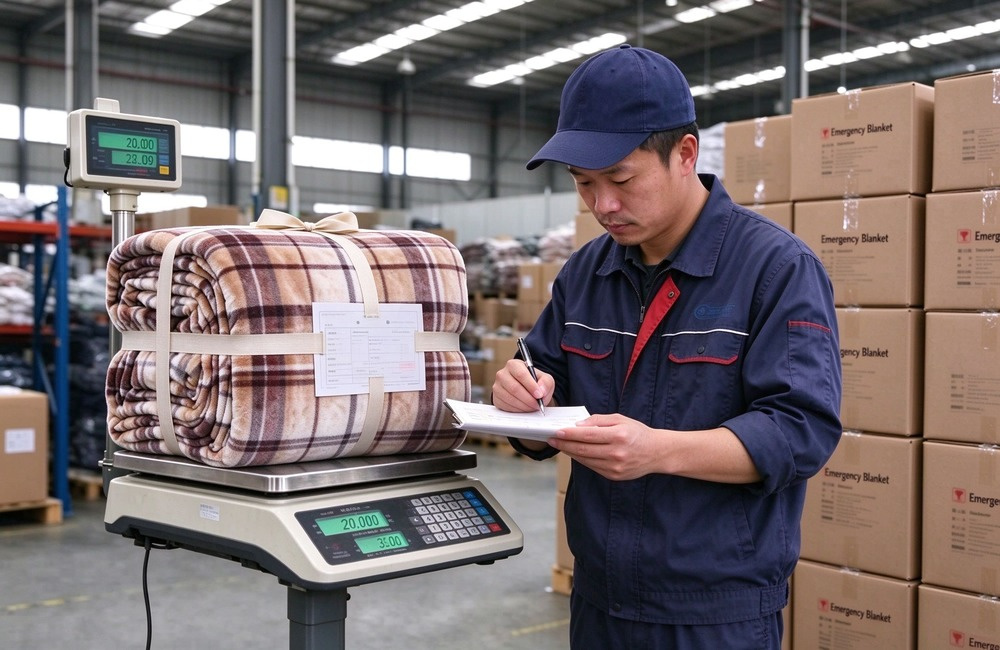
Multiply the blanket area (m²) by the claimed GSM to estimate unit weight, then weigh the sample. A 150×200 cm blanket at 300 GSM should weigh close to 0.90 kg before packaging; if the measured weight is far lower, the GSM claim is unreliable. The same area check works for any size.
Yes. Polyester flannel withstands industrial washing, dries quickly and resists shrinking. Request colour-fastness and shrinkage data—under 3% after five washes is a common relief specification—and confirm the washing temperature with the supplier. Industrial cycles use hotter water and stronger agitation than household machines.
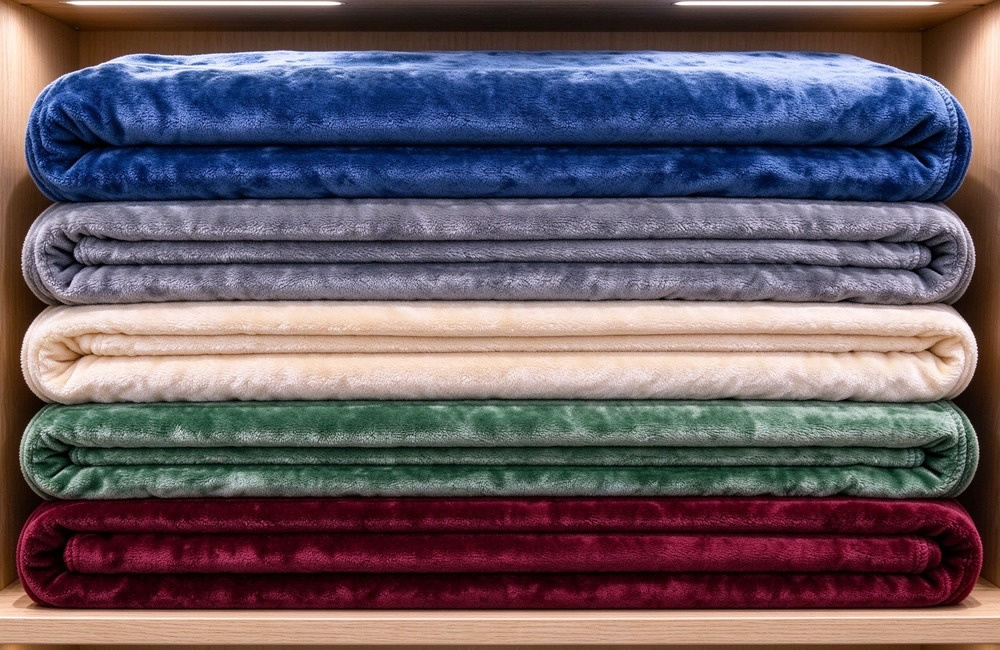
Wool blends hold warmth even when damp and resist odour, but cost more, need gentler washing and dry slowly. Flannel is cheaper, easier to launder and adequate for most shelter conditions. For extreme cold or military-style reserves, wool blends earn their price; a 30% wool 70% polyester blend is a common middle option.
Compressed bales cut ocean freight—roughly three times more blankets per container—but need airing before use. Cartons are easier to store and distribute directly. Choose by your distribution plan: compressed for long overseas shipments, cartons or polybags for direct handling.

Weigh it, measure the finished size flat, feel the surface (brushed flannel, not smooth woven), check the hem is double-stitched with reinforced corners, and verify the label. Keep a photo of the sample beside a ruler, and wash one sample through a normal industrial cycle before measuring.
Price differences usually come from GSM, fibre percentage, sewing quality and packing—not size alone. Two ‘150×200 cm’ blankets can differ by 30% in weight and warmth. Compare GSM, measured unit weight and fibre composition line by line, and ask each supplier for a high-level cost breakdown.

Typical bulk production takes 3–5 weeks after sample approval, plus 1–2 weeks for sample transit and QC, then shipping time. Ask for a written lead time and build buffer into your delivery plan. Work backwards from the distribution date: add shipping, QC and contingency weeks.
Yes. Most relief blanket factories offer custom finished sizes, colours and packing, with minimum order quantities agreed per contract. Send your target size and colour early in the RFQ—ideally a Pantone reference—so sampling and production planning start on the right basis.

Ask for the documents that exist for your specific product and market: fibre composition test reports, colour-fastness and shrinkage lab results, and any applicable flammability certification for the destination market. Only state certifications the supplier provides—do not assume. Keep the list short and verified: request a copy of each certificate and check it is issued for the actual product and factory. When drafting a tender, relief buyers often mirror the standards published by organizations such as the International Federation of Red Cross and Red Crescent Societies.
A short checklist before you issue your flannel blanket order: GSM band agreed, measured unit weight target written, finished size confirmed against the cot dimensions, hem and stitch spec stated, packing and carton spec fixed, and the QC sheet format agreed. Any line still open at this stage will cost more to fix after production starts.
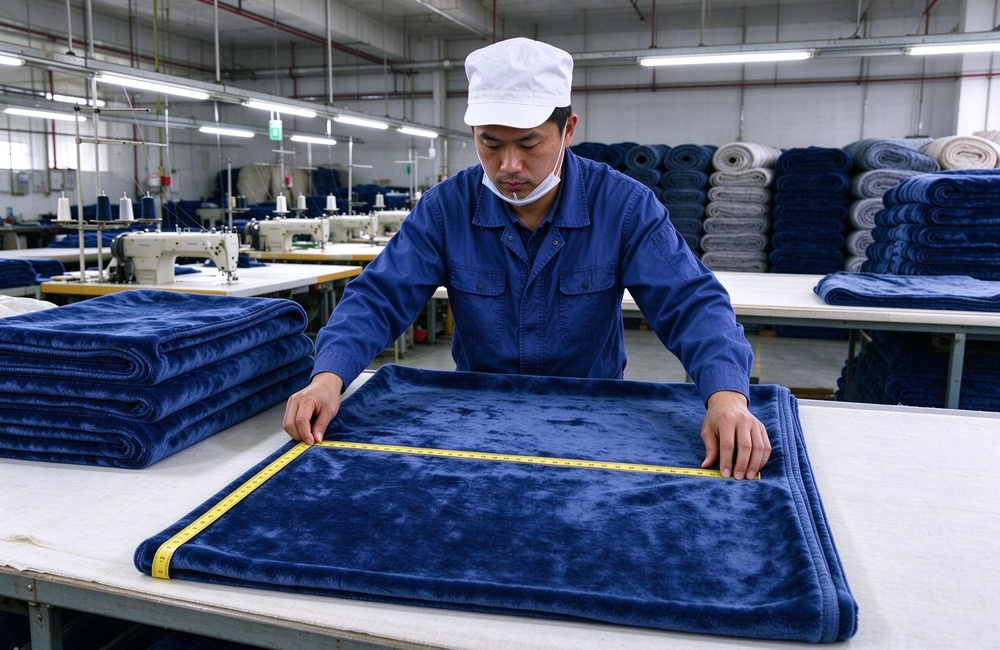
For a fast first screen, keep three numbers together in your file: GSM, measured unit weight and finished size. They answer most quality questions before a single carton is opened, and they are the same three numbers you should ask every supplier to put on the packing list.
According to Sphere standards for shelter and settlement, bedding that protects people from cold and maintains dignity is a core requirement. Before you commit to bulk production, confirm the flannel blanket on the actual sleeping setup: lay the sample on the cot or mat you will use, tuck it the way your team will tuck it, and check coverage, draught at the edges and warmth after one night.
This final check costs one sample and one hour, and it is the difference between a blanket that works on paper and one that works in the shelter. Verify the measured unit weight against the approved sample, keep the QC sheet with the delivery, and only then release the bulk order.
Ready to compare?
Send one structured RFQ with the seven data points above to three suppliers, and compare the answers line by line. If you need a blank RFQ template with the checklist, reply and we will send it.
 |

|
روابط ودية :
حقوق النشر © Custom Disaster - Relief Bedding: Tents, Sleeping Bags, Blankets كل الحقوق محفوظة
الفريق المحترف للخدمة !