التصنيفات
November 14, 2026 · Thunderstorm emergency kit
Thunderstorms can arrive with little warning, bringing lightning, heavy rain and hail that endanger outdoor events, campsites and community sites.
This guide helps procurement teams stock rain gear and weather radios, waterproof alert receivers and lightning safety supplies, apply the 30/30 rule, and keep shelters safe before, during and after a storm.
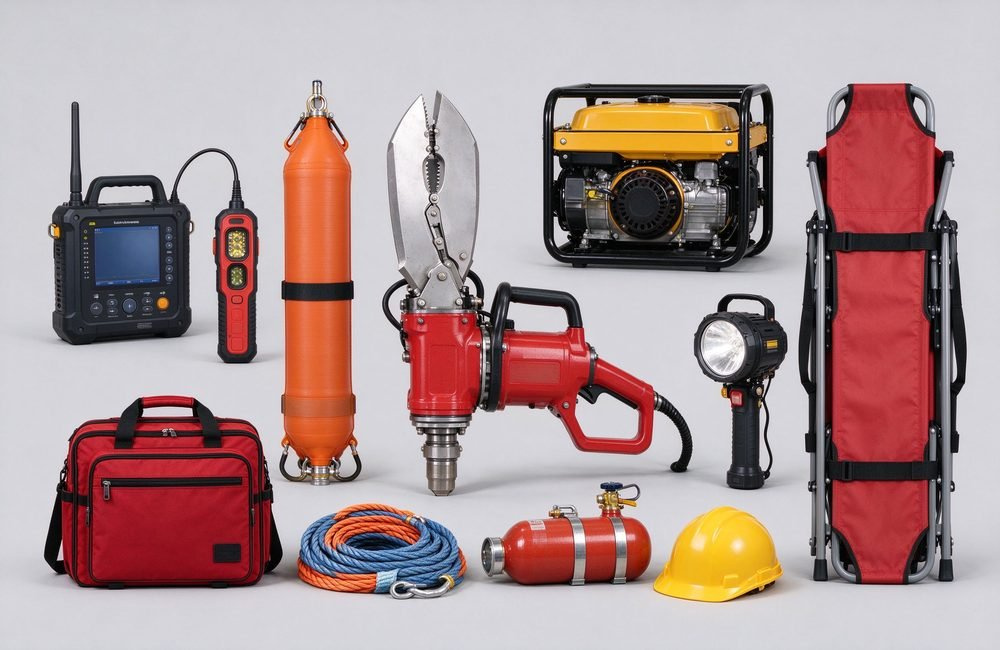
Complete thunderstorm emergency kit flatlay with waterproof rain ponchos, hand-crank weather radio
A complete thunderstorm emergency kit covers rain gear, radios, light and warmth.
Radio and alert coverage come first. A waterproof weather radio with a hand crank receives dedicated weather alert channels and sounds an automatic siren when a warning is issued, which gives staff the minutes they need to move people to shelter before the storm arrives.
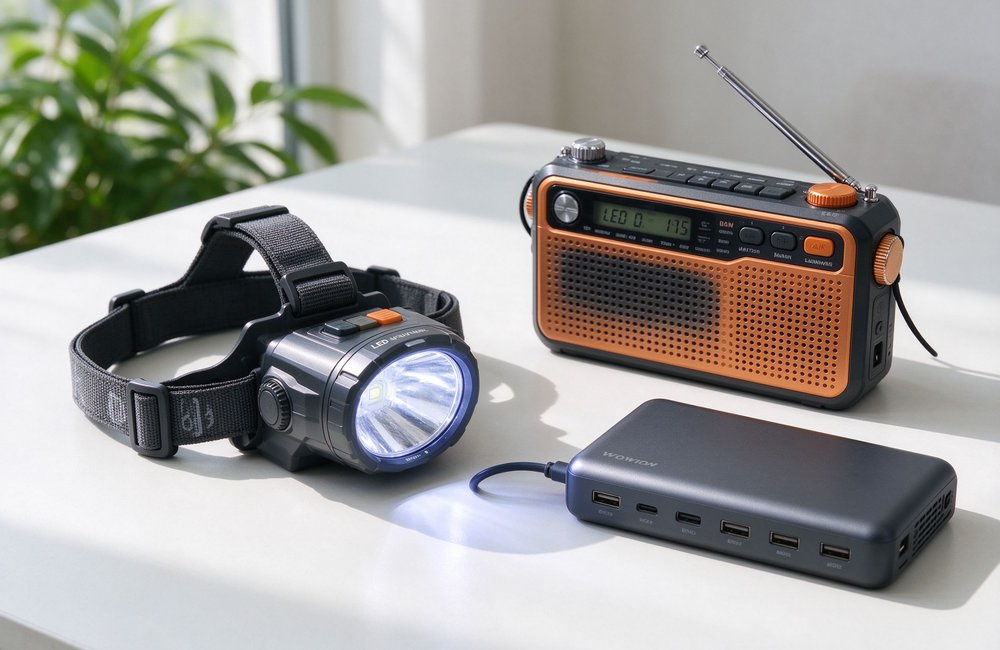
Waterproof emergency flashlight and NOAA weather radio for thunderstorm shelter use, orange and black housing
A waterproof weather radio with flashlight is the core of any storm kit.
Lightning is the deadliest part of a thunderstorm. A single bolt carries up to one billion volts, and strikes can occur more than 16 kilometers from the rain core, which is why every outdoor site needs a documented lightning safety procedure that staff practice before the season.
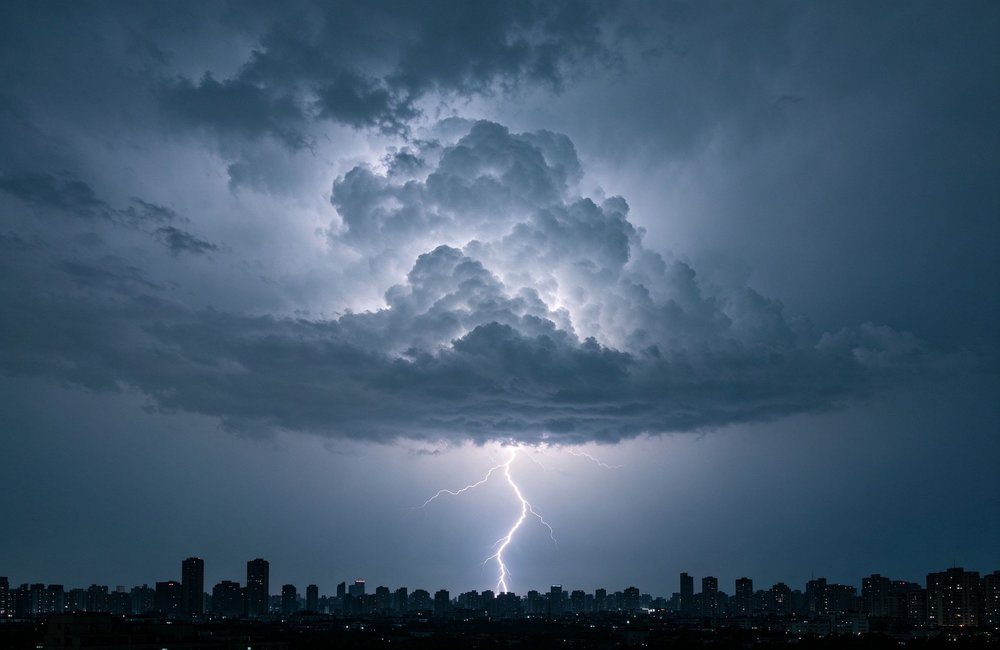
Bright lightning bolt striking over a city skyline at night during a severe thunderstorm with dark clouds
Lightning strikes without warning, which is why the 30/30 rule exists.
The thunderstorm emergency kit includes when the warning sounds, everyone moves indoors. Family and staff shelter plans should name the safe building, keep emergency supplies within reach and stay inside for the full 30/30 window until the storm system has completely passed.
Move children, older adults and anyone with limited mobility first, and keep everyone together until staff confirm the all-clear.
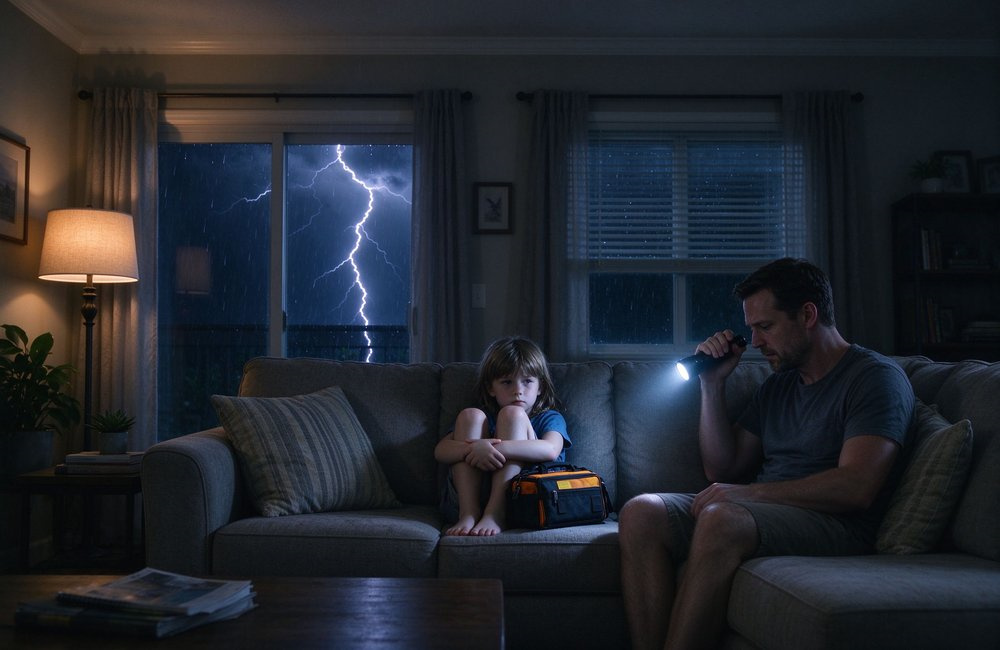
Family sheltering indoors during thunderstorm with child holding emergency flashlight and parents staying safe
Indoor shelter supplies keep families safe until the storm passes.
The thunderstorm emergency kit includes heavy rain follows the lightning. A thunderstorm can drop several centimeters of water in under an hour, flooding roads and low-lying areas while the sky is still dark.
Shelters need drainage awareness, waterproof gear and a plan for rising water, not just for lightning.
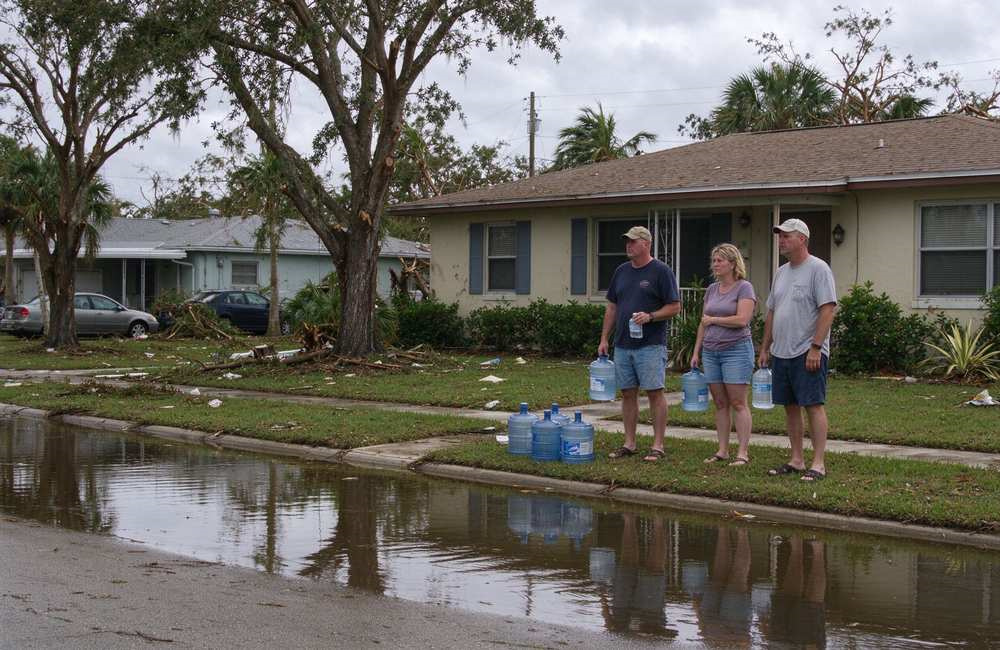
Flooded residential street after a heavy thunderstorm with cars half submerged and residents walking
Heavy rain can flood streets within minutes after a thunderstorm.
The thunderstorm emergency kit includes thunderstorms move fast. A system visible on the horizon can be overhead in 20 minutes, and lightning can strike more than 16 kilometers ahead of the storm itself.
People can be hit while the sky above them still looks clear, which is why preparation has to happen before the warning, not during the storm.
The thunderstorm emergency kit includes for campsite operators, outdoor event organizers and construction site managers, the risk window is short and the consequences are severe.
Lightning causes hundreds of deaths and thousands of injuries every year worldwide, and most of them happen outdoors where people have no shelter plan.
A stocked thunderstorm emergency kit, a trained weather watcher and a written response plan close most of that gap. Pre-staged severe storm response equipment on site turns a warning into an orderly evacuation rather than a scramble.
The thunderstorm emergency kit includes lightning is not the only threat. Golf-ball-sized hail can fall for five to ten minutes and cause injuries, broken windows, roof damage and vehicle loss.
Straight-line winds in a thunderstorm can reach 100 kilometers per hour, downing trees and power lines.
Heavy rain can flood roads within minutes, cutting off access to the very people who need help.
The thunderstorm emergency kit includes community shelters and event grounds face the same core problem: outdoor space with no built-in protection.
A sports field, a fairground or a campground cannot shelter hundreds of people in a storm unless someone has stocked the right gear and trained the staff to use it.
The thunderstorm emergency kit includes procurement teams can close the gap with three steps: buy a weather alert radio for every staff zone, stock reusable rain gear and blankets in bulk, and document the 30/30 rule so every staff member can apply it under pressure.
The thunderstorm emergency kit includes storm frequency varies by region, but the response does not.
A site that sees one storm a year needs the same radio, gear and training as a site that sees twenty, because the warning arrives the same way and the shelter window is the same length.
The thunderstorm emergency kit includes these secondary risks create a second wave of demand after the storm: shelter capacity, drinking water, first aid and cleanup. Sites that stocked thunderstorm safety supplies and severe storm response equipment before the season can respond in hours.
Sites that wait until the warning often find suppliers backlogged and delivery times doubled, which is why storm readiness is a year-round planning task for procurement teams.

Two inspectors in hi-vis vests examining roof and exterior damage after a thunderstorm with clipboard
Damage inspection starts with a checklist after the storm clears.
The thunderstorm emergency kit includes the 30/30 rule is the single most important lightning safety guideline for outdoor sites, and it is the one most people get wrong. The first 30: when you see a flash of lightning, start counting seconds.
The thunderstorm emergency kit includes if you hear thunder before you reach 30, the storm is close enough to strike your site, and everyone must move to a safe shelter immediately.
Every thunderstorm emergency kit should also include the second 30: after you hear the last clap of thunder, wait 30 full minutes before anyone returns outside.
Lightning can strike from a storm that is still far away, and many recorded injuries happen after the rain stops.
The 30/30 rule turns this into a simple, trainable procedure that any staff member can follow.
Every thunderstorm emergency kit should also include campsite and event data shows that many activities resume five minutes after the thunder stops, only to be hit by the next cell in the same storm system. A single thunderstorm can contain several cells, and each one can produce lightning.
Every thunderstorm emergency kit should also include the second 30 minutes protects people during the most dangerous window, when the storm looks over but the electrical charge is still active.
Every thunderstorm emergency kit should also include injuries during this window are easy to prevent but common in practice. Staff leaving a shelter to clear equipment, attendees walking back to open fields and workers returning to scaffolds all take the same risk.
Enforcing the full 30 minutes, documented by a designated weather officer, removes the guesswork and keeps the rule objective.
Every thunderstorm emergency kit should also include safe indoor shelter during a thunderstorm means staying away from windows, doors and plumbing.
People should avoid touching wired appliances, landline phones and metal fixtures until the storm has fully passed, and staff should check that all shelter windows are closed.
For sites with no enclosed building nearby, a closed vehicle with a metal roof is the fallback shelter. Staff should identify these options on a site map so the decision is already made when the warning sounds, not debated in the rain.
The 30/30 rule protects the two most dangerous moments: the approach of the storm and the false calm after it passes. Sites that enforce both 30s consistently report fewer incidents and easier insurance reviews, because the procedure is documented and measurable.
A rule is only useful when people know it. Train every staff member before the season: how to count the 30 seconds, where the safe shelters are and who gives the all-clear.
Post the rule at check-in desks, campsite gates and event entries so attendees see it before the first storm.
For events, announce the rule hourly during storm season. A short message, repeated regularly, builds the habit: if you see lightning and hear thunder within 30 seconds, move to the marked shelter and stay there until the all-clear.
Training records also strengthen grant applications and insurance reviews, because they show a documented safety program.
Every shelter building should have a printed checklist on the wall: close windows, stay away from plumbing, keep the weather radio on and wait for the all-clear before anyone steps outside. A visible checklist works when staff are busy and the storm is loud.
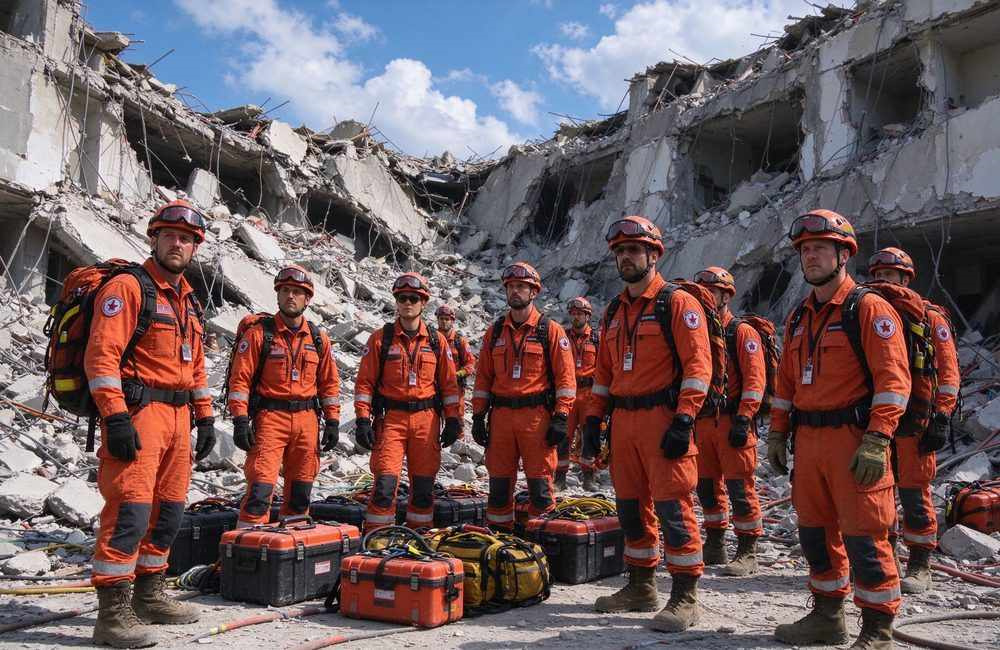
Emergency team receiving a morning briefing around a table with weather radio and maps before an operation
A weather officer briefing keeps event staff aligned before the storm season.
Compare radio models on three points before ordering: the weather alert band, the battery backup and the waterproof rating. A unit that misses any of the three is not a shelter-grade radio, whatever the marketing says.
Every thunderstorm emergency kit for campsites, event sites and construction sites starts with a weather radio. A waterproof weather radio with a hand crank receives dedicated weather alert channels, not just AM and FM.
When a storm is approaching, the alert band activates automatically and sounds a siren, giving staff the warning they need to start the 30/30 procedure.
Battery-free operation matters in real storms because power fails first. A hand-crank radio with a built-in flashlight and USB charging port covers communication, light and phone charging in one unit.
Standard AM/FM-only radios miss the weather alert channels, which is why they are not an acceptable substitute for shelter stocking.
Test every radio against a live weather broadcast when the shipment arrives and again at the start of each storm season.
Log the test date and unit count, because a radio that fails in a drill will fail in a real warning, and the log protects the site in reviews.
When people scramble to get inside during a thunderstorm, they get soaked fast, and wet clothing leads to hypothermia even in warm weather. Bulk rain ponchos in bright colors serve double duty: they keep shelter staff and attendees dry, and the high-visibility colors make people easy to track during an evacuation.
Bulk rain ponchos in bright colors make shelter teams visible in downpours. As an experienced bulk rain gear supplier, we grade every poncho batch on its waterproof rating before dispatch.
The key specification to compare is the waterproof rating. Thin 1000mm ponchos leak after about ten minutes in heavy rain, while 5000mm ponchos hold up through a full storm and can be reused dozens of times.
For shelter operations that hand out gear repeatedly, the thicker material costs more per unit but far less per use.
Rain gear distribution works best with a simple system: ponchos folded by size, stored near the shelter entrance and handed out at the door.
Our bulk rain gear supplier team also labels each bin by size so staff can grab the right poncho in seconds. Assign one staff member to manage the pile so it does not run empty when the storm hits.
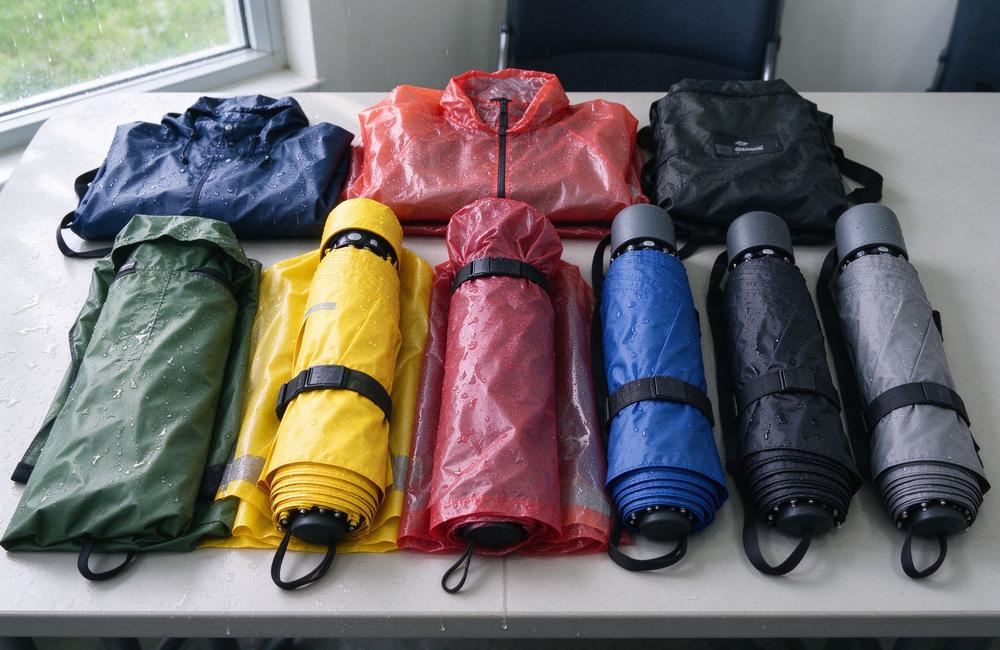
Collection of waterproof rain ponchos in bright colors folded and stacked in a warehouse display for storm shelter bulk supply
Thunderstorms knock out power, and half of all storm-related accidents happen in the dark. Emergency headlamps leave both hands free for guiding people, carrying supplies and checking equipment, which makes them more practical than handheld flashlights for shelter staff.
Stock a mix of headlamps for staff and rechargeable lanterns for shelter common areas.
LED units draw little power, so a modest battery or power bank stock covers a full night of operation. Check charge levels monthly during storm season and rotate units that show low capacity.
Headlamp stock should match the staff roster, not the attendee count, because attendees shelter while staff work in the dark. Add spare batteries or a small power bank per staff zone and check charge levels monthly.
After a thunderstorm, temperatures drop, people are wet and hypothermia becomes a real risk, especially for children and older adults.
Emergency blankets are compact, lightweight and cheap per unit, which makes them ideal for bulk stocking. A stack of blankets turns a school gym into a functioning overnight shelter.
Blanket stock doubles as cold-weather preparation, so sites can share the purchase across seasons. Store blankets compressed and dry, and rotate the oldest stock to the front so every unit is used before its material degrades.
Add sleeping bags for overnight shelter operations and a small stock of towels for drying off at the entrance.
The goal is to keep every person dry and warm for at least the first 24 hours after a storm, which is the window before outside support typically arrives at remote or rural sites.
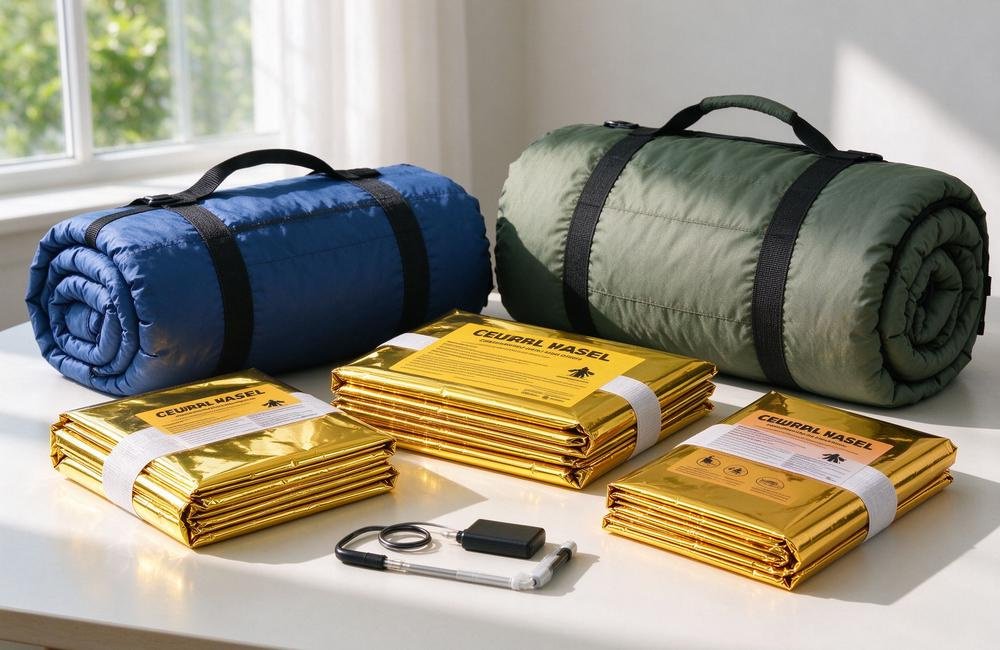
Stack of emergency blankets and sleeping bags for post‑storm shelter use folded on pallets in a supply room
Blankets and sleeping bags keep wet families warm in shelters.
Storm safety gear only works when it is findable in the dark. Store radios, ponchos and headlamps in labeled bins near the shelter entrance, and include a floor plan on each bin so staff can grab the right kit without reading labels in the rain.
Standing under a tree during a thunderstorm is one of the worst places to be. Trees are the tallest objects in most open fields, so lightning hits them first, and the current spreads through the trunk and the ground around the roots. Anyone standing nearby is at direct risk of a ground strike or a side flash.
The same logic applies to other tall objects: umbrellas, flagpoles, light towers and single tents in open ground. The safe response is not to shelter near tall objects but to move everyone to a fully enclosed building or a hard-topped vehicle with the windows closed.
A standard camping tent does nothing to protect people from lightning. The tent fabric is not conductive, and it does not redirect current, so it offers no path to ground.
Lightning can strike the tent poles or nearby ground and travel through the frame and the people inside.
For campsites, the rule is simple: tents are not shelters during thunderstorms. Staff must direct campers to a designated storm shelter building. If no building exists, a closed hard-topped vehicle is the better option, and the site plan should say so clearly.
Using a cell phone during a thunderstorm is safe. The old belief that phones attract lightning comes from the era of wired landlines, which can conduct current through the line into the handset. Cordless and cell phones do not create that path.
The real danger is not the phone but where people use it. Standing in an open field to take a call, talking on a phone while walking between buildings or using a device near a window all put people in the wrong place. The safety rule is location, not the device.
Indoor lightning safety is about location. During a thunderstorm, people should stay away from windows, exterior doors and plumbing lines, and unplug sensitive electronics before the storm arrives. These simple steps prevent most indoor injuries.
Myths spread because storms are rare enough that people learn from stories instead of experience. Post the three myths at check-in, correct them in staff training and repeat the facts until they replace the folklore.
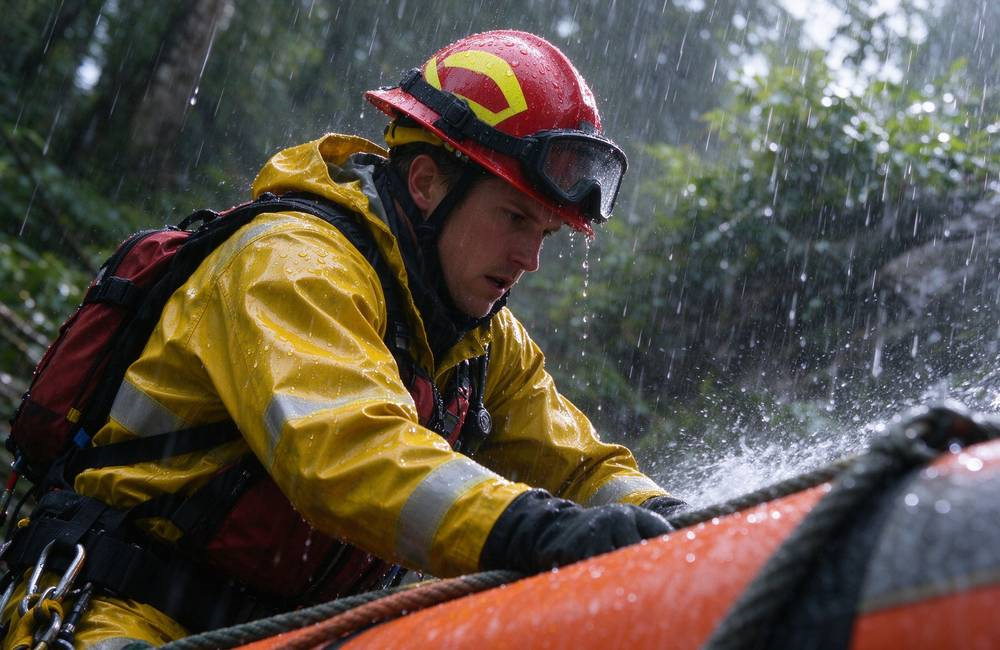
Rescue worker in a waterproof raincoat responding during heavy thunderstorm rain at night with flood gear
Rescue teams need visibility gear when responding in heavy rain.
Before ordering radios, confirm that the unit receives the dedicated weather alert band for your region, not just AM and FM. A weather alert radio with automatic alert activation is the difference between a site that hears the warning and a site that misses it.
Ask the supplier for the specific band range and test a sample unit against a live broadcast.
Compare the waterproof rating, seam construction and material thickness before choosing rain gear.
A 1000mm rating handles light drizzle, while heavy thunderstorm rain requires 3000mm or higher. Sealed seams matter as much as the fabric rating, because water enters through seams before it penetrates the material.
Ask the supplier for the certification documents before ordering: radio certificates, waterproof rating test reports and material safety data. Verified documents make the purchase defensible in grant reviews and simplify the receiving inspection.
Use a per-person baseline to size the order. For every 100 shelter occupants, plan roughly one weather radio per staff zone, 100 rain ponchos, 50 headlamps and 100 emergency blankets.
Adjust for site layout: large event grounds need more radios and shelters need more blankets than day-use campsites.
Document the quantity logic in the purchase record so the next season's order is consistent. Sites that calculate from a clear baseline avoid both under-stocking and over-stocking, and the numbers are easy to defend in grant reports and budget reviews.
Quantity planning starts with site geometry, not guesswork. Walk the site, count the staff zones, measure the distance from each stage to the nearest shelter and size the radio and lighting stock to the slowest evacuation route.
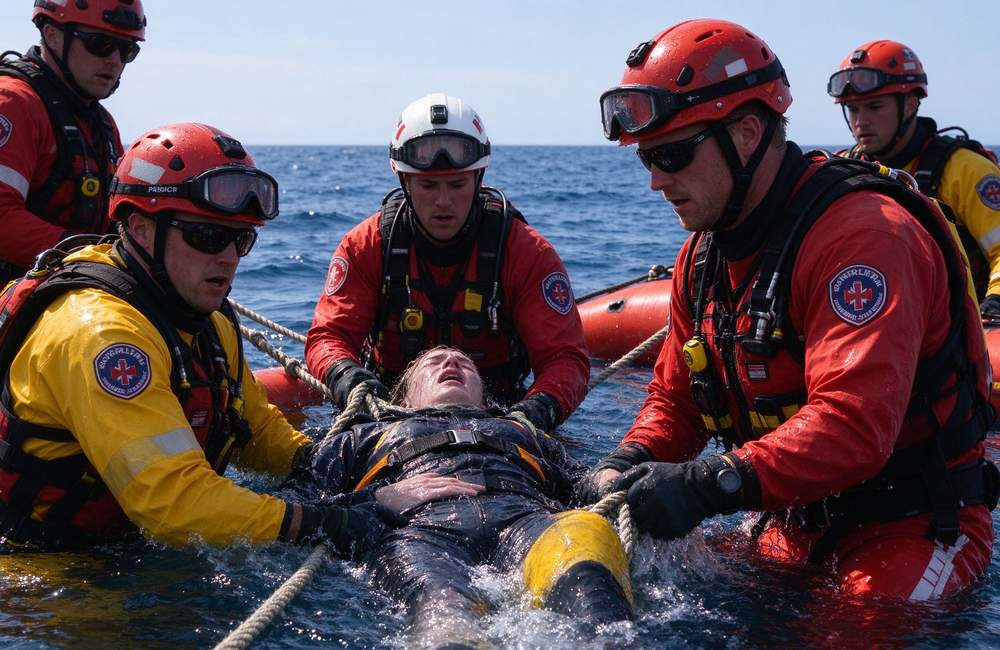
Rescue swimmer in orange life vest with throw bag assisting a person in flood water after thunderstorm
Water rescue techniques use throw bags and life vests in flood water.
Storm supply budgets are easier to approve when they are expressed per person. The table below shows practical benchmarks for shelter and event stocking, based on wholesale pricing for bulk rain ponchos, weather radios, headlamps and blankets.
The table below shows a practical stocking plan per 100 people for thunderstorm shelters.
|
Item |
Per 100 People |
Wholesale Range |
Notes |
|
Weather radio |
10 |
$5–$12 each |
One per staff zone plus extras |
|
Rain ponchos (5000mm) |
100 |
$1.2–$1.8 each |
Reusable, high-visibility colors |
|
LED headlamps |
50 |
$2–$4 each |
Hands-free lighting for staff |
|
Emergency blankets |
100 |
$0.3–$0.6 each |
Compact, low-cost warmth |
Costs assume wholesale bulk pricing; retail typically runs higher. Adjust quantities by site size and storm frequency, and re-check the total after the venue confirms expected attendance for the season.
Quantities are planning guides for sites serving 100 people; adjust by site size and storm frequency. The per-person cost stays roughly constant, so the table scales from a 100-person camp to a 5,000-person event.
A 100-person site budget looks like this: 10 weather radios at wholesale price, 100 rain ponchos, 50 headlamps, 100 blankets and a small first aid restock.
Adding spare batteries, storage bins and printed 30/30 rule signage brings the total to a modest one-time cost that covers several seasons.
The most common budget gap is replacement stock. Ponchos wear out, batteries drain and radios fail, so plan a small annual top-up line item instead of treating the first purchase as a one-time cost.
Grant writers value storm budgets that show per-person cost, because the number is comparable across sites and seasons. Keep the baseline table in the budget file and update it each spring with current wholesale prices.
The biggest savings come from ordering in the off-season and buying reusable items. Weather radios and headlamps are one-time purchases that last years.
Reusable 5000mm ponchos cost more upfront but replace hundreds of single-use ponchos over a season. Compare total cost per use, not unit price, when the budget is tight.

Rack of yellow and orange safety helmets organized at a storm shelter supply point for head protection
Safety helmets protect against hail and debris during storms.
Shelter capacity planning starts with the headcount. Count the maximum number of people on site, divide by the usable floor space of each shelter building and publish the capacity so staff know when the shelter is full.
Every outdoor event needs one person whose only job during the event is weather monitoring. The weather officer checks forecasts before gates open, watches for developing cells and owns the decision to suspend activities.
Giving one person clear authority removes the hesitation that causes most storm-related injuries at events.
Shelters only work when people know where they are. Mark every safe shelter building on the event map, and hand the map to every attendee at entry.
For large grounds, add directional signs so the nearest shelter is visible from every stage and food area. Include the 30/30 rule on the same map.
For large venues, add a secondary announcement system: staff with radios at each zone, signs at the entries and a final sweep before the event suspends. A 5,000-person event needs minutes, not hours, to move everyone under cover.
The weather officer carries the authority to suspend any activity, including headline performances. Document that authority in the event plan so staff and contractors follow the decision without argument when the warning sounds.
Announce the 30/30 rule every hour during storm season, and run a ten-minute evacuation drill with all staff one week before the event.
The drill walks staff through the shelter route, the radio check and the all-clear procedure, so the real storm response is a routine they have already practiced.
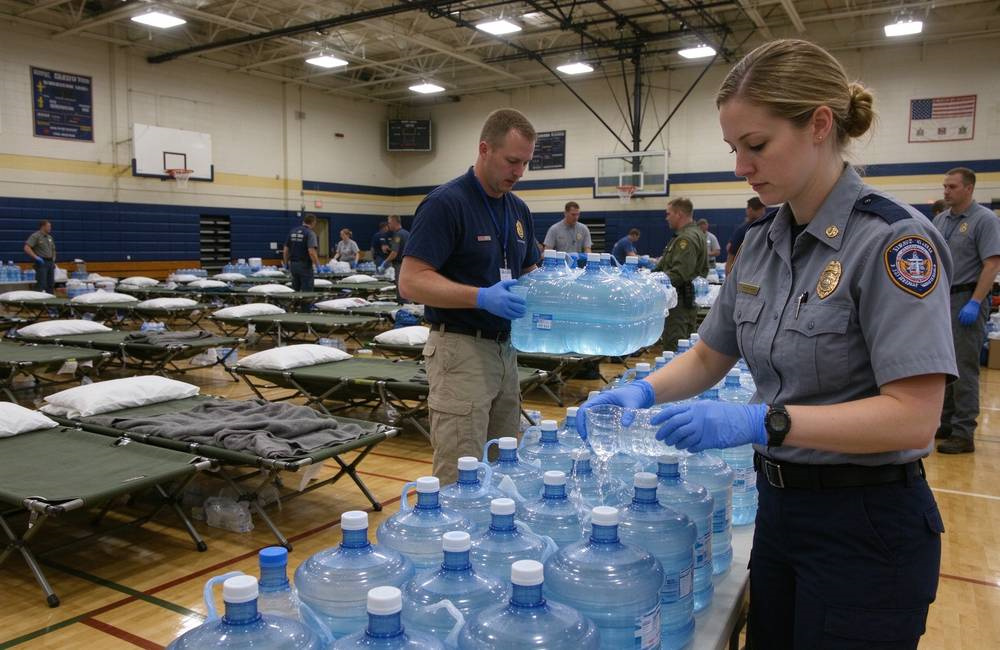
Community shelter set up in a school gymnasium with cots, blankets and supplies housing families after storm
School gyms become community shelters stocked with cots and blankets.
Store waterproof radios in a dry cabinet with batteries removed if they will sit for months. Rechargeable units should be charged fully before storage and topped up every 60 days during off-season.
Test each radio against a live weather alert broadcast before the season starts, not after the first warning.
Fold ponchos flat and store them in dry bins. Do not leave them in a damp shed, because moisture degrades the coating and causes mildew, which shortens usable life. Keep ponchos separated by size and color so distribution is fast when the shelter opens.
Run a quarterly inventory check during storm season: count radios, test two units, inspect poncho bins for moisture and verify headlamp charge. The check takes an hour and catches the failures before the warning does.
Charge headlamps fully before winter storage and check battery health every season, because rechargeable cells lose capacity when stored partially charged. Emergency blankets and sleeping bags stay compressed in dry, cool storage away from direct sunlight, which protects the foil lining and insulation.

Emergency supply warehouse with stacked boxes and organized shelves of bulk thunderstorm gear including blankets and safety helmets
Warehouse shelving keeps bulk storm gear organized for fast distribution.
Standardize the quote request so suppliers compare on the same items: model, rating, packaging, lead time and certification. A consistent request format makes the quotes comparable and the final decision easier to justify.
When quotes for radios arrive, compare the band coverage before the price. A cheap radio that misses the weather alert channel is not a functional product for storm safety, whatever its unit price.
Confirm the alert feature, the battery backup and the waterproof rating on every quoted model.
Rain gear quotes differ mainly in material thickness and seam quality. Supplier A may quote a lower unit price with a 1000mm rating, while Supplier B quotes more with 5000mm material.
For shelter operations that reuse gear, calculate cost per use over a full season before choosing.
Include delivery terms in the comparison. A quote with a lower unit price but a longer lead time can cost the season, because storm suppliers sell out by mid-season. Confirm the in-stock position in writing for the items you need first.
Ask for a written training sheet with every radio order. A one-page 30/30 rule guide laminated at each staff station turns the gear purchase into a completed safety program that any new hire can follow.
By mid-May, suppliers are often backlogged with event and festival orders. Confirm the delivery date in writing, not just the quoted lead time, and ask whether the supplier includes a one-page 30/30 rule training sheet with the order. Training material turns a gear purchase into a completed safety program.
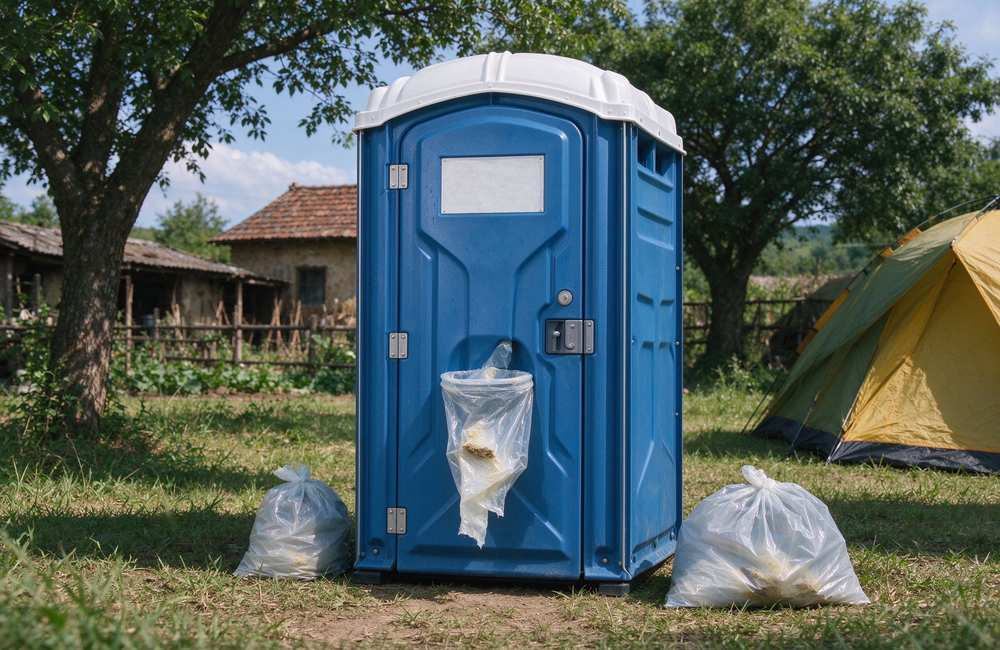
Portable toilet unit placed beside a community shelter after thunderstorm flooding with sanitation supplies
Portable toilets protect sanitation in shelters after flooding.
B2B buyers need proof before placing a bulk order. Confirm that the supplier inspects a sample of every batch before shipment and provides the certification documents with the order.
Radio shipments should include the certificate of conformity, and rain gear should list the tested waterproof rating.
Receiving inspection matches the delivery against the approved sample: radio band test, poncho rating check and headlamp function. Record the results and keep the report with the purchase file for the next season.
Custom packaging adds lead time and minimum order sizes. If branding is not essential for the first season, order standard stock to secure delivery, then add custom logos once the distribution system is proven.
Ask for sample units before the bulk order: one radio, one poncho and one headlamp. Test the radio against a live weather broadcast, wear the poncho in heavy rain and check the headlamp battery life.
Approve the samples in writing, then match the bulk delivery against the approved sample on arrival.
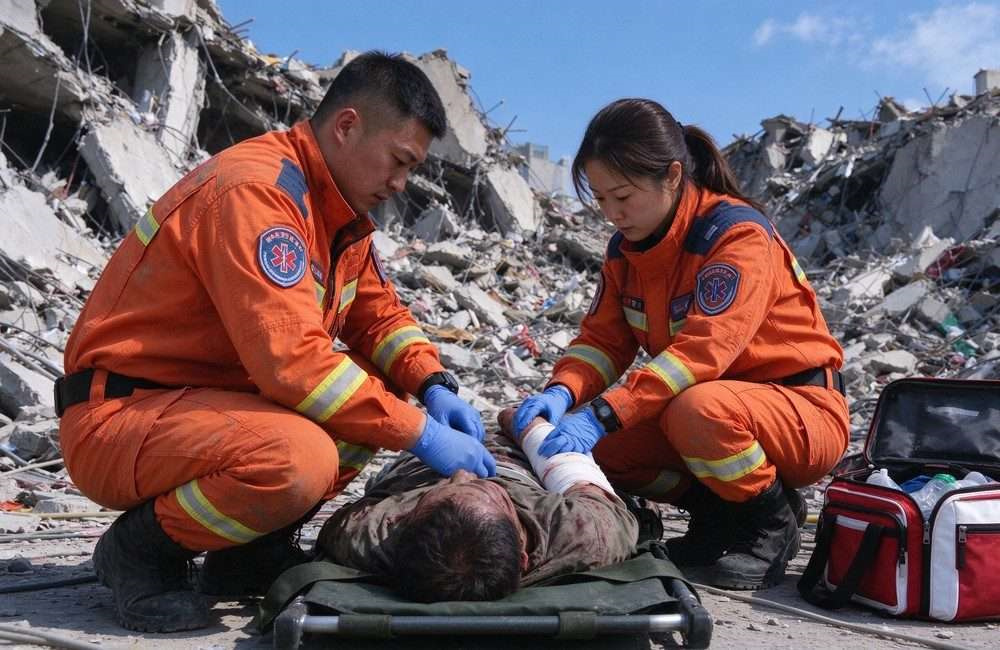
First responder providing medical care to a storm victim in a temporary shelter with first aid kit
First aid supplies handle storm injuries until professional care arrives.
Use this table to place a bulk order directly and confirm the exact specifications before signing.
|
Product |
Standard Spec |
Packaging |
Lead Time |
|
Weather radio |
Weather alert band, hand crank, flashlight, USB |
50 units per carton |
3 days in stock |
|
Rain poncho |
5000mm waterproof, sealed seams, bright colors |
100 units per carton |
3 days in stock |
|
LED headlamp |
Rechargeable, 3 brightness modes, waterproof |
100 units per carton |
3 days in stock |
|
Emergency blanket |
Foam or foil, 210×160 cm packed |
200 units per carton |
3 days in stock |
Specifications are for standard stock items; custom logo and packaging take longer. Confirm details with the supplier before ordering, and request a sample so the poncho fabric and rating can be checked on site.
Standard in-stock items ship in three days, and custom logo or packaging orders take longer. Every bulk order includes a commercial invoice, packing list and certificate of conformity, so the receiving team can verify the delivery against the approved sample.
Thunderstorms strike quickly and their damage lands on outdoor sites that rarely have built-in shelter. Reviewing the numbers helps teams budget storm preparedness supplies before the season starts.
We supply shelters, event grounds and schools that order lightning safety gear and bulk thunderstorm supplies each spring.
As a reliable bulk rain gear supplier, we stage severe storm response equipment at the entrance so staff can move people to cover within minutes of the alert. Teams that refresh their storm preparedness supplies every season respond faster.
Not every site needs the same setup. Match the kit to the people you shelter and the time you spend outdoors. The table below compares three common tiers.
Kit Tier
Best For
Core Contents
Notes
Basic alert kit
Small campsite under 100 guests
One weather radio, ponchos, headlamps
Covers lightning alerts and evacuation
Standard event kit
School or event site up to 1,000 people
Adds spare radios, blankets, first aid restock
Our most ordered tier of storm preparedness supplies
Full response package
Municipal or multi-site program
Adds flood gear, stretchers, portable toilets
Built around your headcount and site map
Match the gear tier to your expected attendance and weather exposure, and pilot one event before ordering for the full season. Compare the pilot spare-parts usage against the table before locking the bulk order.
Tell us your peak attendance and we will recommend the right tier. We work as a bulk rain gear supplier for repeat storm programs, and samples are available for qualified organizations.
Many buyers order a standard event kit first and add severe storm response equipment for extra zones once the drill record improves.
Storm gear stays ready with a few simple habits. A cared-for kit works on the first real warning, while neglected gear fails when it matters most.
We pack all of these as severe storm response equipment delivered to shelters and event sites. We also ship ready-to-use bulk thunderstorm supplies that arrive complete, certified and staged at each shelter entrance.
As your bulk rain gear supplier, we can split one order across several venues so every site receives matching lightning safety gear. For orders over 200 sets we offer OEM and private label, with logo placement and terms confirmed per contract.
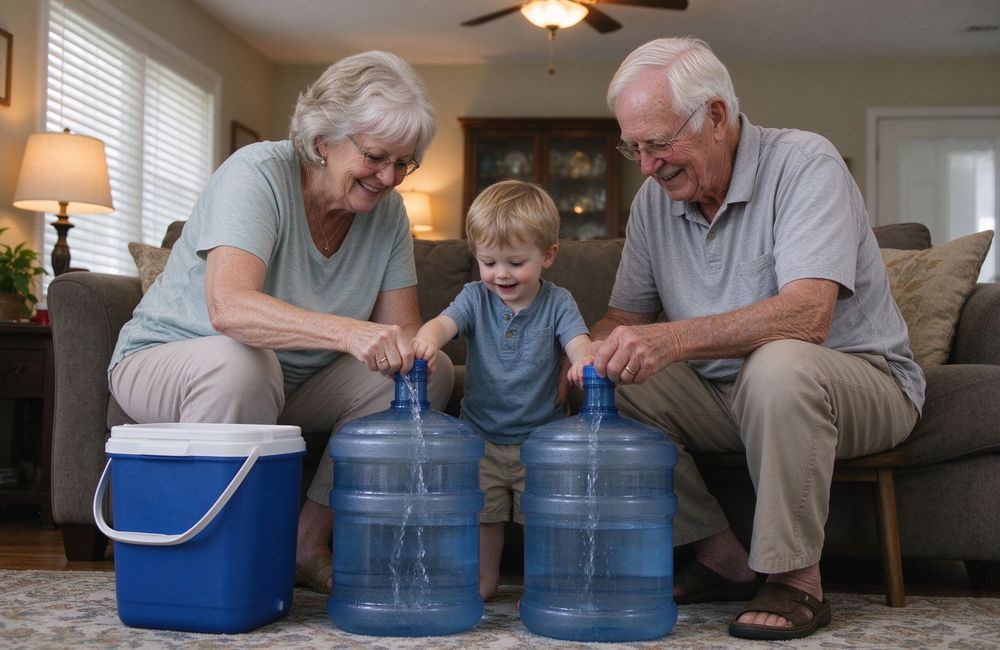
Family filling clean water containers from a community water station at a thunderstorm shelter with emergency supplies
Hydration stations keep shelter families drinking clean water.
Yes. Lightning can strike a tent pole and travel through the frame and fabric, and a ground strike can spread current through the soil.
A standard camping tent is not a thunderstorm emergency kit shelter. Move everyone to a fully enclosed building or a closed hard-topped vehicle until 30 minutes after the last thunder.
No. Plumbing conducts electricity, so water pipes and metal fixtures carry current if lightning strikes the building. Wait 30 minutes after the last thunder before showering, bathing or using sinks. The same rule applies to wired landline phones, which conduct current through the line.
Five seconds between the flash and the thunder means the lightning is roughly 1.7 kilometers away, because sound travels about 340 meters per second.
Under the 30/30 rule, thunder within 30 seconds of the flash means the storm is within about 10 kilometers, and everyone should move to shelter.
Yes. The metal frame of a closed car acts as a Faraday cage, directing lightning current around the occupants and into the ground.
Keep the windows closed, avoid touching metal parts and do not lean against the doors. Convertibles and open vehicles do not offer the same protection.
Wait a full 30 minutes after the last clap of thunder before anyone returns outside.
Lightning can strike from a storm that is still several kilometers away, and the second 30 minutes of the 30/30 rule protects people during the window when the storm looks over but is still active.
Yes. Hand-crank weather radios generate power from the crank, so they work without batteries or mains power.
Cranking for about one minute provides several minutes of listening time, and most models also charge an internal battery for later use. Stock one in every staff zone as the backup alert source.
A 5000mm PVC poncho lasts 30 or more uses when stored properly, while thin 1000mm ponchos tear after one storm.
Rinse, dry in the shade and fold flat after each use, and avoid direct sunlight, because UV rays break down the coating. Reusable ponchos are the economical choice for shelter operations.
Hang it on a line in the shade for about two hours. Do not put it in direct sun, because UV rays break down the waterproof coating, and do not machine dry it, because heat damages the seams.
Fold it flat and store it in a dry bin once completely dry, ready for the next storm.
Yes. Regular AM/FM radios do not receive dedicated weather alert channels, which broadcast continuous warnings and automatic alert tones.
A weather alert radio with the dedicated band and automatic siren activation gives staff the warning even when no one is actively listening, which is essential for overnight sites.
Absolutely. Tall buildings, towers and ridge-line trees get hit dozens of times every year because they are the highest point in the area.
The myth that lightning never strikes twice is false and dangerous, because it makes people treat previously struck objects as safe. Shelters should never be under tall structures.
Plan one radio per 500 attendees plus one per staff zone. For a 5,000-person event, that means roughly 10 radios for the audience plus one for each gate, stage, medical tent and command post.
Radios cost little compared to the evacuation they enable, so under-stocking is a false saving.
Use 3000mm as the minimum for shelter rain gear and 5000mm for gear handed out in heavy storms.
A 1000mm rating handles light drizzle but leaks in thunderstorm rain within minutes. Sealed seams and coated fabric matter as much as the rating number, so verify both in the sample test.
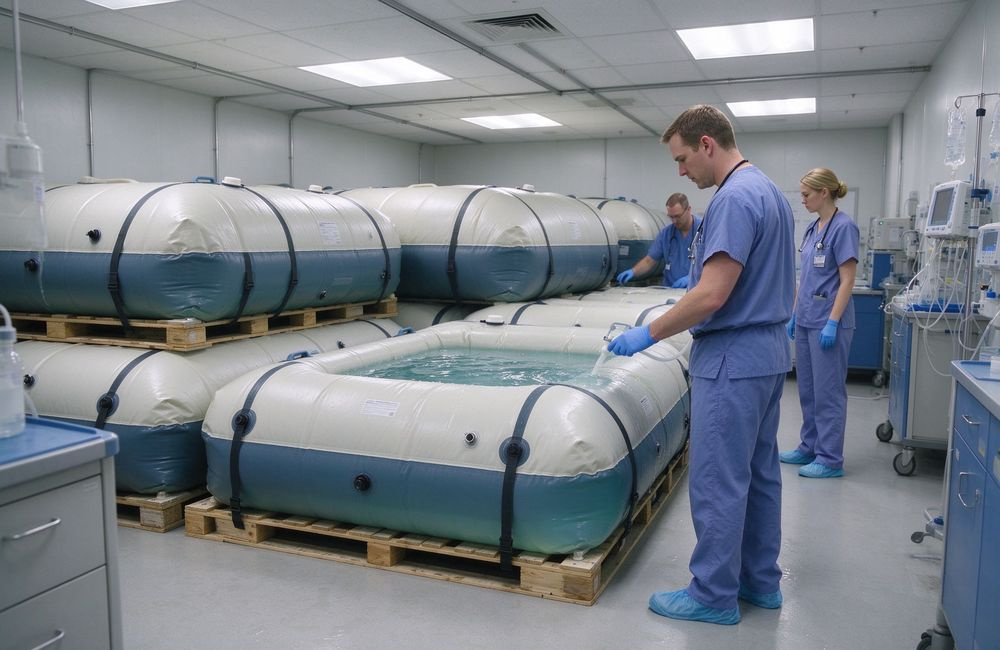
Hospital staff checking large water storage containers in utility room before thunderstorm season arrives
Hospitals pre-position water storage before thunderstorm season.
Every outdoor event needs a written lightning emergency plan before the season starts. The plan names the weather officer, lists the shelter buildings, defines the 30/30 threshold and assigns roles for evacuation, headcount and communication. A written plan turns a chaotic storm response into a sequence of assigned steps.
Communication is the part that fails most often. The plan should cover how staff receive the alert (weather radio, phone tree or PA system), how attendees are directed to shelters and how staff confirm that every zone is cleared. Assign a check-in method for each zone so the headcount is verified, not assumed.
Post-storm recovery is part of the plan too. After the all-clear, staff should check for downed lines, standing water and damaged structures before reopening, and keep the shelter open until the system has moved well beyond the site.
Test the plan with a tabletop exercise in the off-season: announce a fake warning, walk each zone through the shelter route and review what went slowly. Tabletop drills cost nothing and fix the plan before the real storm.
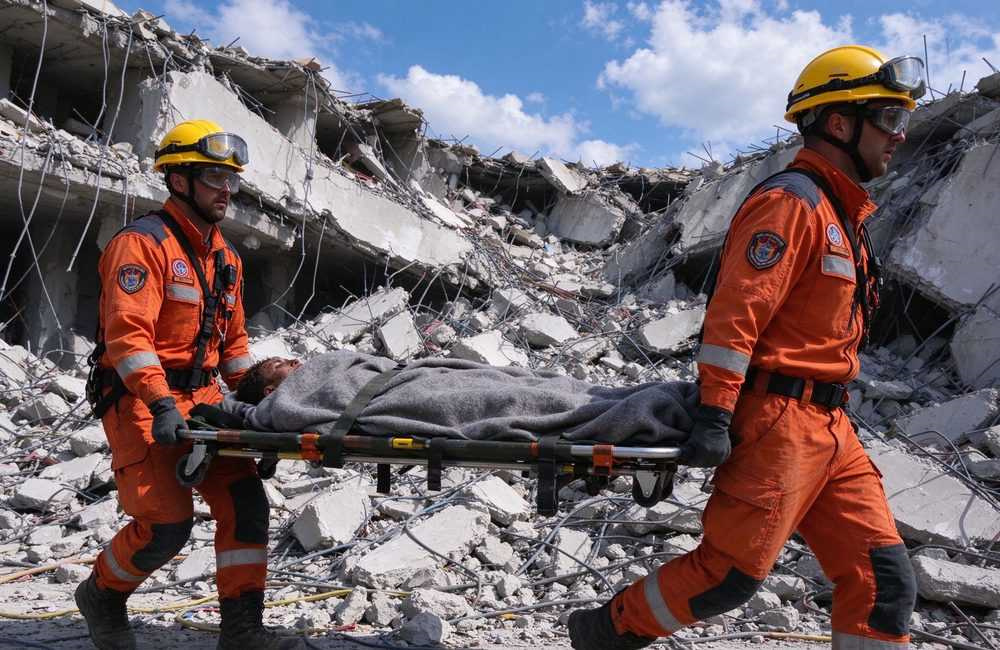
Rescuers carrying injured person on a stretcher through storm-damaged area after thunderstorm with rubble
Stretcher evacuation moves casualties through storm-damaged areas.
Run the evacuation drill once before the season and once mid-season. Staff should be able to start the shelter move within two minutes of the alert and account for every zone within ten.
The 30/30 rule governs the return: no one leaves the shelter until 30 minutes after the last thunder.
Boiling water for one minute makes it safe to drink when the shelter supply is compromised, and the shelter kitchen should keep this step posted near the stove.
Label the water source, track how much has been boiled and rotate stored water every few days to keep the shelter supply safe.

Person boiling water in a pot on a portable stove at a community shelter kitchen after thunderstorm
Boiling water for one minute makes it safe when supply is compromised.
For official lightning safety guidance and storm preparedness standards, review the NWS lightning safety guidance, the American Red Cross thunderstorm safety guide, and the Red Cross survival kit supplies checklist. See also tornado emergency kit and hailstorm safety for related storm readiness guides.
YRF Textile · info@yrftextile.com
روابط ودية :
حقوق النشر © Custom Disaster - Relief Bedding: Tents, Sleeping Bags, Blankets كل الحقوق محفوظة
الفريق المحترف للخدمة !