التصنيفات
Guest rooms run out of blankets faster than most hotels plan for. One sold-out weekend, one laundry delay, and the front desk is borrowing from another floor. Backup stock is the buffer between a quiet operation and a guest complaint, and it works only when planned before peak season. This guide walks through the numbers.
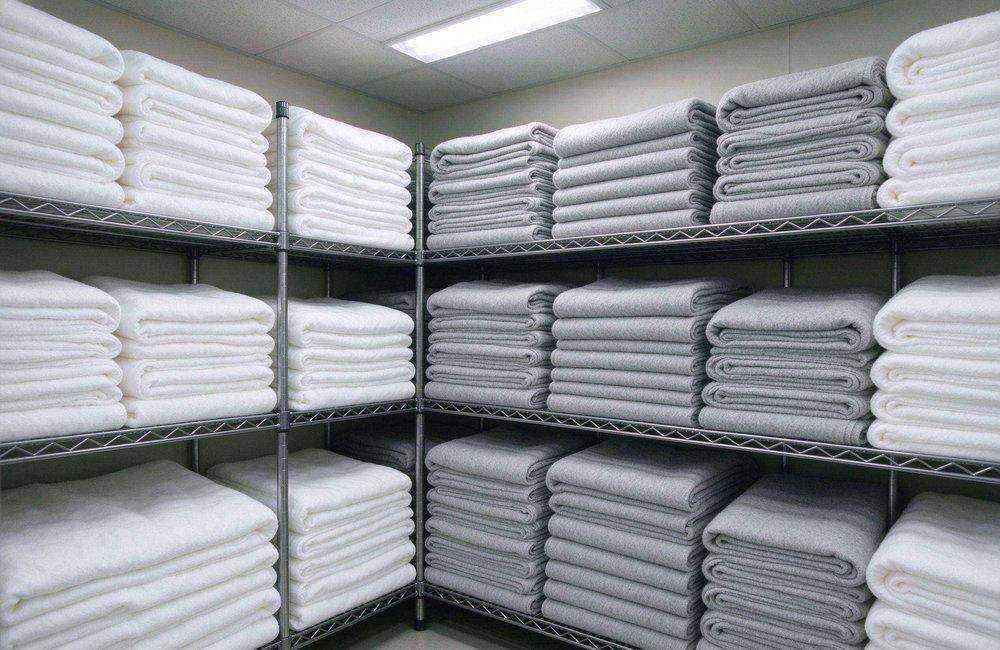
Backup stock starts in the linen room, organized before peak season arrives.
A hotel blanket backup stock plan starts with three questions: how many backups per room type, what GSM suits the hotel's turnover pace, and how much space the storage actually takes. The answers differ for a 40-room city hotel and a 300-room resort, but the calculation method is the same. Every property runs the same arithmetic with its own occupancy numbers, laundry turnaround and storage constraints.

A full housekeeper cart means guest rooms stay covered when demand spikes.
Peak-season demand is not a single number. It is a curve that climbs with occupancy, repeats every week and spikes during holidays and events. Hotels that order backup stock against the highest expected week, not the average, keep every floor covered. Hotels that order against the average borrow blankets between floors and pay for it in staff time and guest complaints.

Guest rooms carry the visible line; backup stock sits ready behind it.
The storage side matters just as much as the buying side. Backup blankets occupy real space in linen rooms, housekeeping carts and warehouse racks, and the space has a cost. Folding thickness, pack size and rotation all decide how much stock fits. A hotel that plans storage before ordering avoids the second purchase: racks, bags and a count system.
This guide keeps the math practical. Each section names the planning factor, shows how to calculate it and flags where hotels usually get it wrong. The worked numbers use a mid-size property as the example, and every figure can be replaced with the hotel's own occupancy, laundry and storage data.
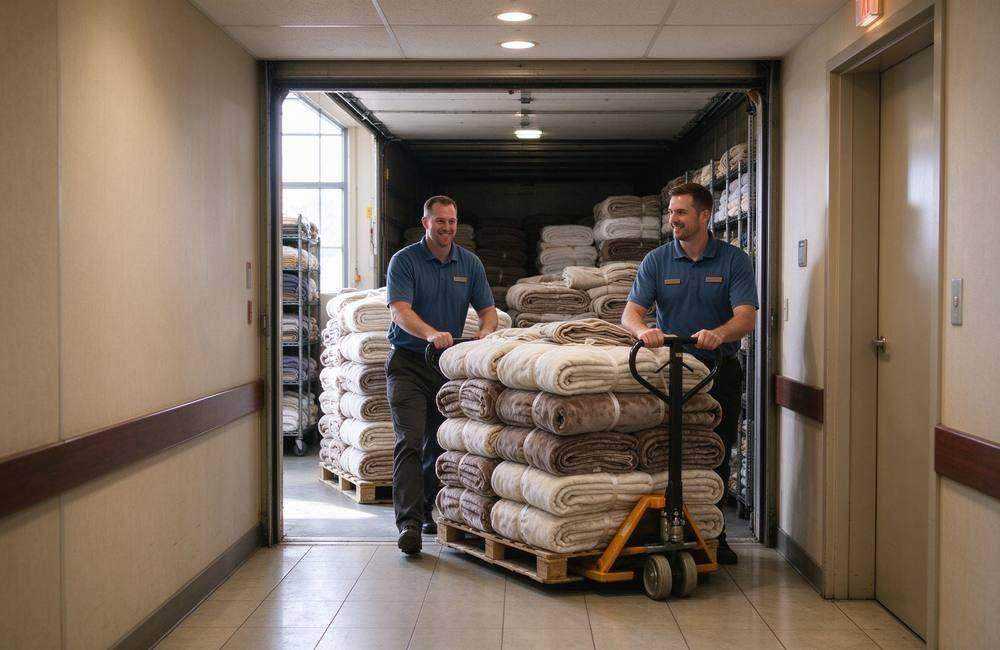
Peak-season delivery moves backup blankets to the floors that need them.
The final number a hotel should track is not total blankets on hand but backup blankets per room at the busiest week. That ratio decides whether peak season runs smoothly or the front desk runs out. Every section below feeds into it.
For hotels buying through a wholesale supplier, the same plan converts directly into an order: backup count per room, GSM, pack size and delivery timeline. The supplier works from the spec sheet, and the hotel works from the plan. When both sides use the same numbers, the first order is right and reorders are simple.

Evening turndown is where backup blankets quietly prove their value.
Hotels run on spare capacity, and backup blanket stock is part of that buffer. When a guest checks out late, a blanket is stained, or a room needs a second layer on a cold night, housekeeping cannot wait for a new order. A small reserve of hotel backup blankets keeps turnover smooth and protects guest ratings. Planning the backup stock starts with knowing peak occupancy and laundry turnaround times.
A hotel blanket backup stock plan exists because guest rooms do not wait for laundry. When a blanket is dirty, damaged or missing, the room needs a replacement that night, not next week. Backup blankets cover that gap, and the gap is bigger than most properties admit. Turnover between check-out and check-in, lost items and seasonal wear all draw from the same pool.

Related guidance: WHO.
A property with same-day laundry service needs fewer backups than one that sends laundry offsite and waits longer. The dryer in the back-of-house tells the story: every hour a blanket spends drying is an hour it is not on a guest bed, so the backup count follows the laundry turnaround.
The cost of running out is rarely counted, but it is real. A front desk manager who has to call another floor, wait for a delivery or apologize to a guest spends staff time that backup stock would have saved. In a full hotel, the difference between a covered room and an uncovered room can decide a review. Backup stock is cheap insurance against a failure that is expensive to fix at night.
The insurance view changes how the budget is read. A backup blanket that sits unused for months still earns its cost the night it saves a sold-out floor, and it earns it again every season it survives. Properties that treat backup stock as an expense cut it first in a budget review; properties that treat it as coverage keep it funded. The planning sections below exist to make the coverage measurable, so the budget conversation is about numbers, not opinions, in line with industry association guidance for hotel operations.
Peak season makes the gap visible. Occupancy climbs, laundry runs two shifts and the same blanket cycles faster, which is why peak-season hotel blanket storage and floor allocation are planned in advance. A hotel that planned for the average week discovers in the busy week that it is short. Planning backup stock against the peak week, not the average, is the difference between smooth operation and constant borrowing.

The stock sheet, not memory, decides how many backups each floor keeps.
The right backup ratio depends on room count, occupancy pattern and laundry speed. Many hotels keep one backup blanket per two to three rooms during normal season and raise the ratio for peak periods. The goal is to cover stains, damage and late checkouts without overstocking. A clear ratio per room type makes the hotel blanket order size easy to calculate.
For facility-scale planning, FEMA guidance on emergency supplies and shelter operations provides a practical baseline for backup ratios and stock rotation.
The backup ratio is the number every hotel should set first. A common starting point is 0.5 to 1 backup blanket per guest room, with the exact figure depending on occupancy, laundry turnaround and room type. A property with same-day laundry service needs fewer backups than one that sends laundry offsite and waits longer.

Many hotels run a lighter guest line and a heavier backup line to balance cost and warmth. The choice should follow the property climate and turnover pace, not a catalogue default. The trolley carries the backup line, and the size of that stack is the real staffing number in use.
|
Room type |
Backups per room |
Why the ratio differs |
|
Standard guest room |
0.5-1 |
Normal turnover and laundry cycle |
|
Family / extra-bed room |
1-1.5 |
Extra bedding requests are frequent |
|
Resort / event property |
1.5-2 |
Peak events and high turnover |
|
Long-stay apartment |
1-1.5 |
Guests keep blankets longer |
The ratio converts into a total order when multiplied by room count, and it is the core of any hotel blanket backup stock calculation. A 150-room property at one backup per room needs 150 backup blankets as the baseline, before season spikes. The hotel blanket backup stock plan then adds a buffer for the peak week, typically ten to twenty percent, and that buffer is what keeps floors covered when demand spikes.
Room type changes the ratio more than property size. Family rooms and extra-bed rooms draw more blankets because guests ask for additional bedding. Resorts draw more during events because the same blankets cycle faster. Hotels should set the ratio per room type, not as one property-wide number, and review it after each peak season.
The ratio is also a budgeting tool. At a unit price, backups per room becomes backup investment per room, which fits into the annual linen budget line as the cost per backup blanket. That single conversion lets the GM see what coverage costs and approve the number before the season starts, instead of approving emergency orders mid-season.

Samples settle the specification before the first bulk order.
GSM, or grams per square meter, decides how warm and how heavy a hotel blanket feels. Lighter GSM suits warm climates and quick laundering, while heavier GSM suits cold seasons and premium guest expectations. Choosing the right hotel blanket GSM prevents complaints about thin blankets and avoids stock that is too heavy to launder efficiently.
Guest-facing bedding also needs to meet basic fire-safety expectations; the American Red Cross publishes straightforward home and facility fire-prevention guidance that hotels can adapt.
Hotel blanket GSM decides how a blanket performs through hotel turnover: how it washes, how it drapes and how long it lasts. Guest-line blankets and backup blankets can share a GSM, but many hotels run a lighter guest line and a heavier backup line to balance cost and warmth. The choice should follow the property's climate and turnover pace, not a catalogue default.
|
GSM range |
Best fit |
Trade-off |
|
200-250 GSM |
Warm-climate hotels |
Lighter, cheaper, shorter life |
|
250-350 GSM |
Mid-climate guest line |
Balanced warmth and weight |
|
350-450 GSM |
Cool-climate backup line |
Heavier, warmer, longer life |
Laundry cycle tolerance matters more than the GSM number itself. A blanket that survives fifty industrial wash cycles serves twice as long as one that survives twenty-five, and service life decides the real cost per backup blanket. Hotels should ask the supplier for wash-test results before choosing GSM, and keep the test method consistent between the guest line and the backup line.
Hotels buying in bulk should order one GSM per line and keep the specification stable across reorders with a hotel blanket wholesale supplier. A consistent spec means every batch washes the same, folds the same and fits the same storage. Drifting GSM between orders is the most common quality complaint from hotel buyers, and it is entirely avoidable with a written spec.

GSM and surface feel decide how a blanket performs through guest use.
Peak season is not the moment to discover a shortage. Allocation should be planned by room type: family suites need extra blankets, standard rooms need a base stock, and meeting rooms may need standby layers. A simple allocation table per floor or room category tells housekeeping where the backup hotel blankets are and when to top them up.
Backup stock is not a fixed pile; it moves with occupancy, and peak-season hotel blanket storage planning keeps the movement controlled. High season demands more blankets on floors and faster replenishment; low season lets the same stock rest in storage. Allocation is the plan that moves blankets between the two states, and it prevents both running out and overstocking.
|
Season |
Floor allocation |
Storage allocation |
Action |
|
High season |
80-100% of backup ratio |
20-40% |
Full stock, fast rotation |
|
Shoulder season |
60-80% |
40-60% |
Balance, prepare changeover |
|
Low season |
40-60% |
60-80% |
Deep clean, rotate stock |
The allocation percentages translate into shelf plans. Each floor keeps its share on the housekeeping cart or floor linen room; the rest sits in central storage with a count. A simple rule keeps it working: floors hold what the peak week needs, central storage holds the reserve, and both are counted on the same schedule.
Seasonal allocation also protects the blankets themselves. Low season is when stock gets deep-cleaned, inspected and rotated so the oldest blankets are used first. Blankets that sit unused for months need the same rotation as food stock; without it, the property discovers worn or musty stock at the start of high season, exactly when it is needed most.
A practical way to set floor levels is to review the previous year's busiest week: how many blankets each floor borrowed, from which pool and how long the shortage lasted. That record becomes the starting allocation for the next season, and it improves each year as the pattern repeats.
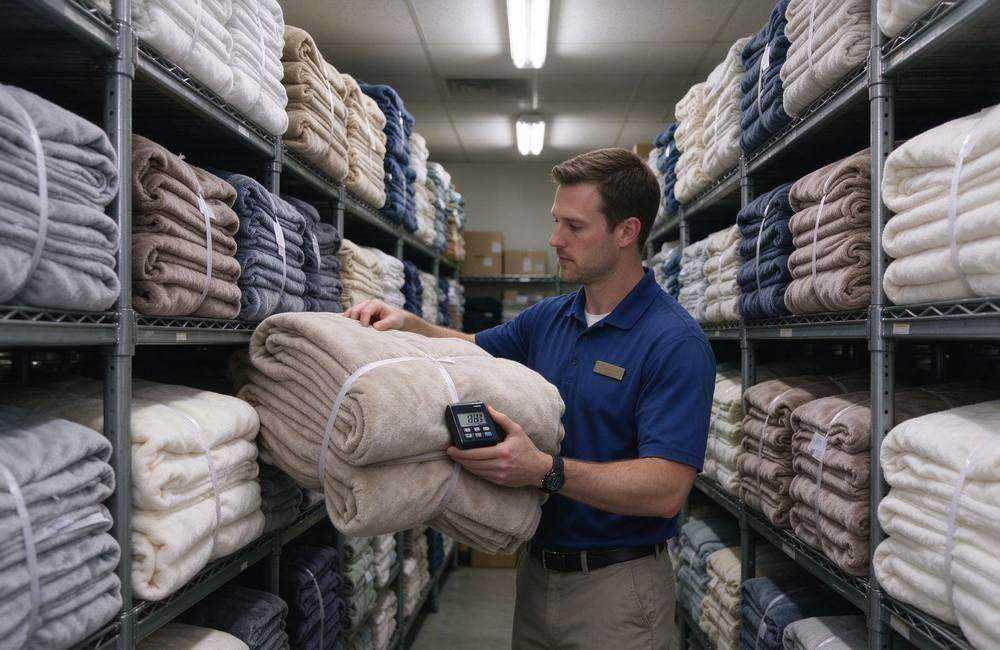
Regular counting keeps backup stock honest between seasons.
Stored blankets develop damp, dust and odor if the storage system is wrong. Racks with airflow, sealed bags for long-term reserve and a first-in-first-out rotation keep hotel backup blankets fresh. Each storage unit should be labeled so housekeeping finds stock quickly. Rotation also spreads wear evenly across the blanket inventory.
Storage is where backup stock lives between seasons, and it is the most underestimated cost in the hotel blanket backup stock plan. Blankets take space, space has a price, and poorly organized stock costs staff time every time it is counted or moved. The three storage factors are racks, bags and rotation.
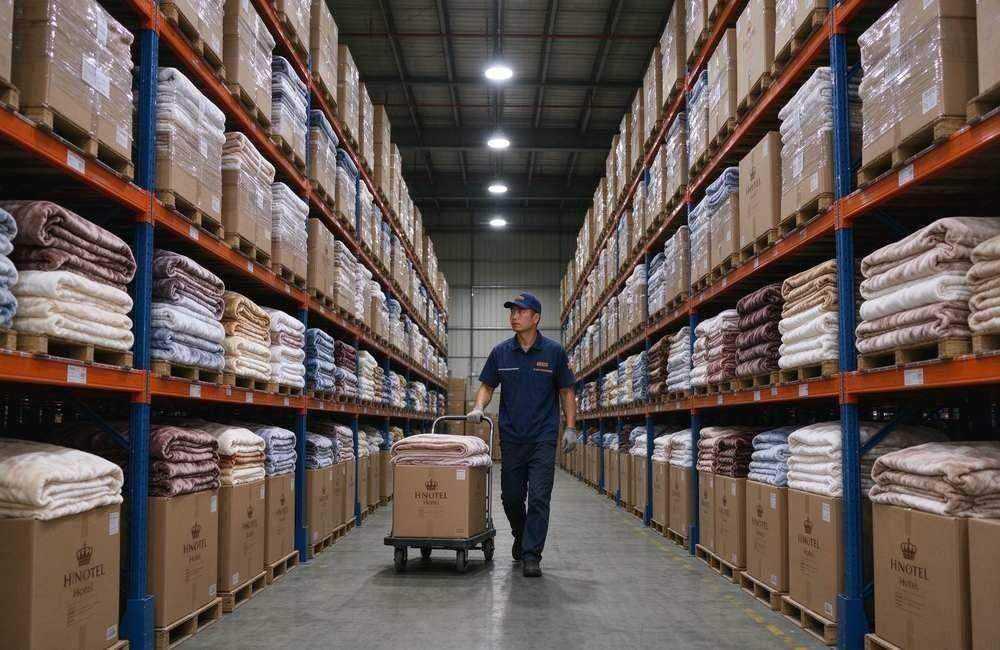
Full racks are only useful when the rotation plan keeps them moving.
Racks decide how much fits: folded blankets stack flat, and pack thickness sets the shelf count. Bags protect stock from dust and moisture and keep lines identifiable at a glance. Rotation keeps the stock moving so the oldest blankets leave first and nothing sits long enough to degrade. All three work together in one simple layout: labeled racks, sealed packs, oldest in front.
One practical way to size the racks is to start from the approved sample. Fold one backup blanket the way the warehouse will store it, measure the pack and multiply by the backup count per room type. A 150-room property at one backup per room with a six-inch folded pack needs about 150 packs across roughly three standard rack bays. The same math catches the second hidden cost: when storage runs short, hotels stack bags on the floor or in corridors, and that is when stock gets mixed, damaged or lost. Budgeting the rack space in the same pass as the blanket order keeps the storage plan complete, and it turns the hotel blanket storage number from a guess into a shelf plan.

Hotel warehouses work best when stock is organized by room type.
The fold thickness of the approved sample decides the hotel blanket storage math. Measure the folded pack, multiply by the backup count and the storage footprint becomes a number the hotel can plan around. A blanket that folds twenty percent thinner stores twenty percent more per shelf, which is a real difference when storage is tight.
Rotation is the part hotels skip most often. Backup stock that sits untouched through the low season needs a count and a check before high season starts. The same discipline that protects food inventory protects textiles: oldest first, labeled batches, regular inspection. Without it, the hotel pays storage costs for stock it cannot actually use.
Central storage should be organized the same way every season. Fixed shelf positions for each room-type allocation, a count sheet that matches the shelves and a simple rule that every pack has a label. When storage is organized this way, a mid-season count takes minutes instead of a morning, and the plan survives staff turnover.
Storage organization also protects the count sheet itself. Every shelf position has one label and one number, and every movement between floors updates the sheet the same day. The rule is simple enough to train in one session, which matters in properties where housekeeping shifts rotate. When the count sheet matches the shelves, the hotel knows its backup ratio at any moment, and that knowledge is what turns storage from a cost into a control.
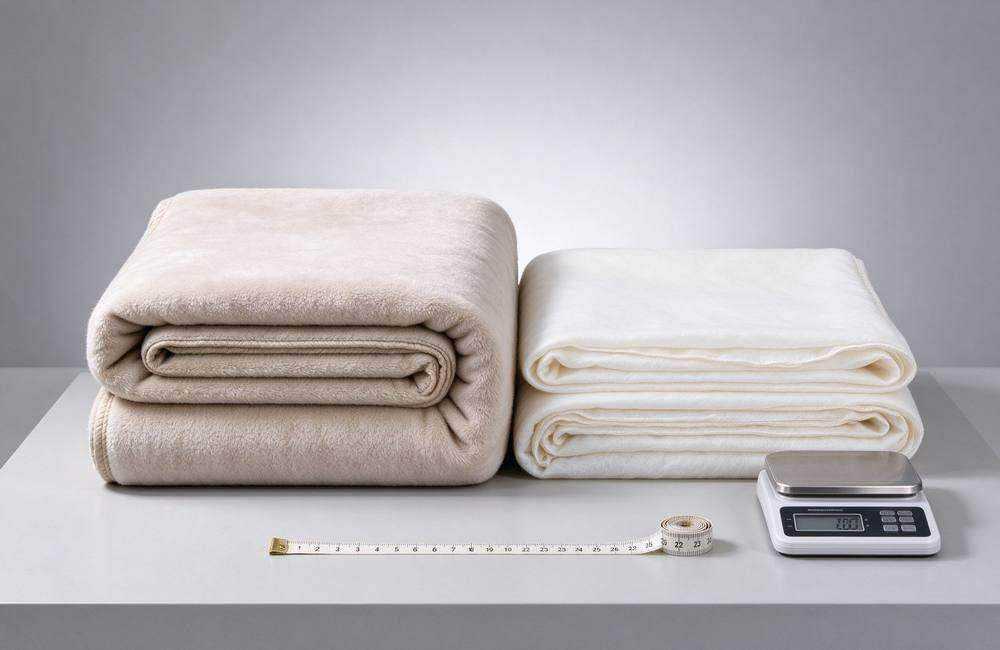
Fold thickness decides how much backup stock fits in limited space.
Backup stock and guest room blankets should be managed as separate lines. Guest blankets follow a fixed laundering and replacement cycle, while backup blankets stay untouched until needed. Mixing the two makes it hard to track quality and service life. Separate labeling or storage zones keep the lines clear for housekeeping and purchasing.
Guest-line blankets and backup-line blankets should be separate SKUs, not one pool, so the hotel blanket backup stock count stays honest. The guest line is the blanket guests see and sleep under; the backup line is the working stock that covers gaps. Mixing them blurs the quality standard and makes counts unreliable. Two lines, two specs, two labels.

Separate lines prevent quality drift between guest and backup blankets.
Keeping the lines separate protects quality consistency. The guest line keeps the spec guests expect; the backup line can be a heavier or more durable spec chosen for wash survival. When they are mixed, the property cannot tell which blanket is which after a few washes, and the guest line quietly degrades.
Making the two lines easy to tell apart removes most of the guesswork from daily housekeeping. The simplest systems use a different fold, a colored edge tape or a printed pack label, and every one of them works when it is written into the spec. Housekeeping then knows at a glance which stack is the guest line and which is backup, so the right blanket goes to the right room and the hotel blanket backup stock count stays accurate. The label also protects the property between deliveries: when a new batch arrives, staff compare the label to the approved spec instead of relying on memory. A line separation that costs almost nothing at the factory saves hours of sorting and recounting every season.
Separate lines also make counts honest. The backup count per room is meaningful only when backup stock is identifiable. Labeled packs, a different fold or a colored edge tape lets housekeeping tell the lines apart at a glance, and the count sheet stays accurate without guesswork.
The separation rule does not mean two suppliers. One wholesale supplier can produce both lines with two specs, and the hotel keeps one invoice, one delivery and one quality contact. The discipline is in the spec sheet, not the vendor list.

Buyers who check samples in person order with fewer surprises.
Every hotel blanket has a service life measured in laundry cycles. Polyester flannel and raschel blankets typically survive more cycles than delicate wools, but repeated high-temperature washing fades color and thins fabric. Tracking wash counts helps hotels replace blankets before guests notice quality drop, and protects the value of the backup stock.
Industrial laundry is the real test of a hotel laundry blanket, and textile care standards set the reference for wash cycles and service life. Guest blankets are washed more often than home bedding, at higher temperatures and with stronger chemicals, and each cycle slowly wears the surface and the fibers. Service life is the number of cycles a blanket survives before it fails inspection, and it decides replacement cost.
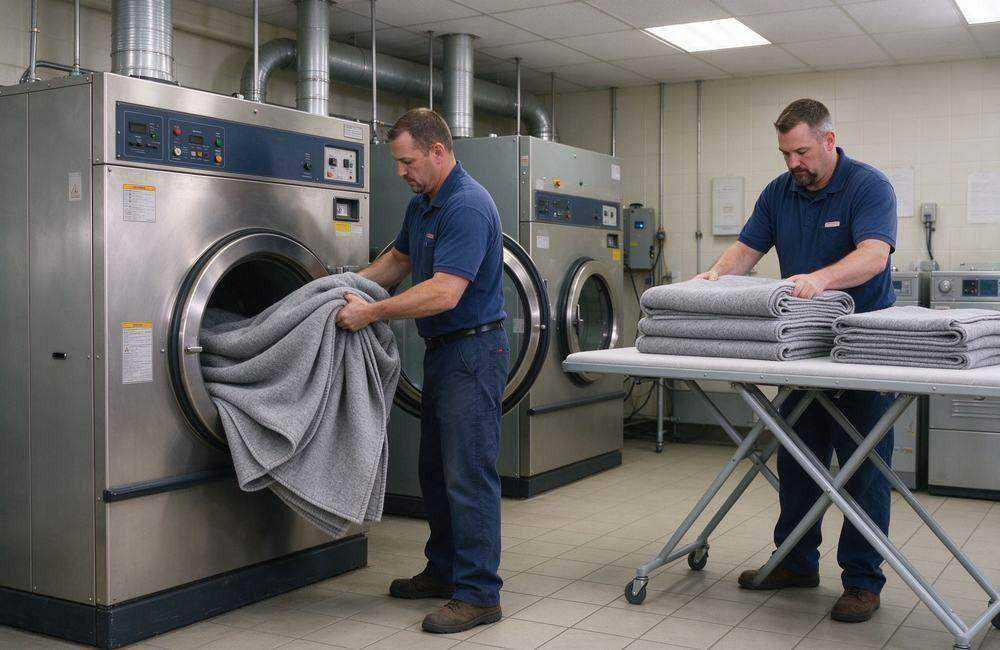
Industrial laundry is the real test of a hotel blanket service life.
The wash-test result from the supplier is the starting point. A blanket rated for fifty industrial cycles at a stated temperature will serve a mid-size hotel several seasons; a blanket rated for twenty-five will need replacing twice as often. Hotels should ask for the test protocol, not just the number, so the test matches how the property actually washes.

Factory wash trials predict how a blanket survives hotel turnover.
Post-wash checks catch the failures that matter: shrinkage that changes the fit, pilling that changes the feel and edge wear that shortens life. A simple monthly check on a sample of backup stock tells the property whether the line is meeting its rated life. Hotels that check monthly replace on schedule; hotels that skip it discover failures in bulk at the worst time.
Hotels should also keep one washed sample per spec as a reference for hotel laundry blanket service life. After fifty cycles, pull the reference and the in-service blanket side by side: the comparison shows exactly how the line is aging, and it catches drift before guests do. The reference sample also makes supplier conversations concrete. When a batch pills early or shrinks more than the test predicted, the hotel shows the reference and the conversation moves from opinion to evidence. Properties that keep a washed reference replace specs on schedule; properties that skip it negotiate every claim from memory.
Service life also belongs in the cost per backup blanket math. A blanket that lasts fifty cycles costs half as much per use as one that lasts twenty-five, even at the same unit price. The cost per backup blanket section below builds on this number, which is why the laundry test is not an optional extra in the buying process.

Post-wash checks catch shrinkage before it becomes a guest complaint.
Ordering backup blankets at the last minute forces rush freight and limits choice. A practical timeline starts eight to ten weeks before peak season: confirm quantity, place the order, approve the sample, and allow production and sea or air freight. Building the hotel blanket ordering timeline into the annual procurement plan keeps peak season stress off housekeeping.
Backup stock ordered at the start of peak season arrives too late, so the hotel blanket ordering timeline starts a season ahead. Blanket production, packing and shipping take weeks, and a hotel that waits for occupancy to rise pays for the delay in borrowed blankets. The ordering timeline starts the season before the season, with delivery planned against the calendar, not against demand.
|
Order stage |
When |
What happens |
|
Spec and sample |
10-12 weeks before peak |
Samples, wash test, spec lock |
|
Bulk order placed |
8-10 weeks before |
Production slot reserved |
|
Production and QC |
4-8 weeks before |
Factory runs, inspection |
|
Shipment and delivery |
2-4 weeks before |
Stock counted on arrival |
|
Season buffer |
1-2 weeks before |
Storage set, floors allocated |
The timeline works backwards from the peak week. Sample approval takes time because it fixes the spec; production takes time because the factory needs a slot; shipping takes time because containers move on schedules. Working backwards from the season start gives each stage its own deadline and makes the whole order reviewable.
Hotels with a stable annual order can compress the timeline with a rolling plan: order the next season's stock right after the current season's counts, keep the same spec and let the supplier hold the production slot. A rolling order removes most of the rush from the buying process and keeps the backup ratio constant year to year.
The timeline also protects against the two failures hotels see most: ordering too late and ordering from memory. Both are fixed by a written plan with dates. The plan sits with the budget, gets reviewed after each season and becomes the template for the next order.
A practical habit keeps the timeline alive: set one reminder per stage. When the sample approval deadline passes, the spec is locked. When the production deadline passes, the factory confirms the slot. When the shipment deadline passes, the hotel books the receiving time. Each reminder is a five-minute check that prevents a two-week surprise, and the habit costs nothing to start.
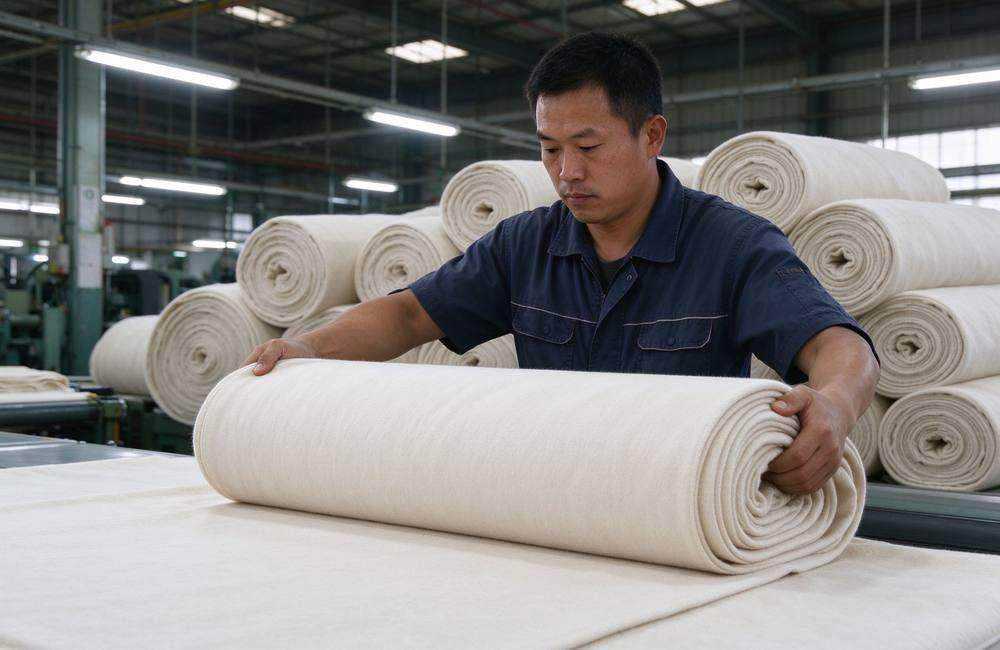
Consistent rolling keeps fabric quality stable across production runs.
Hotel blanket packaging has one job: keep the product clean from factory to storage. Individual polybags protect against dust and handling, while strong cartons prevent crushing in transit. Packaging should also be easy to open, because housekeeping may need to distribute stock quickly. Confirm bag and carton details when ordering so the hotel blanket arrives in usable condition.
Packaginstorage. Blankets shipped looseoading dock and what survives storage. Blankets shipped loose or in weak bags arrive wrinkled, dusty and hard to count; blankets in sealed packs arrive ready for the shelf. The packaging spec belongs in the order, not improvised at delivery.
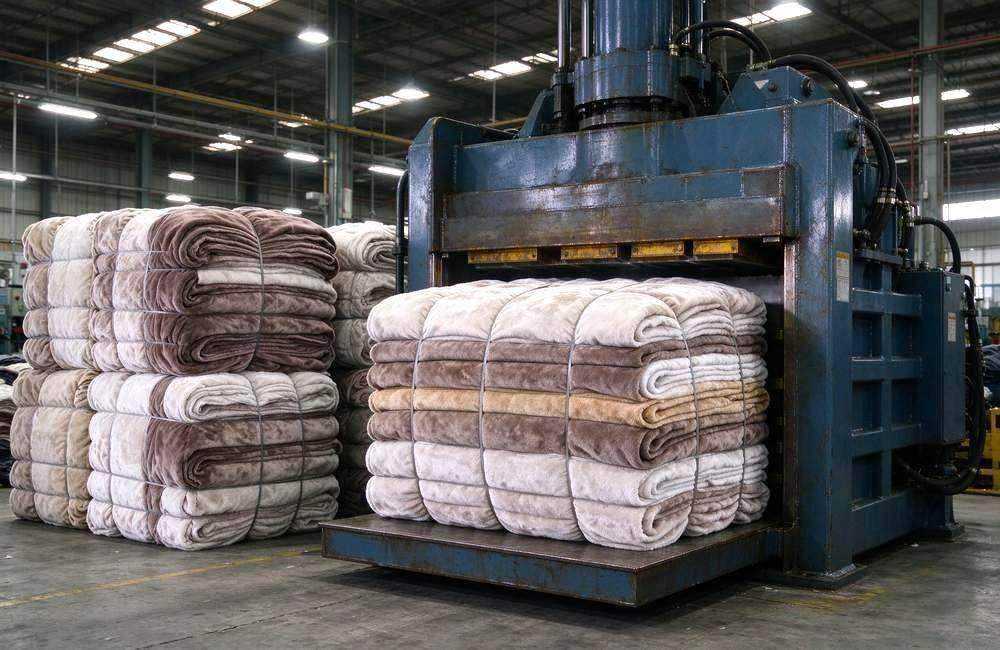
Compressed bales move more backup stock in the same container.
Sealed bags are the minimum standard. Each pack holds a known count, stays clean through storage and identifies the line at a glance. Hotels should specify pack size, bag material and labeling on the order, so every delivery is countable in minutes and storable as it arrives.
Compression packing matters when storage or shipping is tight. Hydraulic baling reduces folded volume significantly, which means more backup stock per container and per shelf, and a lighter freight bill per blanket. The trade-off is that compressed blankets need time to recover their loft, so hotels should plan decompression before the blankets go into guest rooms. A simple schedule works: open the bales when the delivery is counted, air the packs for a day or two, then move the stock to the racks. The extra handling is small, and the space saving is real for properties where the linen room is measured in shelves, not rooms.
Carton quality is part of the packaging spec too. Weak cartons collapse in transit and let dust and moisture reach the blankets. A simple carton spec, tested on the first delivery, prevents most damage claims and keeps the acceptance count clean.
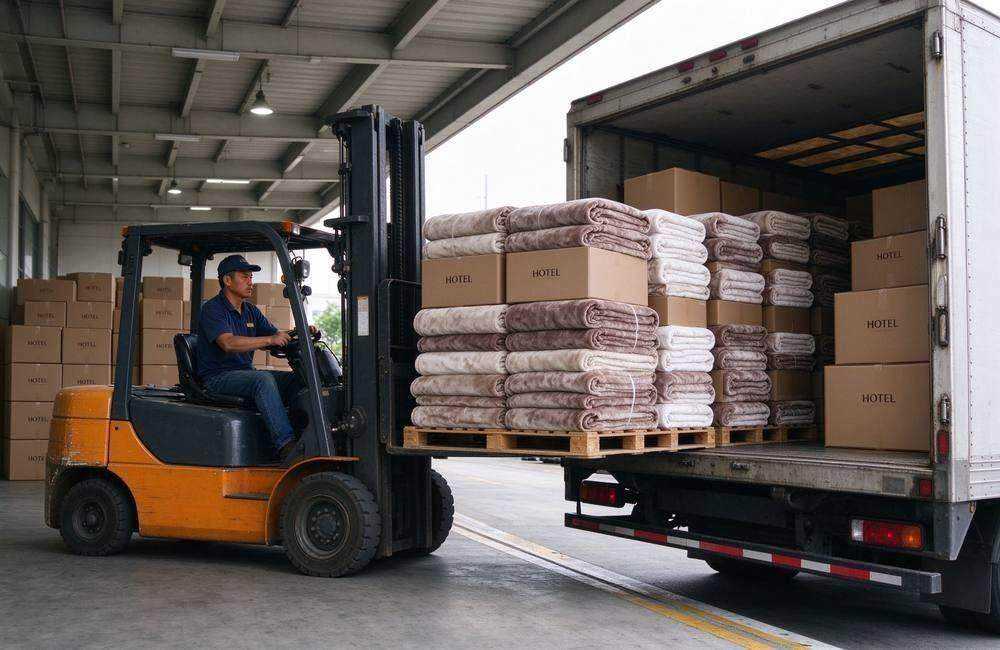
Dock loading sets the delivery pace for seasonal restocking.
The true cost of a backup hotel blanket includes the purchase price, storage space, and eventual replacement after repeated laundering. Comparing suppliers by unit price alone misses these lifecycle costs. A simple per-blanket cost calculation helps hotels decide between a thicker premium blanket and a durable mid-range option for backup stock.
The cost per backup blanket is not the unit price; it is the unit price divided by the number of seasons the blanket actually serves. A heavier blanket that survives more wash cycles costs less per season than a cheaper one that fails early. This section turns the plan into a budget line the hotel can defend.
|
Blanket type |
Unit price |
Rated wash life |
Cost per season |
|
Light guest line |
6.50 |
25 cycles |
Higher (shorter life) |
|
Mid backup line |
8.20 |
50 cycles |
Lower (double the life) |
|
Heavy backup line |
10.50 |
70 cycles |
Lowest per season |
The per-season math uses the wash test from the laundry section. A hotel that replaces blankets every season because of a light spec pays the highest cost per season, even at the lowest unit price. The budget line should be cost per backup blanket per season, and the GM approves that number, not the unit price.
Cost also includes the hidden items: storage space, counting time and the occasional emergency order at peak prices. A full-season plan with the right spec minimizes all three. Hotels that budget the complete picture order once, store correctly and replace on schedule, which is the cheapest way to run backup stock.

Acceptance counts protect the hotel from short or damaged deliveries.
Blankets disappear through loss, damage and undocumented transfers between floors. Regular counts, clear labeling and a simple check-in and check-out record keep hotel blanket inventory accurate. Monitoring turns backup stock from a vague reserve into a countable asset, so purchasing knows exactly when to reorder.
The count schedule has three beats: on delivery, mid-season and after peak season. Delivery counting settles the supplier claim. Mid-season counting catches loss before it becomes a shortage. Post-season counting sets the reorder quantity for next year. All three use the same count sheet, so numbers stay comparable across seasons.
Loss tracking is the part that finds the money. When the count falls short of the plan, the difference is either a stock error or real loss, and both are worth knowing. A simple loss line in the count report tells the property whether the backup ratio needs adjusting or the process needs fixing.
The monitoring section closes the loop that the plan opened: plan the ratio, order the stock, store it, count it, adjust the plan. A hotel that runs this loop twice a year keeps backup coverage stable without constant emergency buying.

Counting on arrival settles claims and updates the backup stock ledger.
Before committing to a hotel blanket order, check the sample for fabric hand, GSM accuracy, stitching, shrinkage after one wash, and the packaging plan. A sample that passes these points gives housekeeping confidence the blanket will survive guest use and laundering. The checklist is short but catches the majority of hotel blanket quality problems.
bulk blanket order shouldr should start with an approved sample. The sample fixes the GSM, the fold, the wash behavior and the pack, and it gives both hotel and supplier the same reference point. Orders placed without an approved sample are orders placed on hope, which is why textile testing standards anchor the spec before the bulk run.
The checklist is short: wash-test the sample, measure the folded pack, check the surface and edges, confirm the pack size and label. Each check feeds a number in the plan: wash test feeds service life, fold thickness feeds storage, pack size feeds the acceptance count. A sample that passes all five is ready to become the bulk spec.
Hotels should keep the approved sample sealed and dated. When the bulk delivery arrives, the acceptance team compares against the sample, not against memory. A sealed reference sample settles most quality disputes before they start and keeps reorders consistent.

Sealed bag samples keep quality consistent order after order.
A hotel blanket wholesale supplier for backup stock should show consistent quality, stable pricing and reliable lead times. Ask about fabric sourcing, wash testing and the ability to hold seasonal stock. A supplier who understands hotel laundry cycles is worth more than one who only sells blankets, because backup programs depend on repeat orders and consistent specs.
A hotel blanket wholesale supplier turns the hotel's plan into an order: the spec sheet, the pack size and the delivery timeline. The working relationship is simpler when both sides use the same numbers. The hotel sends the plan; the supplier confirms the spec, the price and the schedule; the delivery is counted against the plan.
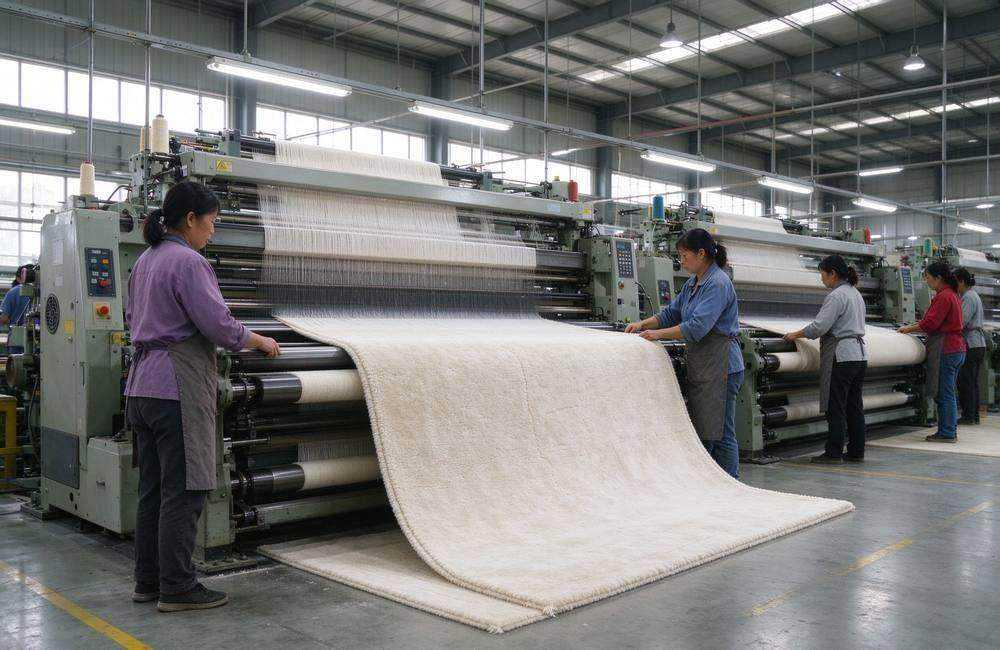
The workshop floor is where GSM consistency is actually made.
The supplier should be asked the questions that protect the plan: wash-test results, production lead time, minimum order quantity, pack and carton details and how reorders are priced. Written answers to these five questions give the hotel everything needed to set the budget and the timeline. Two more questions protect the relationship: how the factory communicates production progress and what the QC check covers before shipment. A supplier who answers all seven in writing is a supplier the hotel can plan around. The answers also become the comparison table when two factories quote for the same spec.

QC inspection decides which blankets leave the factory.
Consistency is the supplier attribute hotels should value most. The same GSM, the same fold and the same pack across reorders keep the storage plan and the guest experience stable. A supplier with documented QC and sealed samples earns reorders; a supplier that drifts costs the hotel in recounting and rework.
A simple supplier file makes reordering fast and keeps the relationship fair. Record the approved spec, the pack size, the unit price and the wash-test result on one page, and the next order starts from that page instead of from memory, which is how a hotel blanket wholesale supplier relationship stays consistent. The file also shows price drift: when the quoted price moves between seasons, the hotel sees the change against the original order and can ask for the reason before accepting. Hotels with a supplier file reorder in minutes and keep quality stable; hotels without one rebuild the conversation every season.
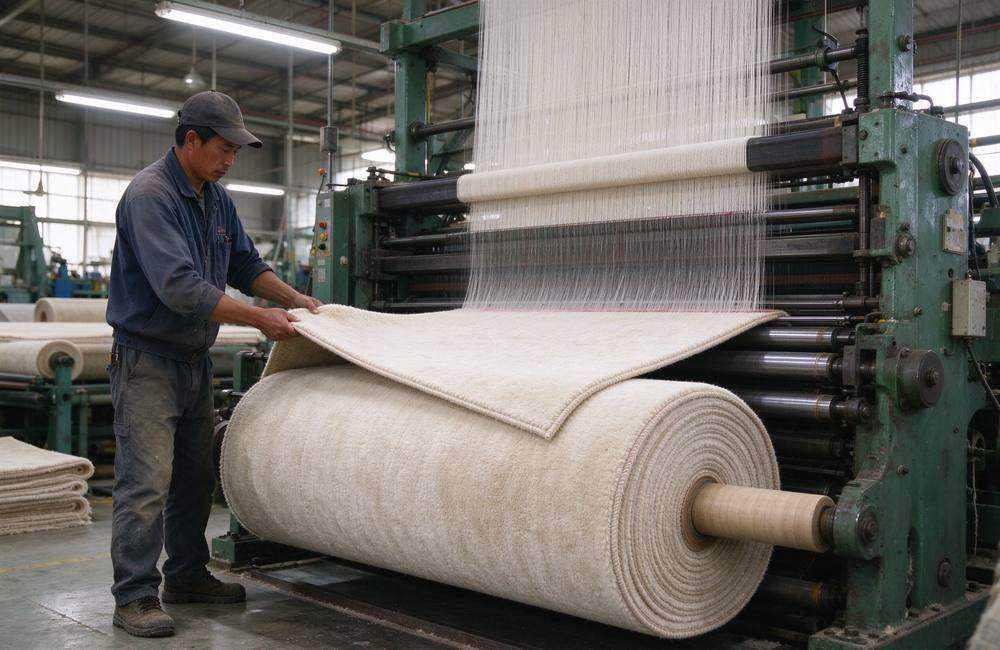
Fabric rolling and edge checks keep guest-line quality uniform.
The relationship should also include the two directions of communication: the hotel sends the plan and the supplier sends production updates. A delivery that slips two weeks is manageable when the hotel knows at production time, not at dock time. Simple progress updates keep the timeline alive and prevent peak-season surprises.
For a first order, a small trial batch protects the whole plan. Order a fraction of the annual backup count, run it through a full season and check how it washes, folds and counts before committing the rest. The trial also tests the supplier side: lead time, pack consistency and how claims are handled. Hotels that trial before scaling avoid the two worst outcomes, a full delivery that fails the wash test and a supplier that only answers after payment. The trial batch is a few hundred blankets, but it de-risks the entire cost per backup blanket budget.
For properties that buy regularly, a rolling order with a fixed spec and a reserved production slot removes most of the friction: the plan becomes the standing order, the supplier holds the slot, and each season's delivery arrives on schedule.

Packing lines standardize the packs that arrive at hotel loading docks.
These are the questions hotel purchasing teams ask before the first bulk order. Each answer connects back to the planning numbers, so the FAQ works as a quick reference next to the budget and the count sheet.
A common starting point is 0.5 to 1 backup blanket per guest room, rising to 1.5-2 for family rooms, resorts and event properties. The exact ratio depends on occupancy, laundry turnaround and room type, and it should be set per room type rather than as one property-wide number.

A regular stock count keeps the backup ratio honest between seasons.
200-250 GSM suits warm climates, 250-350 suits a mid-climate guest line and 350-450 suits a cool-climate backup line. GSM choice should follow the property climate and turnover pace, and wash-test results matter more than the GSM number alone.
Because backup stock is planned against the average week instead of the peak week. When occupancy climbs and laundry runs two shifts, the same blankets cycle faster and the average-based stock runs short. Planning against the peak week closes the gap.
Folded flat on labeled racks, in sealed packs, organized by room type with oldest stock in front. Fold thickness of the approved sample sets the shelf count, and low-season rotation keeps the stock usable. Organized storage makes counts take minutes instead of a morning.
No. They should be separate SKUs with separate specs and labels. The guest line keeps the quality guests expect; the backup line can be a heavier, more durable spec chosen for wash survival. Mixing the lines makes counts unreliable and degrades the guest line.
It depends on the spec and the wash protocol. A blanket rated for 50 industrial cycles serves a mid-size hotel several seasons; a blanket rated for 25 needs replacing twice as often. Hotels should ask for the wash-test protocol, not just the number.
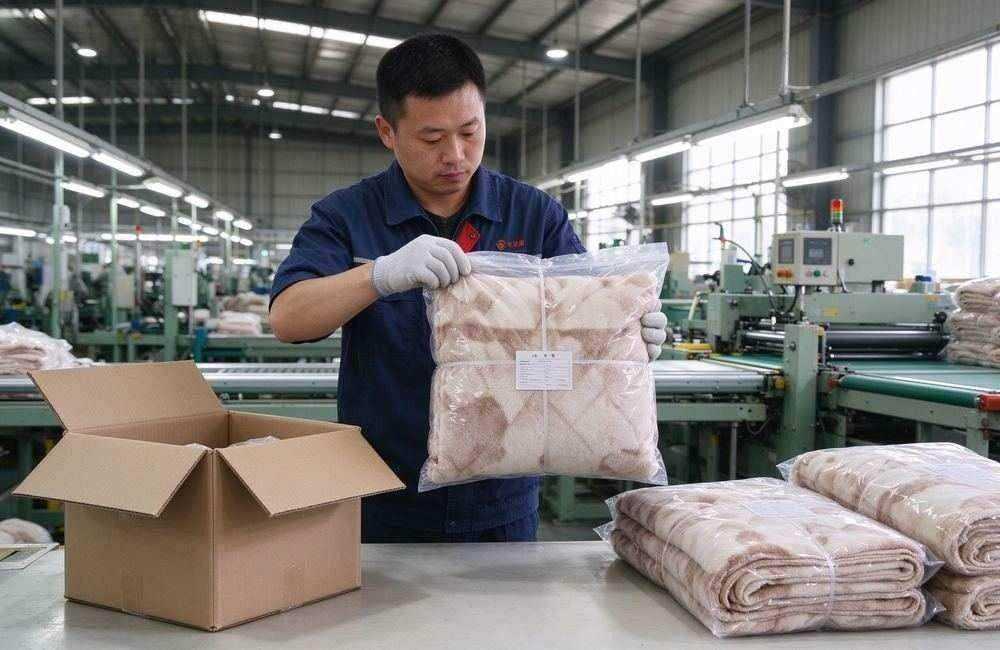
Sealed samples make the acceptance check fast and fair.
Ten to twelve weeks before the peak week for spec and samples, with the bulk order placed eight to ten weeks out. Working backwards from the season start gives each stage its own deadline and prevents last-minute emergency ordering.
Yes, when it survives more wash cycles. A heavier blanket at a higher unit price can cost less per season than a cheaper blanket that fails early, because the cost per season is unit price divided by wash life.
Sealed bags with a known count per pack, labeled for the line and room type, in tested cartons. Compression packing saves space but needs decompression time before guest use. Packaging belongs in the order spec, not improvised at delivery.
Three beats a year: on delivery, mid-season and after peak season. Delivery counting settles the supplier claim, mid-season counting catches loss early and post-season counting sets the reorder quantity. All three use the same count sheet.
Wash test for service life, folded pack thickness for storage, surface and edge check for quality, and pack size and label for the acceptance count. A sample that passes all five checks is ready to become the bulk spec.

Cartons counted on arrival keep the backup ledger accurate.
Resorts and event properties should run 1.5-2 backups per room and add a 10-20 percent buffer for the peak week. Event demand cycles blankets faster, so the floor allocation rises during events and returns to baseline after.
Wash-test results, production lead time, minimum order quantity, pack and carton details and how reorders are priced. Written answers to these five questions give the hotel everything needed to set the budget and the timeline.
Higher GSM blankets weigh more, which can affect laundry load and drying time, but the trade-off is a longer service life. Balance the cost per cycle against the longer life per blanket in the cost-per-season math.
Compression saves space and shipping cost but needs decompression time before guest use. Hotels with tight storage benefit most; properties with normal linen rooms can use sealed packs without compression. The choice is part of the packaging spec.
Multiply backups per room by room count, add the peak-season buffer, multiply by cost per backup blanket and divide by expected wash life. The cost-per-season line fits the annual linen budget and survives review.

The guest room is where the backup blanket becomes visible. A clean spare on the bed, ready before check-in, is the difference between a recovered room and a complaint. Hotels budget backup blankets by occupancy and laundry speed, and the room stack is the daily evidence of that calculation.
✅ Source premium hotel bedding supplies and wholesale hotel linen for all star-rated hotels, resorts and accommodation projects. Our range includes cotton bed sheets, polycotton duvet covers, pillowcases, hotel blankets, mattress protectors and hotel bed skirts, available in custom sizes, colors and logos. Ideal for hotel bulk procurement, hotel renovation and new hotel opening orders. We deliver durable, wash-resistant hotel linen that meets commercial laundering standards, supporting large-volume orders with stable supply.
YRF Textile - Manufacturer and supplier of emergency and institutional textiles. Contact: info@yrftextile.com
سابق :
Blanket Total Cost of Ownership for Bulk Buyers: Unit Price, Ocean Freight, Storage, Quality Failures and Replacement Costs Compared for Wholesale and Emergency Blanket Ordersالتالي :
Wholesale Flannel Blankets FAQ: MOQ, GSM, Fabric Weight, Sizing, Lead Time, Packaging and, Certifications and Bulk Relief Pricing for Humanitarian, NGO, and Institutional Buyersروابط ودية :
حقوق النشر © Custom Disaster - Relief Bedding: Tents, Sleeping Bags, Blankets كل الحقوق محفوظة
الفريق المحترف للخدمة !