التصنيفات
Last updated: November 14, 2026
Earthquake rescue tools for Earthquake Response
Heavy Cut Lift and Breach
Earthquake rescue tools for earthquake response cut reinforcement steel, lift concrete slabs and clear collapse debris around a trapped survivor. Our battery cutters deliver 560 kN, spreaders open debris 720 mm, and hydraulic breakers break concrete at 122 J per blow. This page covers the USAR tool set and the collapse rescue workflow.
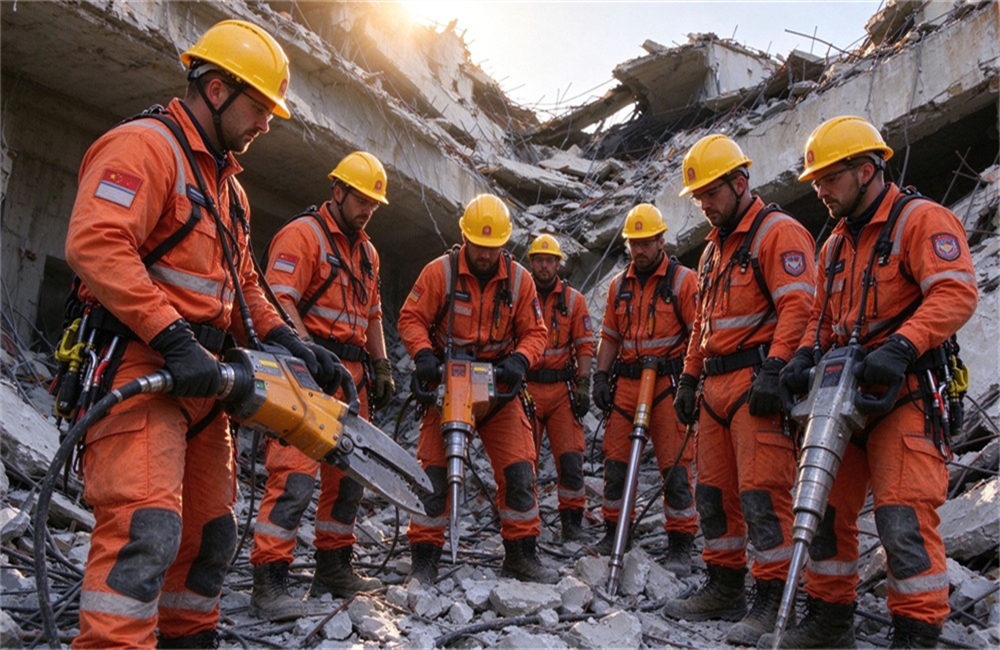
Table of Contents
Earthquake Rescue Tools: Why Heavy-Duty Gear Matters
Core Collapse Rescue Tools
USAR Workflow
Collapse Rescue Stability and Cribbing Support
Portable Earthquake Rescue Tools for Fast Entry
Earthquake Rescue Tools Ordering and Delivery
Earthquake Rescue Tool Quality and Standards
FAQ
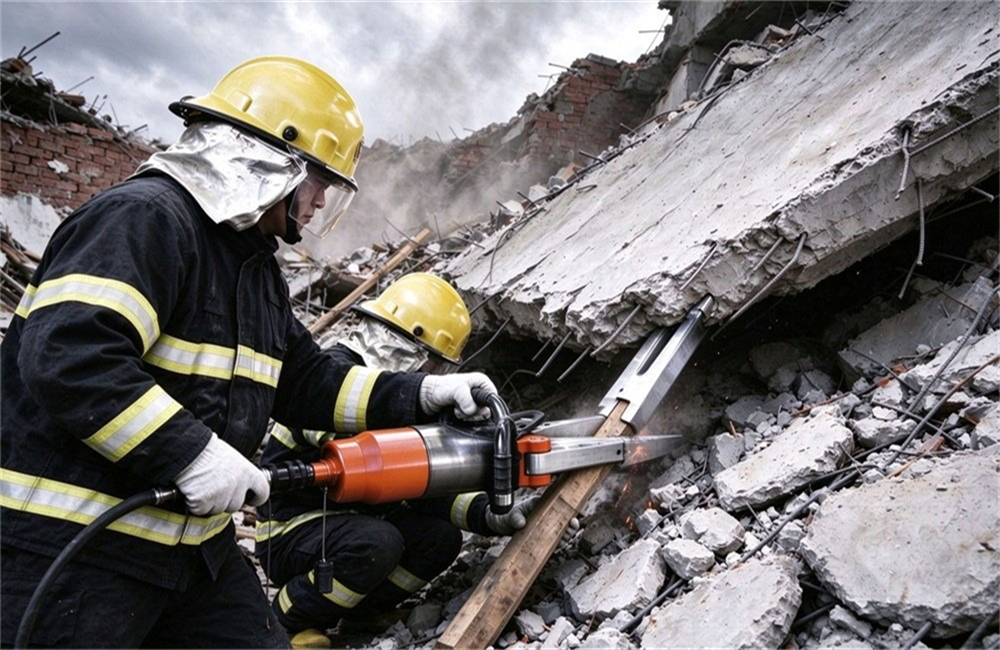
USAR teams rely on heavy tools at every stage of a collapse. The collapse site punishes unprepared tools: concrete dust clogs mechanical parts, rebar snags blades, and the shifting load changes the working angle mid-cut. Tools built for the site share one design language: hardened cutting edges, sealed hydraulic systems and release valves that work under dust.
Rescue tools for earthquake teams are quoted per team, not per truck. The same rating sheet records the cut time per slab, so the station knows which heavy duty cutter finishes the breach fastest.
Rescue tools for earthquake response start with the breach phase. The heavy duty cutter cycle time is logged on the drill card, and structural collapse tools are swapped out before wear slows the breach.
Earthquake Rescue Tools: Why Heavy-Duty Gear Matters
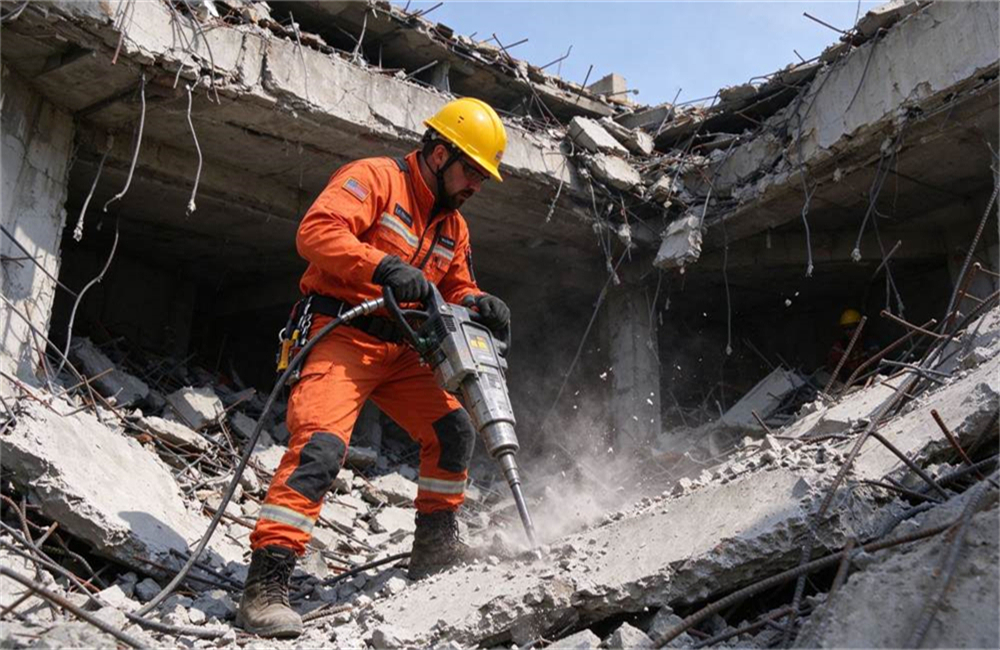
An earthquake turns a building into layered slabs of concrete, steel and furniture. The tools that open a car door are not enough here: collapse rescue works against reinforced concrete, tangled rebar and precast panels that can weigh several tons each.
Rescue tools for earthquake response are staged in the same tray order on every deployment.
Heavy earthquake rescue tools are rated for this material.
A cutter that severs car pillars also cuts 35 mm round steel and rebar; a breaker that breaks pavement also breaks C30 concrete slabs; a spreader that opens doors also pries precast panels apart. One tool family covers both worlds.
The collapse site also shifts. Aftershocks move the debris, dust reduces visibility, and the structure settles under its own weight.
Teams work with tools they can control in one hand and release in seconds, which is why battery and portable hydraulic tools dominate modern USAR kits.
Rescue tools for earthquake operations are judged by three numbers: cutting force, lifting force and weight.
The tool that cuts the most steel, lifts the most concrete and still fits in a backpack wins the procurement decision, because the same kit has to move from trench to tower on foot. Speed at a collapse is measured in survivor hours, not response minutes.
Rescue tools for earthquake response are staged in the same tray order on every deployment.
These search and rescue tools are rated for collapse scenes. International search and rescue teams work shifts around the clock in the first days after the quake, and every tool failure or setup delay costs one of those hours. Readiness is built into the kit, not improvised at the site.
Structural behavior shapes the tool choice: reinforced concrete fails at the steel, precast panels fail at the joints, and masonry crumbles into layered debris. The rescue kit is therefore planned against the local building type, which is why the same four-tool set is configured differently for steel-frame cities and masonry towns.
Rescue tools for earthquake response are staged in the same tray order on every deployment.
Aftershock discipline is part of the tool routine, not a separate drill. Tools are placed within arm's reach, the release valve is checked before each cut, and the team clears the void on warning. Battery tools support this because they are dropped and picked up in seconds with no hose to coil.
Rescue tools for earthquake response are staged in the same tray order on every deployment.
This page is written for procurement officers, USAR team leaders and government buyers who specify collapse rescue equipment. It covers the tool families, the USAR workflow, stability practice, the ordering path and the standards, with tested numbers from our battery and hydraulic range for direct comparison.FEMA guides USAR team response.
Core Collapse Rescue Tools
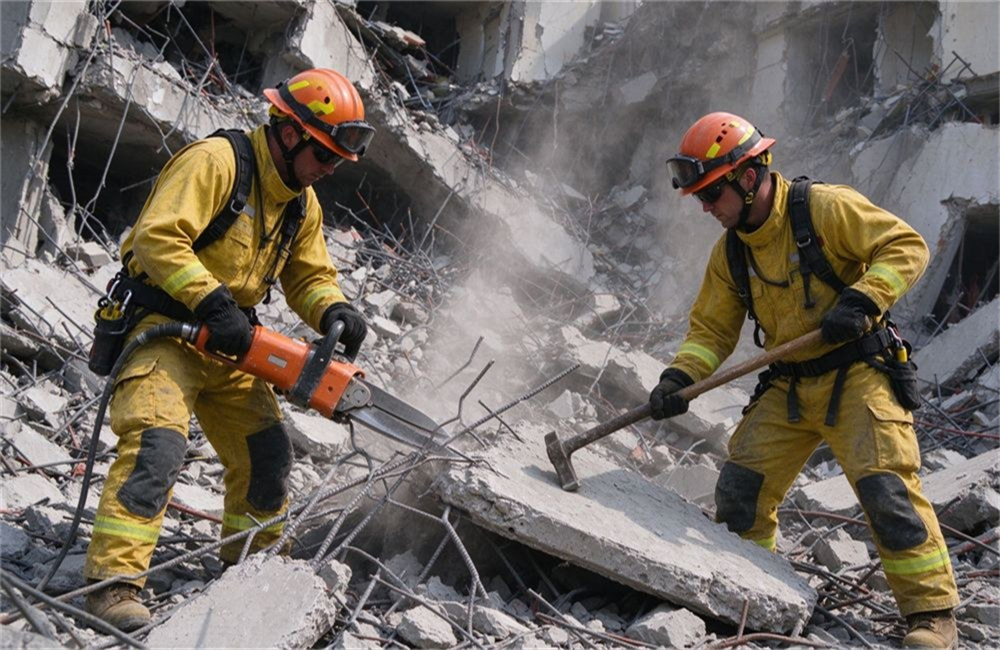
Structural collapse tools cover cutting, lifting and breaking in one matched system. Structural collapse tools for USAR teams must stay portable, because access routes are often narrow and unstable.
Four families cover the collapse site: cutters for steel, spreaders for debris, rams for lifting and breakers for concrete. Each is rated in force and weight, and each maps to a step in the USAR workflow. The numbers below are from our tested battery and hydraulic range.
Rescue tools for earthquake response are staged in the same tray order on every deployment.
Buyers read the four tools as one system because the collapse site needs all of them. A team that carries a cutter but no breaker wastes time on concrete; a team with a breaker but no ram cannot lift the slab it just broke. The kit is planned as a set, not as single tools.
Rescue tools for earthquake response are staged in the same tray order on every deployment.
The four families share one operating system: one battery, one pump pressure and one handle layout across the cutter, spreader and ram. Team members who train on one tool can run the others, and one spare pack covers the whole operation at the void.
Rescue tools for earthquake response are staged in the same tray order on every deployment.
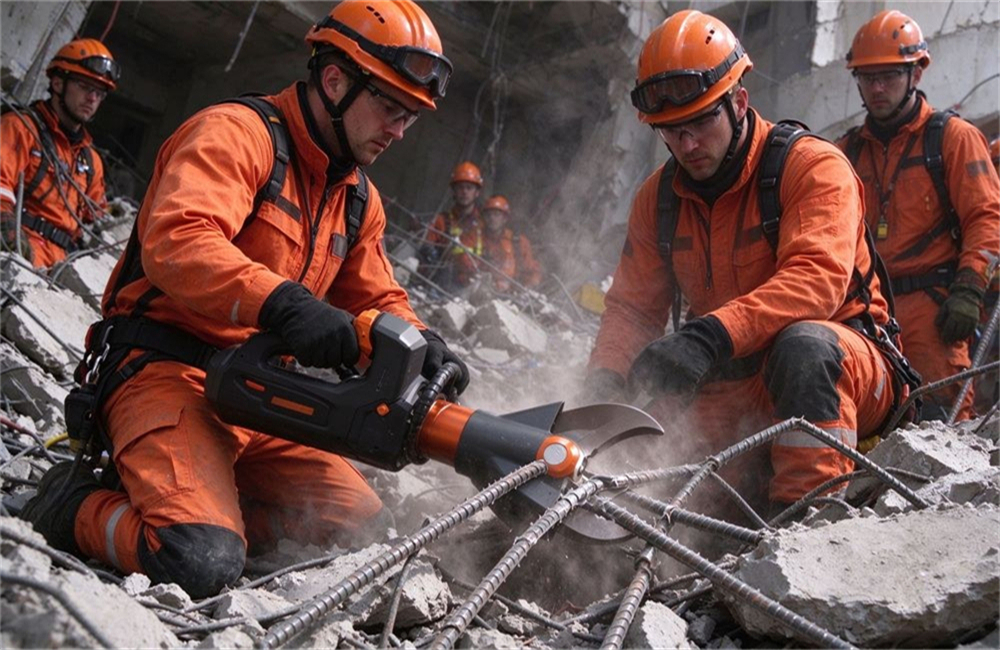
Heavy duty cutters slice through concrete rebar, steel mesh and vehicle wreckage at a collapse site. A heavy duty cutter with battery power removes the need for generators in confined access areas.
Earthquake rescue tools start with the cutter: concrete blades and steel blades in one battery family. Earthquake rescue tools buyers order the wholesale earthquake rescue tools set. The station trains multiple crews, and wholesale earthquake rescue tools pricing is per kit with the blade set included.
Rescue tools for earthquake response are rated in cutting depth and cycle time, and search and rescue tools for earthquake response for the collapse site are the same family.
Earthquake rescue tools cut concrete with the blade marked for rebar, and cut steel with the metal blade. Buyers get the two-blade set in the base kit, and quotes list the cutting depth for each blade; spare blades are added when the site mix includes both concrete and steel.
Collapse rescue equipment is the frame the kit is built on: cutters, spreaders, rams, breaker and lifting bags. Our range covers concrete, rebar and steel beams, and the glass kit finishes the final steps; the same handles run the five-step workflow at every collapse.
The hydraulic cutter severs rebar, window frames and the steel mesh that holds concrete together. Our battery cutter delivers 560 kN of cutting force at 720 bar with a 155 mm blade opening, and cuts 35 mm round steel in one pass. The 258 mm version handles double rebar and light structural steel.
Concrete work starts at the steel: the cutter opens the mesh, the breaker breaks the panel, and the spreader pries the pieces apart. This sequence repeats through every layer of the collapse, and the cutter is the tool that finishes each layer.
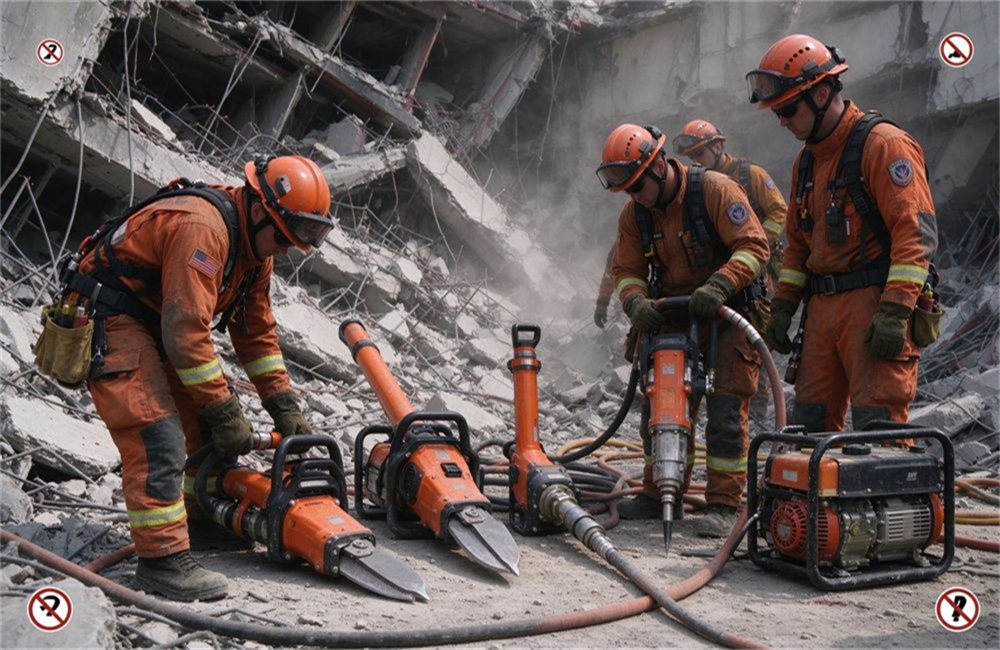
Rescue tools for earthquake response are staged in the same tray order on every deployment.
Blades for collapse work are the same hardened steel as vehicle blades, checked for hardness at HRC 48-55 before shipment. A blade that holds its edge through concrete dust and rebar ends the job without a tool change.
Steel cutting at a collapse is mostly rebar work, and rebar behaves differently from car pillars: it bends, springs and tangles in the mesh. The cutter works in controlled passes, one bar at a time, and the blade stays perpendicular to the bar to avoid deflection. The 258 mm opening model handles double and twisted bars in one bite.
Debris voids are three-dimensional, and the spreader works in the plane the team needs: horizontal for slab seams, vertical for wall panels, angled for the voids under furniture. The operator picks the tip and the angle, opens to the safe gap, and the cribbing crew locks the void before the search team enters.
Earthquake rescue tools spreaders open the gap between slabs, and the earthquake rescue equipment spec lists the spreading force in tonnes. earthquake rescue tools for earthquake crews pair the spreader with the ram. search and earthquake rescue tools for the site stay in one compartment.
Earthquake rescue tools for collapse work are matched to the void: the heavy duty cutter opens the rebar grid, the spreader holds the lifted slab, and the ram props the temporary gap while the search team reaches the victim. Rescue tools for earthquake response are carried on one battery platform, so the breaching team never waits on a power unit change. Rescue tools for earthquake work are staged on the same tray order every call. Stations drill the sequence timed, because structural collapse tools only save the minutes the crew wins on the first cut.
The same rating sheet records the cut time per slab, so the station knows which heavy duty cutter finishes the breach fastest.
The heavy duty cutter cycle time is logged on the drill card, and structural collapse tools are swapped out before wear slows the breach.
Wholesale earthquake rescue tools buyers compare spreading force against the USAR task list, and earthquake rescue tools quotes list the depth for every blade.
Earthquake rescue tools spreaders open the slab gap, and crews pair the spreader with the ram on every lift. Refreshers cover the spreading-force table, and the site log records the opening width for the next shift.
Earthquake rescue equipment includes the breaker for thick concrete, running on the same battery family as the cutters. Orders ship with the test record, and refreshers keep the blade angles current between calls.
The spreader pries apart precast panels, door frames and slab sections that pinch a void. Our battery spreader delivers 397 kN of spreading force, opens to 720 mm and pulls at 80 kN, enough to open a crawl space wide enough for the search team.
Debris spreading is a controlled push: the tips go into the seam, the arms open until the gap is safe, and the cribbing goes in before the team moves on. The spreader holds the gap while the crew checks the void, which is why it is the most-used tool at a collapse.
Rescue tools for earthquake response are staged in the same tray order on every deployment.
The changeable tips cover the debris jobs: pointed tips for seams, flat tips for panels, ripping tips for timber and trim. One spreader with a tip set replaces several single-purpose prying tools in the USAR bag.
Rescue tools for earthquake response are staged in the same tray order on every deployment.
Debris prying happens in two modes: opening a seam for the search camera, and widening a void for the rescue team. The spreader does both with the same tool, using small openings for the camera pass and full openings for the rescue pass, which keeps the tool count low at the site.
The ram is rated to hold as well as lift: the self-locking mechanism holds the rated load without drift, which is what the removal phase depends on. The cribbing crew stacks under the held load, the medics work in the void, and the ram keeps the position until the board team is ready.
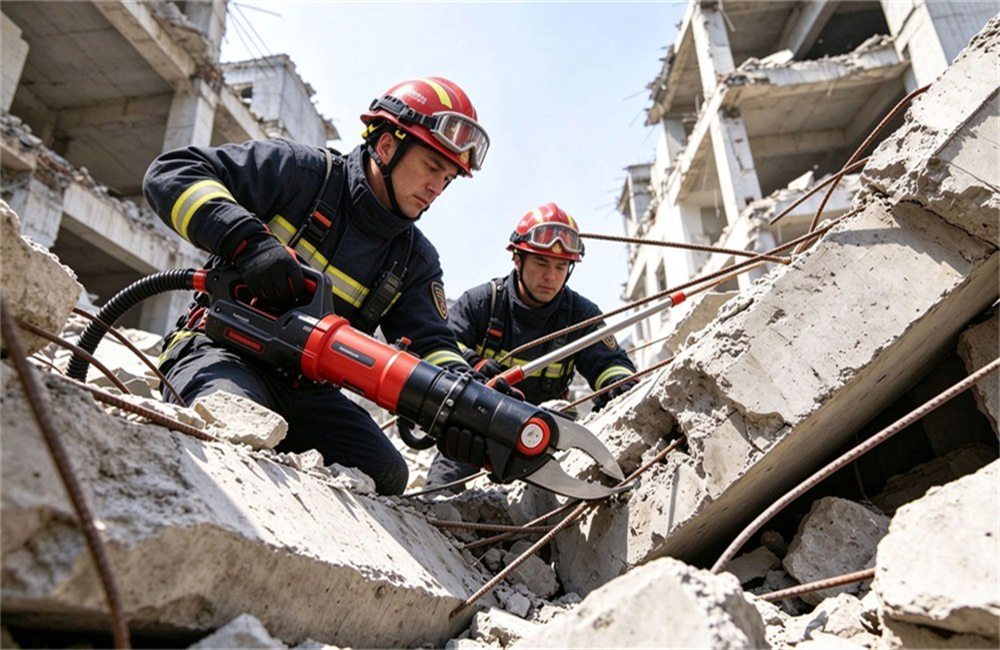
Hydraulic lifting rams raise concrete slabs and heavy debris with controlled, repeatable strokes. A lifting ram paired with cribbing holds the gap open while the rescue team works underneath.
Earthquake rescue tools rams lift the slab edge, and the earthquake rescue equipment table lists ram reach and lifting force. earthquake rescue tools for earthquake crews use the ram after the spreader opens the gap, and wholesale earthquake rescue tools kits include the ram tips.
Earthquake rescue tools for collapse work are matched to the void: the heavy duty cutter opens the rebar grid, the spreader holds the lifted slab, and the ram props the temporary gap while the search team reaches the victim. Rescue tools for earthquake response are carried on one battery platform, so the breaching team never waits on a power unit change. Stations drill the sequence timed, because structural collapse tools only save the minutes the crew wins on the first cut.
The same rating sheet records the cut time per slab, so the station knows which heavy duty cutter finishes the breach fastest.
The heavy duty cutter cycle time is logged on the drill card, and structural collapse tools are swapped out before wear slows the breach.
Search and rescue tools for earthquake response teams stack cribbing under the lift as standard procedure.
Earthquake rescue tools rams lift the slab edge, and buyers check ram reach against the collapse type. Cribbing is stacked under every lift, orders ship with the test record, and refreshers cover the lift cycle.
Maintenance follows the short list, and crews log the lift cycle after each call; buyers check the ram reach against the collapse types common in the region.
The ram lifts slabs, beams and collapsed furniture off a survivor. Our battery ram works at 227 kN in stage one and 102 kN in stage two, with a stroke that extends to 1,082 mm. The self-locking mechanism holds the lift while the crew removes the victim.
Lifting at a collapse is about millimeters of control: the ram rises in small steps, the cribbing stacks under each step, and the load never moves faster than the team. The two-stage design gives the operator fine control at the start and full force at the end. Rams work at angles other tools cannot reach.
Rescue tools for earthquake response are staged in the same tray order on every deployment.
Under a fallen beam, beside a tilted slab or inside a narrow void, the ram is the only tool that lifts without swinging, and it holds the position until the victim is clear.
Structural collapse tools by Task for Earthquake Rescue Equipment Buyers
Tool
Rated Output
Cut rebar
steel mesh
Battery hydraulic cutter
560 kN / 720 bar
Pry slabs
panels
Battery spreader
397 kN / 720 mm
Lift slabs
beams
Battery ram
227 kN stage 1
Break concrete panels
Hydraulic breaker
122 J / 2050 bpm
Clear small debris
Manual tools + shovel
By task
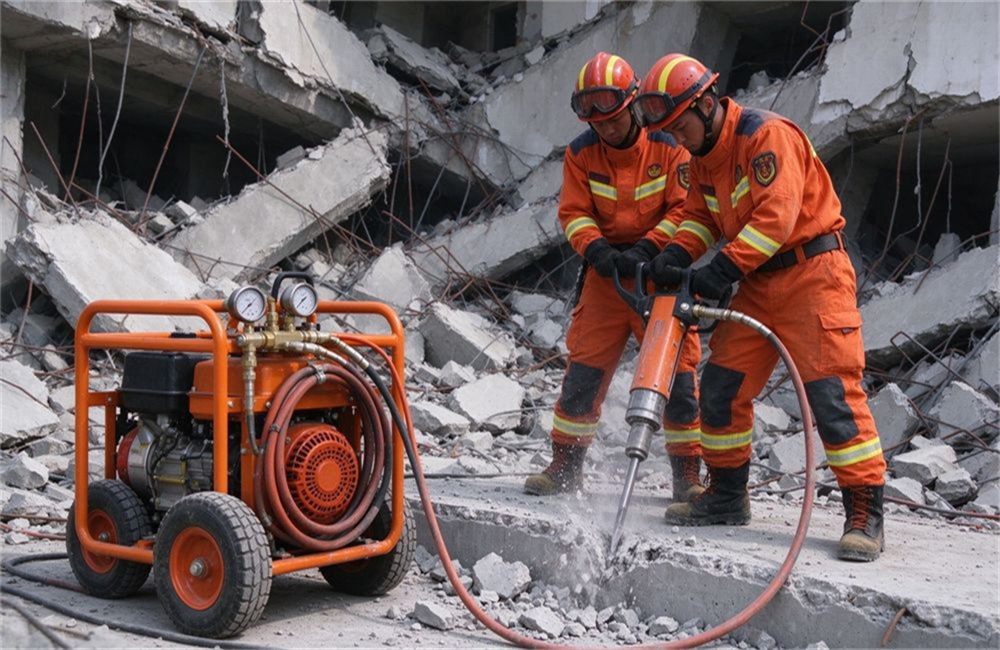
Every USAR kit lists structural collapse tools first: the heavy duty cutter, a ram and a power unit, because structural collapse tools decide how fast voids open after a quake.
The heavy duty cutter shears rebar and thin steel sections; for thicker columns the heavy duty cutter runs on a stand-alone power unit so structural collapse tools keep working through a full shift.
Procurement teams compare structural collapse tools by rated force and weight; a lighter heavy duty cutter speeds hand-carried entries, while a heavier heavy duty cutter serves base-of-rubble cuts.
Ordering structural collapse tools in matched sets means one hose standard for every heavy duty cutter, and structural collapse tools shipments include the chisels and blades each heavy duty cutter needs for rubble work.
Response drills run structural collapse tools against timed debris cuts; teams score each heavy duty cutter on cycle speed, and stations refresh structural collapse tools before the wet season when heavy duty cutter wear is highest.
Standardised structural collapse tools and a common heavy duty cutter model keep every earthquake response team interchangeable across districts.
Ram placement follows the load path: the foot goes on the bearing point, the head goes under the slab edge, and the lift is always vertical. A wedged foot slips; a bearing point spreads the load. The operator reads the position from the LED display and steps the lift in small increments.
Specifications referenced on this page come from tested models in our range: the cutter at 560 kN cutting force and 720 bar. The spreader reaches 397 kN and 720 mm. The ram lifts at 227 kN stage one. The breaker delivers 122 J. All values are recorded on the batch test card that ships with each order.
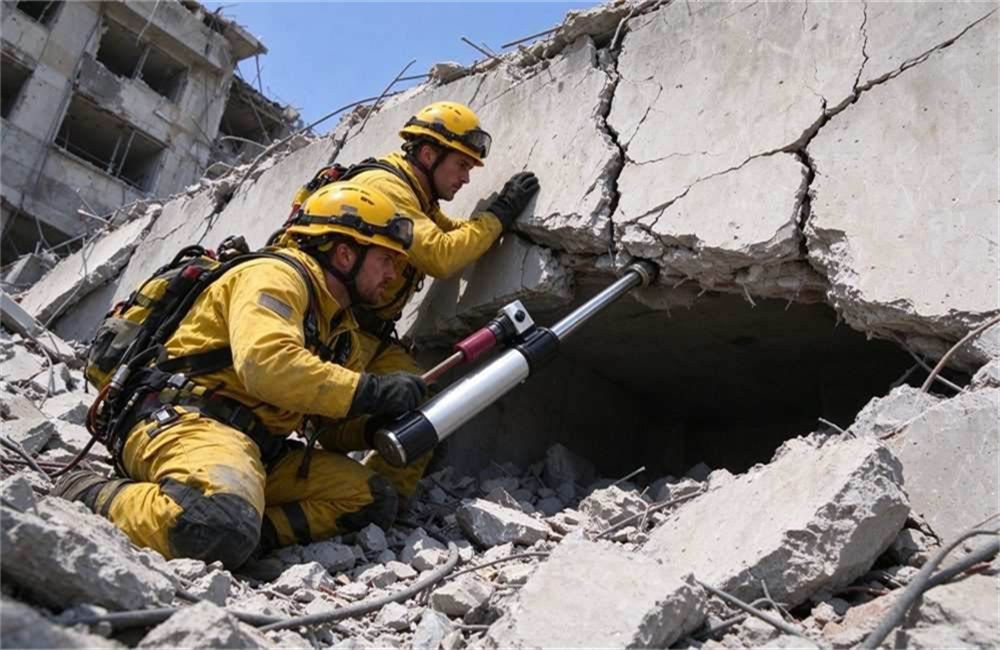
USAR Workflow
Urban search and rescue follows a fixed sequence: search, breach and lift, then victim removal. The workflow is taught in USAR training worldwide, and the tool set is built around it. This section shows the collapse operation step by step. The USAR sequence is one system with one clock, and the tool set is built around the phases.
The search team hands the marked spot to the breaching team, the breaching team hands the open void to the lifting team, and each handoff is checked against the same checklist.
Earthquake rescue tools for collapse work are matched to the void: the heavy duty cutter opens the rebar grid, the spreader holds the lifted slab, and the ram props the temporary gap while the search team reaches the victim. Rescue tools for earthquake response are carried on one battery platform, so the breaching team never waits on a power unit change. Stations drill the sequence timed, because structural collapse tools only save the minutes the crew wins on the first cut.
The same rating sheet records the cut time per slab, so the station knows which heavy duty cutter finishes the breach fastest.
The heavy duty cutter cycle time is logged on the drill card, and structural collapse tools are swapped out before wear slows the breach.
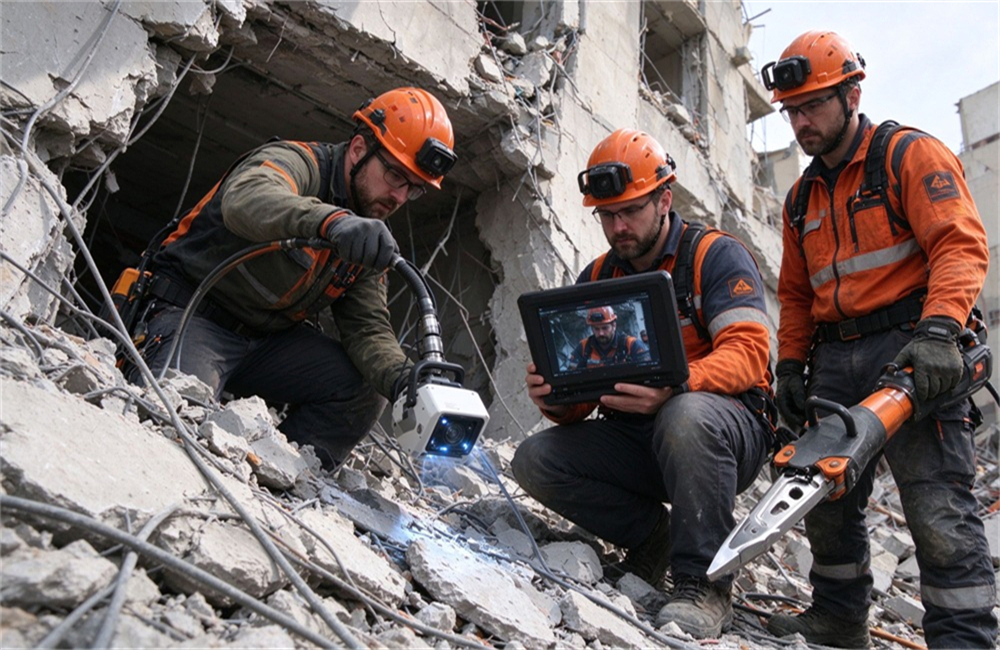
Search and earthquake rescue tools for earthquake sites start with the listening probe, then the camera, then the lift. Search. Earthquake rescue tools for earthquake teams confirm the void before the cutter opens it, and earthquake rescue equipment orders include the probe set.
Wholesale earthquake rescue tools buyers add the probe when the site mix includes deep voids, and the earthquake rescue tools checklist covers the probe, camera and lift in order.
Wholesale earthquake rescue tools buyers order the full collapse set, and quotes include the blade set and probe. Shipments carry the batch card, reorders use the same part numbers, and lifting bags are added when the debris mix calls for them.
Earthquake rescue tools teams confirm the void with the probe before the cutter opens it, and refreshers keep the five steps automatic. Buyers check the battery cycle against the shift length, and orders ship with the test record; crews log each lift.
Search for voids starts with the probe, camera and lift, used in that order. Drills repeat the five steps, logging keeps the next shift current on the void map, and the probe set is checked before each deployment.
Search phases use the same workflow at every collapse: probe, camera, breach, lift and extract. Refreshers cover each step, and logging keeps the next shift current on the void map.
Search finds the void and the survivor before any tool touches the debris. Teams listen, call and use search cameras and acoustic devices to locate victims, then mark the spot for the breaching team. The search phase decides where the tools go in.
Search equipment pairs with earthquake rescue tools in the same bag: the search camera sees into the void, the marking paint shows the entry point, and the acoustic device confirms a response. The earthquake rescue tools then work exactly where the search team points them. Search works in a cycle: listen, call, camera, mark.
The cycle repeats at each void until the team either confirms a survivor or clears the spot. Marking is disciplined because a marked spot saves the next team from re-searching, and the paint is part of the search module.
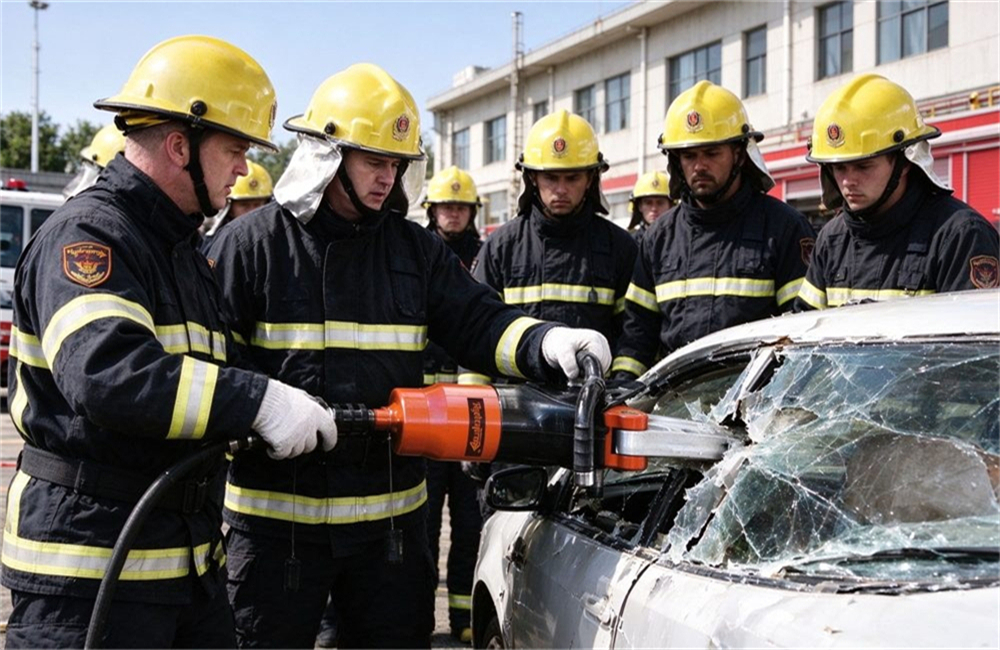
Collapse rescue equipment for the breach phase is the breaker and bags, and collapse rescue equipment quotes list bag force. Earthquake rescue tools use the same battery family, and collapse rescue equipment spares are one list.
Search and earthquake rescue tools for earthquake crews log the cycle, and search and earthquake rescue tools for earthquake refreshers cover blade angle and bag pressure. Search. Earthquake rescue tools for earthquake teams confirm the void before the earthquake rescue tools cutter opens it, and the same earthquake rescue tools battery runs the whole breach phase.
Earthquake rescue equipment covers the whole USAR task list: cutter, spreader, ram, breaker and bags. Ratings list cutting depth, spreading force and ram reach, quotes include the probe set, and drills run quarterly.
Earthquake rescue tools and collapse rescue equipment share the battery family, and teams run both drills together. Void search starts with the probe, crews log the opening width, and the breach-phase kit ships with the test record.
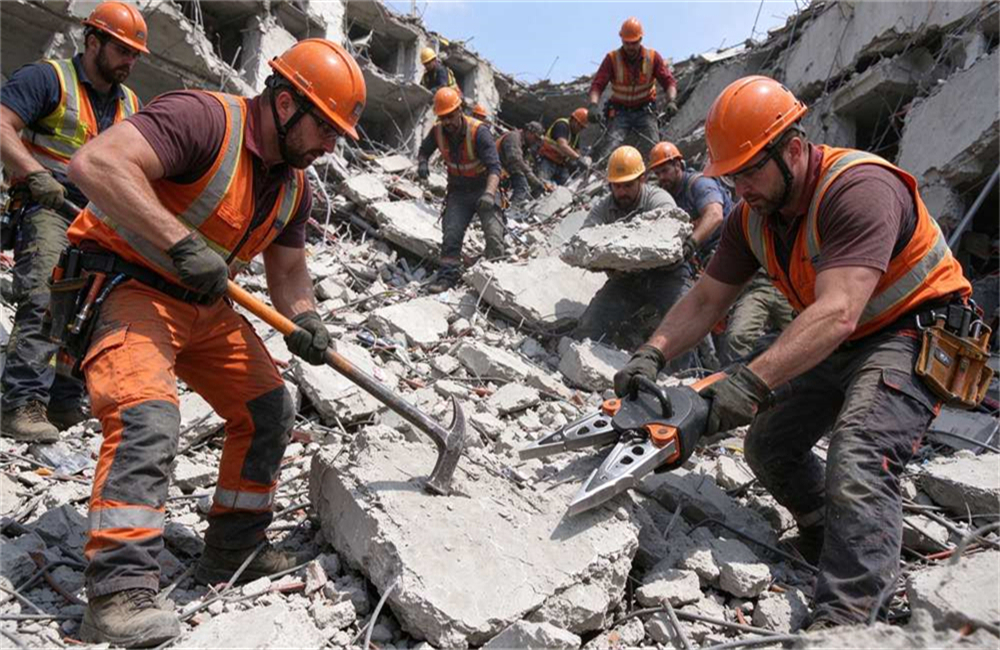
Breaching opens the debris above and around the victim. The breaker breaks the concrete, the cutter severs the steel, and the spreader pries the pieces. Each piece is cribbed before the next is moved, so the void never closes on the team or the victim.
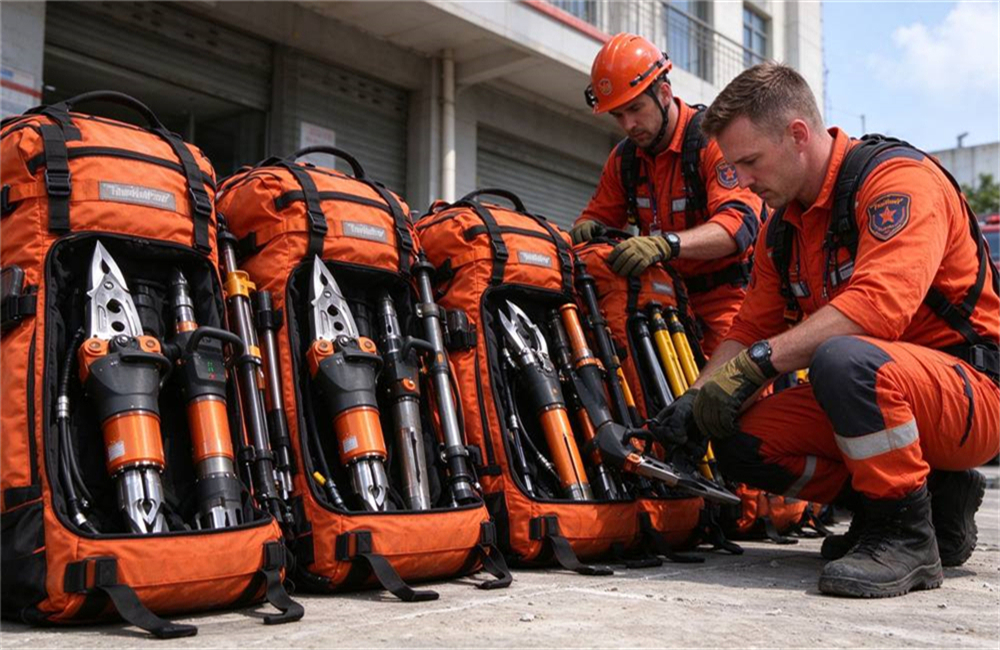
Lifting follows breaching when a slab or beam rests on the survivor.
The ram goes under the edge, rises in controlled steps, and the cribbing stack grows under each step. The victim is reached when the load is held, not when it is removed. Breaching order follows the collapse geometry: clear the top layer first, then the side panels, then the slab over the void.
Each removed piece is cribbed immediately, so the hole grows outward instead of closing inward, and the team always has an exit path beside the entry path.
Earthquake rescue tools victim removal uses the stretcher and the glass kit, and earthquake rescue tools for earthquake crews run the five steps in order. Search. Earthquake rescue tools teams hand off the void map, and search and rescue tools for earthquake refreshers keep the removal steps current.
Earthquake rescue tools and rescue tools for earthquake are the same kit in two drills.
Buyers confirm the probe set at quotation, and teams check it against the void map before each deployment.
Removal is the final pass: the load is held, the debris is cleared from the victim's path, and the team slides the survivor onto the board. The ram and cribbing hold the position while the medical team works, and the board team moves the victim in one coordinated shift.
Removal at a collapse is slower than at a car because the load is heavier and the void is smaller. The workflow keeps the same order—stabilize, breach, lift, remove—so the team never rushes a lift it cannot hold.
Removal is where the medical team takes over the clock. The load stays held, the debris stays cleared, and the board team moves the victim without hurrying the lift. The workflow gives the medics a stable void to work in, which is the whole point of the heavy tool set.
The kit travels with the stability module because the two are used together: every lift in the workflow lands on cribbing, and every void in the search phase is propped before entry. The module is the same size discipline as the tools, checked by count before and after each operation.
USAR Workflow for Earthquake Rescue Tools Teams
Key Action
Tools Used
Phase 1 - Search
Locate void
victim
Search camera + acoustic
Phase 2 - Breach
Break concrete, cut steel
Breaker + cutter
Phase 3 - Lift
Lift slab, stack cribbing
Ram + cribbing
Phase 4 - Stabilize
Lock the void open
Struts + wedges
Phase 5 - Remove
Slide victim to board
Spine board + crew
Collapse Rescue Stability and Cribbing Support
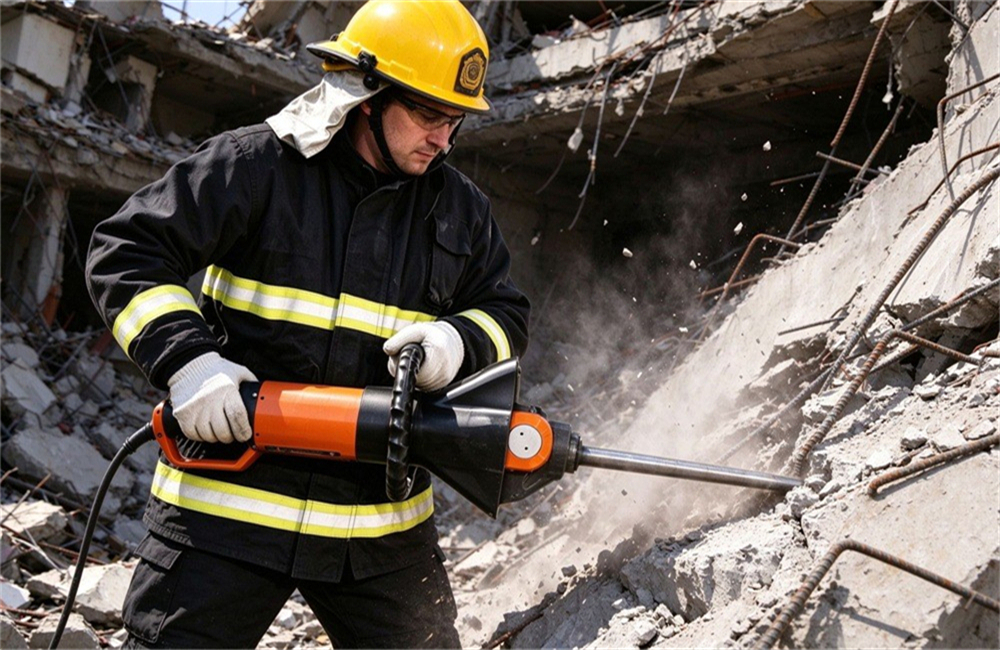
Debris tools such as halligan bars, pry tools and shovels clear loose material before power tools take over. Debris tools remain essential when the collapse zone is too tight for hydraulic equipment.
Stability is the difference between a rescue and a second collapse. Every slab the team lifts is held by cribbing before anyone goes underneath, and every void is propped before the search team crawls in. The rule is taught in one line: never work under a load that is not supported.
Earthquake rescue tools for collapse work are matched to the void: the heavy duty cutter opens the rebar grid, the spreader holds the lifted slab, and the ram props the temporary gap while the search team reaches the victim. Rescue tools for earthquake response are carried on one battery platform, so the breaching team never waits on a power unit change. Stations drill the sequence timed, because structural collapse tools only save the minutes the crew wins on the first cut.
The same rating sheet records the cut time per slab, so the station knows which heavy duty cutter finishes the breach fastest.
Cribbing stacks are built from timber or composite blocks sized for the load. A 100 mm block stack carries a slab while the ram moves; a wedge set levels the slab on uneven debris. The cribbing kit travels with the tools, not separately, because it is used at every lift.
Struts and wedges handle the sideways loads that cribbing cannot.
A strut props a leaning wall; wedges stop a slab from sliding. Both are hand tools, so they work where the hydraulic tools cannot fit, and both are in every collapse rescue kit.
Structural collapse tools stabilization order at a collapse is the same every time: crib under the load, prop the lean, wedge the slide, then open the void.
The team practices this order because a collapse site gives no second chance. The numbers behind the cribbing are printed on the kit: the max load per block, the wedge angle and the strut rating. Teams read these numbers before the lift, not during it, and the same numbers are in the training material that ships with the kit.
Stability equipment is rated like the tools: cribbing blocks carry their max load, wedges hold their angle, struts bear their rating, and all three are stamped with the numbers. The receiving team checks the stamps against the order, because a cribbing block with a missing rating is a block that is not used.
Collapse sites fail in patterns, and the cribbing kit is built for them: vertical slabs need wedges, leaning walls need struts, flat voids need crib stacks. The kit travels with a quick-reference card that maps the pattern to the stabilizer, so the crew reads the card while the tool is still in the bag.
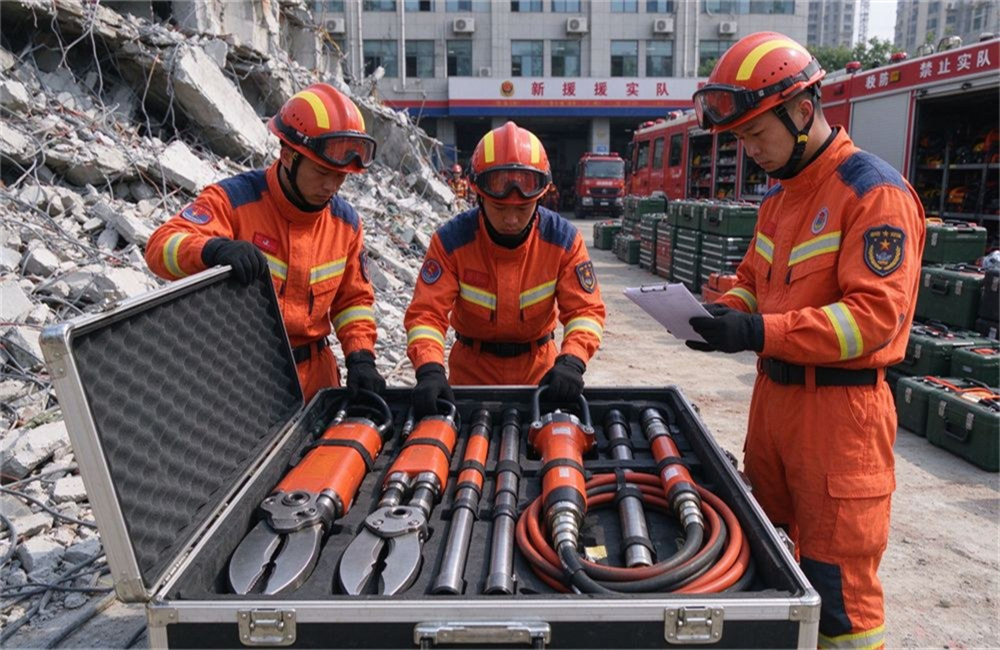
Manual tools complete the kit where hydraulic tools cannot go: halligan bars, breaching pliers, chisels and the glass and seatbelt tools selected from the forcible entry tools range. They work in the small voids, at the edges and under the loads, and they are the backup when a battery runs flat in a deep void.
The manual set shares the case with the powered tools, not a separate bag, because the crew uses them in the same phase: powered tools open the layer, manual tools finish the void. One foam layout holds both, and the inventory check covers the whole module at once.
Portable Earthquake Rescue Tools for Fast Entry
Rescue tools for earthquake response now come in battery versions that remove generator noise from the rescue zone. Rescue tools for earthquake use that are lighter and quieter let teams work closer to survivors without adding engine fumes.
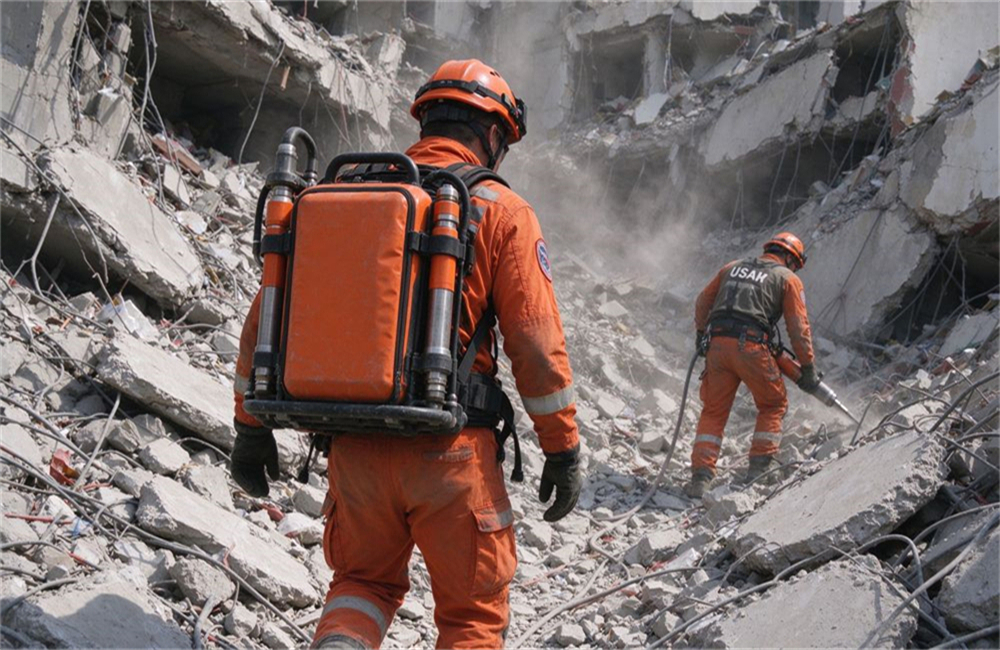
Weight is the hidden spec at a collapse site. USAR teams move on foot through debris, up stairs and across rubble fields, and every kilogram in the bag is carried by a person. Battery tools answer this: no hoses, no pump, no engine to drag behind.
Rescue tools for earthquake response are staged in the same tray order on every deployment.
Earthquake rescue tools for collapse work are matched to the void: the heavy duty cutter opens the rebar grid, the spreader holds the lifted slab, and the ram props the temporary gap while the search team reaches the victim. Rescue tools for earthquake response are carried on one battery platform, so the breaching team never waits on a power unit change. Stations drill the sequence timed, because structural collapse tools only save the minutes the crew wins on the first cut.
The same rating sheet records the cut time per slab, so the station knows which heavy duty cutter finishes the breach fastest.
Our battery cutter weighs 19.5 kg, the spreader 22 kg, the ram 19.5 kg and the breaker 20 kg with its hydraulic power source. Two team members carry any of them to the void, and the set fits the USAR rucksack module.
Portability also means quick release.
A battery tool is dropped and picked up in seconds, which matters in a void that shifts or an aftershock warning. The operator stays mobile instead of tied to a hose run from a pump at the edge of the site.
USAR tools run on the same battery family across the kit: cutter, spreader, ram and the electric pump share one pack and one charger. One spare set of packs covers the whole operation, and the LED display confirms charge before the team goes in.
The comparison table below puts the three tool families side by side: battery for speed and mobility, pump-fed for continuous heavy work, manual for the fine work in the void. Most teams carry the battery set as primary and the manual set as the backup module.
Battery economics matter on long operations: one charger tops up every pack in the kit, and the packs swap between the cutter, spreader and ram. Teams that run back-to-back shifts carry the second set of packs, which the recommendation table sizes by team strength.
Rescue tools for earthquake response are staged in the same tray order on every deployment.
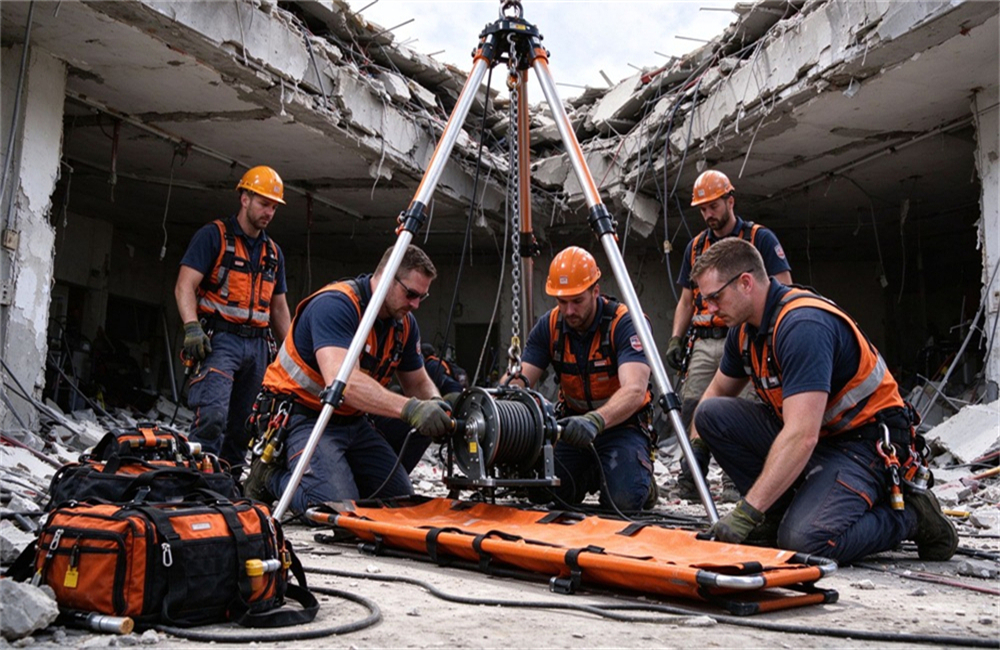
The rucksack module is part of the order, not an add-on: the foam layout fits the four tools, the packs, the charger and the manual set, and it is sized for foot movement over rubble. Teams specify the module with the tools so the whole system ships as one unit.
Documentation for international orders follows the export standard: proforma invoice, commercial invoice, packing list and the batch test records, with the terms confirmed in the quotation. Buyers who need tender documents receive them in the requested format with the shipment.
Sample evaluation is the standard first step for government buyers: one tool, two battery packs and the test card ship as the sample set, and the station runs the full-cycle test before volume ordering. The sample price is credited against the first volume order.
Earthquake Rescue Tools Ordering and Delivery
Collapse rescue orders follow the same path as the rest of the rescue range: inquiry, specification, production, testing and shipping. The quotation confirms the kit configuration and delivery time, and samples are available before volume production.
Typical first orders for rescue tools for earthquake work are the four-tool USAR set: cutter, spreader, ram and breaker with two battery packs each.
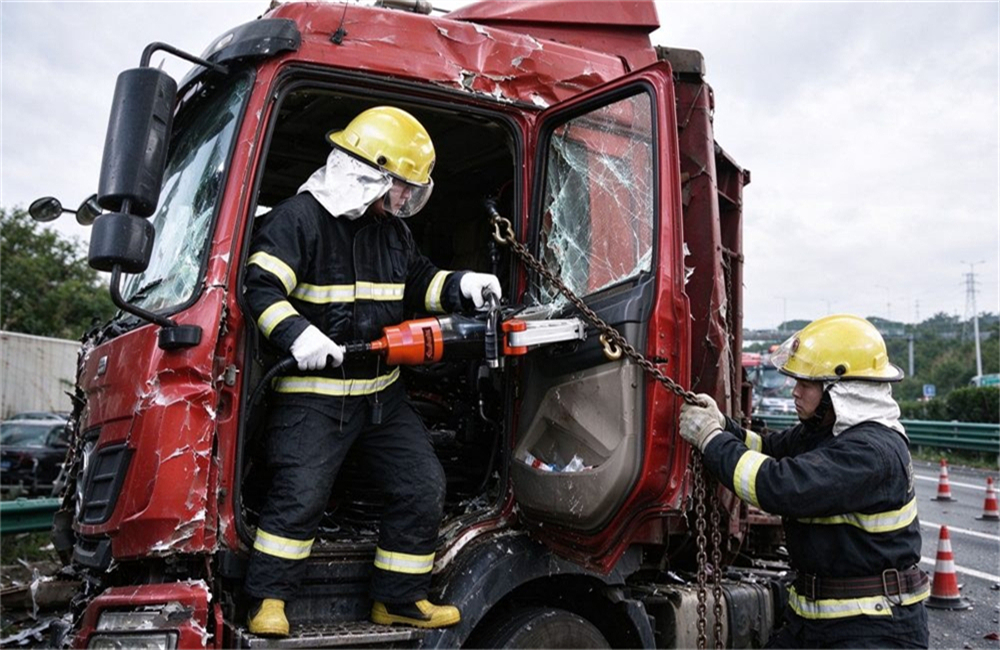
Departments that already carry the vehicle extrication range order the breaker and ram as the structural collapse tools add-on, because they share the same battery and pump family.
Government and international teams receive the full document set with every shipment: hardness records, pressure test values, battery reports and the packing list.
The same documents support tender review, customs clearance and the receiving check.
Spare parts are stocked for every model: blades, tips, seals, battery packs and charging cradles. Each spare is cross-listed with the tool it fits, so the station reorders by part number. Export packing protects the tools for air and sea freight with foam cases and labeled cartons.
Delivery time depends on destination, customization and stock. Standard USAR sets ship from stock in the shortest window; OEM orders with team colors, logos and custom case foam follow the confirmed production schedule. The quotation states both the time and the port.
Spares for collapse kits are stocked deeper than for vehicle kits because the operation runs longer: spare blades, spare tips, spare seals, spare batteries and the cribbing consumables. Each spare is cross-listed with the tool it fits, and the reorder list is part of the shipment documents.
Maintenance at a collapse site is simple because the battery system has no oil to change and no fuel to store. The checklist is short: wipe the tools, check the seals, charge the packs, verify the LED. The same checklist is printed on the case lid and in the documents.
Packaging for collapse kits follows the export standard used across the rescue range: foam cases, labeled cartons, and the documents in the case pocket. Air-freight orders add the battery declaration, and sea-freight orders add the moisture barrier wrap.
Earthquake Rescue Tool Quality and Standards
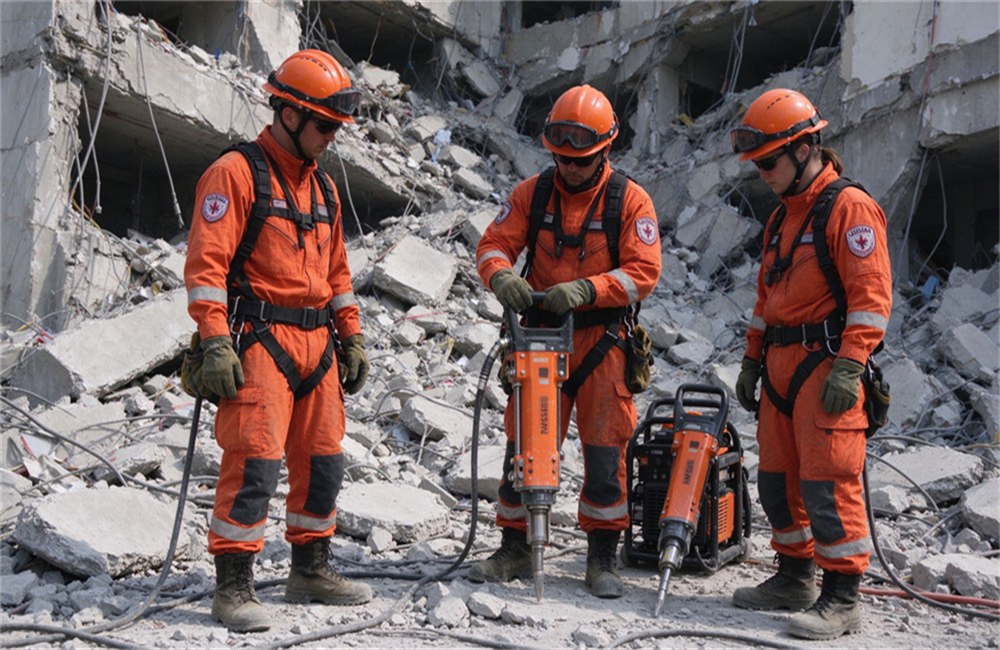
Collapse rescue tools are tested to the same standards as the powered rescue range: NFPA 1936 for force and cycle testing, with CE marking for European export. The test values are recorded per batch and travel with the shipment.
Every tool passes a full-cycle test before packing: open to full stroke, hold rated pressure, close, repeat.
The breaker runs a timed blow count; the cutter blade is hardness-checked; the battery pack is load-tested. The batch card carries every reading.
Standards also frame the operation itself. FEMA publishes the USAR system that organizes collapse teams, and INSARAG sets the international search and rescue guidelines these tools support.
Buyers use both as the operational reference for their kit specification. Quality at a collapse means the tool works on the first try, because there is no spare hour to test it. The batch records give the receiving team the proof, and the same records are re-issuable for international deployments and tender review.
This page covers rescue tools for earthquake use end to end: the heavy-tool argument, the four tool families, the USAR workflow, stability and cribbing, the lightweight deployment case, the ordering path and the quality file. The tables close the procurement question and the FAQ answers the questions teams ask before they buy.
Structural collapse tools Rescue Equipment List for Wholesale Rescue Tools Orders
Purpose
Recommended Qty
Battery cutter + 2 packs
Cut rebar
steel
1 per team
Battery spreader + 2 packs
Pry slabs
panels
1 per team
Battery ram + 2 packs
Lift
hold loads
1 per team
Hydraulic breaker + source
Break concrete
1 per team
Manual tool set
Fine void work
2 per team
Locate victims
1 set per squad
Cribbing + wedges + struts
Stabilize voids
Full set
Related Hydraulic Rescue Tool Guides
Extend your rescue tools for earthquake response capability with the full hydraulic rescue tool matrix.Extend your rescue tools for earthquake response capability with the full hydraulic rescue tool matrix.
Hydraulic Rescue Tools Hub: Full Product Matrix
Hydraulic Power Unit: 63MPa Rescue Pumps
Hydraulic vs Manual Rescue Tools Compared
How to Choose Hydraulic Rescue Tools: 9-Point Checklist
FAQ
What rescue tools are needed for earthquake response?
A cutter for steel, a spreader for debris, a ram for lifting and a breaker for concrete, plus the search, cribbing and manual tool sets. The four-tool USAR set covers the collapse workflow
The manual set handles the fine work in the void. Entry-level teams start with the cutter and spreader pair, then add the breaker and ram as the collapse calls grow. The recommendation table sizes the set by team strength.
How heavy is a full collapse rescue kit?
Rescue tools for earthquake entry are carried by two breachers. The battery cutter weighs 19.5 kg, the spreader 22 kg, the ram 19.5 kg and the breaker 20 kg. Two team members carry each tool, and the whole four-tool set packs into the USAR rucksack module with the battery packs. The four-tool set with packs and charger packs into the USAR rucksack module
Which is sized for two-person carries over rubble fields and stairs.
Can rescue tools for earthquake response be used at a collapse?
Yes. The same cutter, spreader and ram families work on rebar, panels and slabs, which is why departments extend the vehicle rescue kit with a breaker and a ram.
Force values that open a car also cut rebar and lift debris. Departments commonly extend the vehicle extrication tools kit with the breaker for concrete and the ram for slabs Sharing one battery and pump family across both operations.
How much concrete can the hydraulic breaker break per hour?
The hydraulic breaker delivers 122 J of impact energy at 2,050 blows per minute and breaks C30 concrete slabs, which covers typical collapse panels. It runs from the same hydraulic power source as the rest of the kit. C30 is the reference concrete for collapse panels
The breaker handles typical panel thicknesses and rebar-mixed sections when the cutter opens the steel first.
How fast do rescue tools for earthquake operations work at a collapse site?
The workflow is five phases: search, breach, lift, stabilize and remove. Phase times vary with the collapse, but the sequence is fixed so the team never rushes a lift it cannot hold.
Timed drills on training sites build the speed. Phase times vary with the collapse geometry, but the fixed sequence keeps the team safe: the void is stabilized before anyone works underneath, at every phase.
How do battery tools last through a USAR shift?
Each battery tool runs with two packs: one in the handle, one on charge. A spare set covers the whole operation, and the LED display confirms charge before the team goes in. The packs top up between phases at the staging point. Two packs per tool plus a spare set covers a full shift.
What standards apply to structural collapse tools in USAR?
Tools follow NFPA 1936 for force and cycle testing and CE marking for European export. The operations follow the FEMA USAR system and INSARAG international guidelines, which are the reference points buyers use for specification. Force and cycle testing follows NFPA 1936 the operational framework follows the FEMA USAR system and INSARAG guidelines, which are cited in the kit documents.
How long is delivery for rescue tools for earthquake orders?
Delivery time is confirmed in the quotation by destination and customization. Standard four-tool sets ship from stock fastest; OEM orders with team colors and custom cases follow the production schedule. Samples are available first. Quotations state the window by destination and customization level, and stock sets ship fastest because no customization is required.
Is operator training included with the rescue tool kit?
Every wholesale pack includes the workflow videos and the cribbing load tables. Departments also receive the batch test records, so the training officer can show the force and pressure values behind each tool. The workflow videos, cribbing load tables and batch test records ship with every order, so the training officer has the operational and the technical reference together.
How do I choose rescue tools for earthquake sites and collapse kits?
Start with the four-tool USAR set and scale by team size: one set per team, plus the search and cribbing modules. Send us the team structure and response area, and we confirm the configuration and quotation within one working day. Send the team structure the local building type and the response area, and we return the recommended configuration and quotation within one working day.
Batch traceability closes the quality loop: every tool carries its serial, and the serial maps to the test card, the blade batch and the battery batch. If a station flags an issue, the record shows the exact production day and test values, and the replacement part ships against the same serial reference.
International deployments add one requirement: the documents must travel with the tools. The batch records, the packing list and the export documents are packed in the case pocket, so the receiving team and the customs desk read the same numbers.
The heavy tool set is the difference between reaching a survivor and losing the void, and it shares one battery family with the electric hydraulic rescue tools range. Read this page with the three tables and the FAQ, confirm the configuration with your team structure, and the quotation follows within one working day.
Frequently Asked Questions
Which search and rescue tools for earthquake response arrive first?
Search cameras, acoustic detectors, cutters and rams arrive before heavy lifting gear. The first 24 hours decide survival, so lightweight detection tools and powered cutters deploy together.
How do structural collapse tools stabilise a void?
Shoring posts, air bags and rescue rams brace the void while teams dig. Structural collapse tools transfer load away from the survivor and keep the opening safe.
Can heavy duty cutters cut rebar and steel in rubble?
A heavy duty cutter with a 40 mm blade shears rebar and thin structural steel. For thick columns, teams switch to a hydraulic combi or a breaker.
What battery runtime is safe for rescue tools for earthquake response?
Carry at least two battery packs per tool plus a generator or petrol power unit. Earthquake response runs long shifts, so a hot-swap pack system keeps the cutter working.
How is void search done without moving debris?
Search cameras on poles and acoustic listening devices map the void first. Movement is limited until rescue tools for earthquake response teams know where survivors sit.
What training precedes earthquake tool deployment?
USAR (urban search and rescue) level training covers shoring, cutting and lifting. Teams rehearse the collapse sequence before a real event, and the tools are tested monthly.
How do rescue tools for earthquake response teams pack for air freight?
Batteries ship under UN38.3 and MSDS rules, tools go in foam cases and generators travel with fuel drained. The packing list is reviewed before dispatch for every international order.
Which structural collapse tools does a rescue team carry first?
Structural collapse tools carried first are the cutter and the ram. Search and rescue tools for earthquake response add a spreader for concrete slabs, and the heavy duty cutter handles rebar inside the debris.
How do search and rescue tools for earthquake response reach buried survivors?
Search and rescue tools for earthquake response include cameras and listening devices first, then structural collapse tools clear the path. The heavy duty cutter opens the concrete pocket without moving the unstable slab.
What heavy duty cutter works best in structural collapse?
A heavy duty cutter with a long blade works best in structural collapse. Rescue tools for earthquake response need the closing force to shear rebar, and search and rescue tools for earthquake response stay small enough to enter narrow voids.
Why are search and rescue tools for earthquake response kept compact?
Search and rescue tools for earthquake response are compact so teams can crawl into voids. Structural collapse tools that are too long cannot turn inside a rubble tunnel, which slows the whole rescue tools for earthquake response operation.
روابط ودية :
حقوق النشر © Custom Disaster - Relief Bedding: Tents, Sleeping Bags, Blankets كل الحقوق محفوظة
الفريق المحترف للخدمة !